Tag Archive for: studio

Many different ways to shoot the same backdrop

Different looks with one backdrop

Its happens…

You think, “This is the perfect background,” and you start shooting… and it doesn’t work.
Do you stop?
Or do you find a way to make it work? In this blog I talk and show you how I made different looks with one backdrop

Some backgrounds work great out of the box. Some backgrounds need some extra thought, but then reward you with awesome shots.

Let me make one thing clear before I continue.
This is an awesome background for commercial shoots. For my work, I like to have a realistic or over-the-top surrealistic background, and especially with lighting, I’m pretty picky where someone else might not even see it. So keep that in your mind.

The backdrop

Today we are taking a look at the new Profold background from ClickBackDrops.
The Ornate drapes goldWhen I saw the background I immediately loved it.  I’m a big fan of horror movies and gothic styles so this one really fitted the bill.
The thing that I did not think about was the lighting that is incorporated into the backdrop in the form of chandeliers.
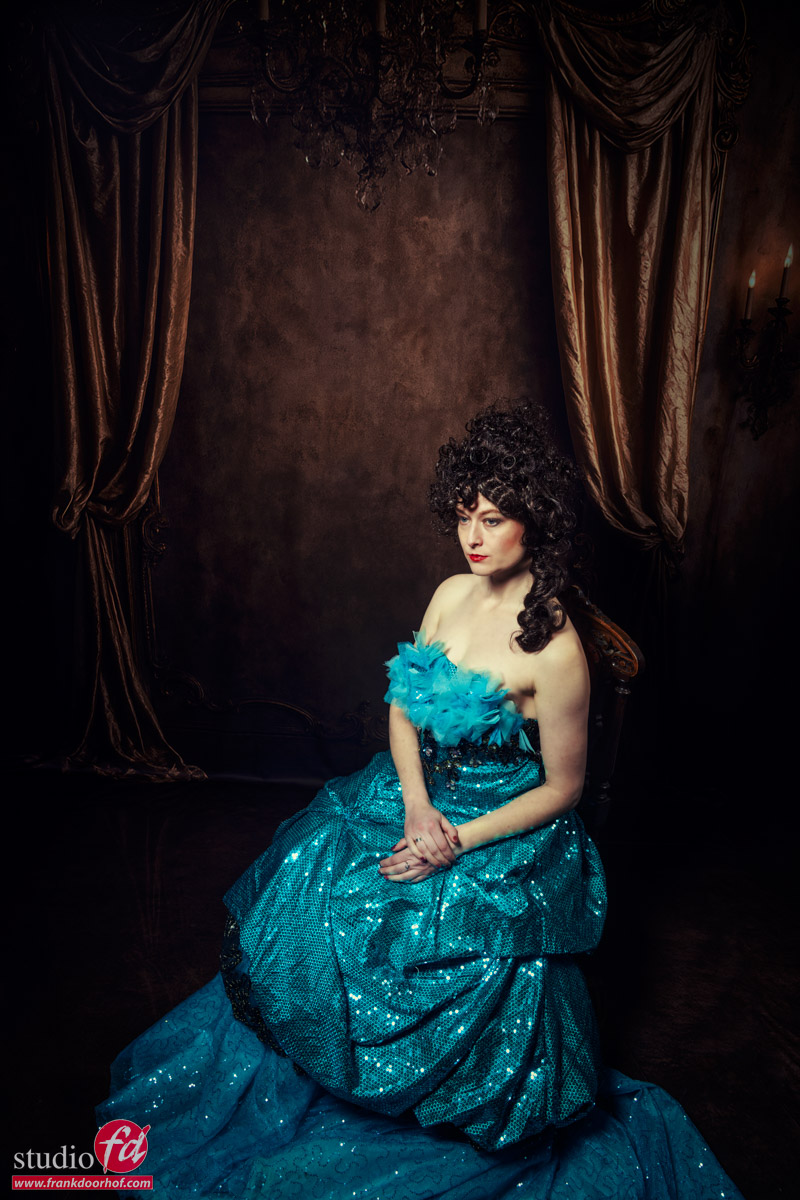
It looks great as a catalog shot. It looks great for family portraits, but for my work I use a lot of light fall off and the chandeliers didn’t look right.

There are several solutions.
You can choose to crop them out or use them just inside the lightfall off, which I did in the following shots.
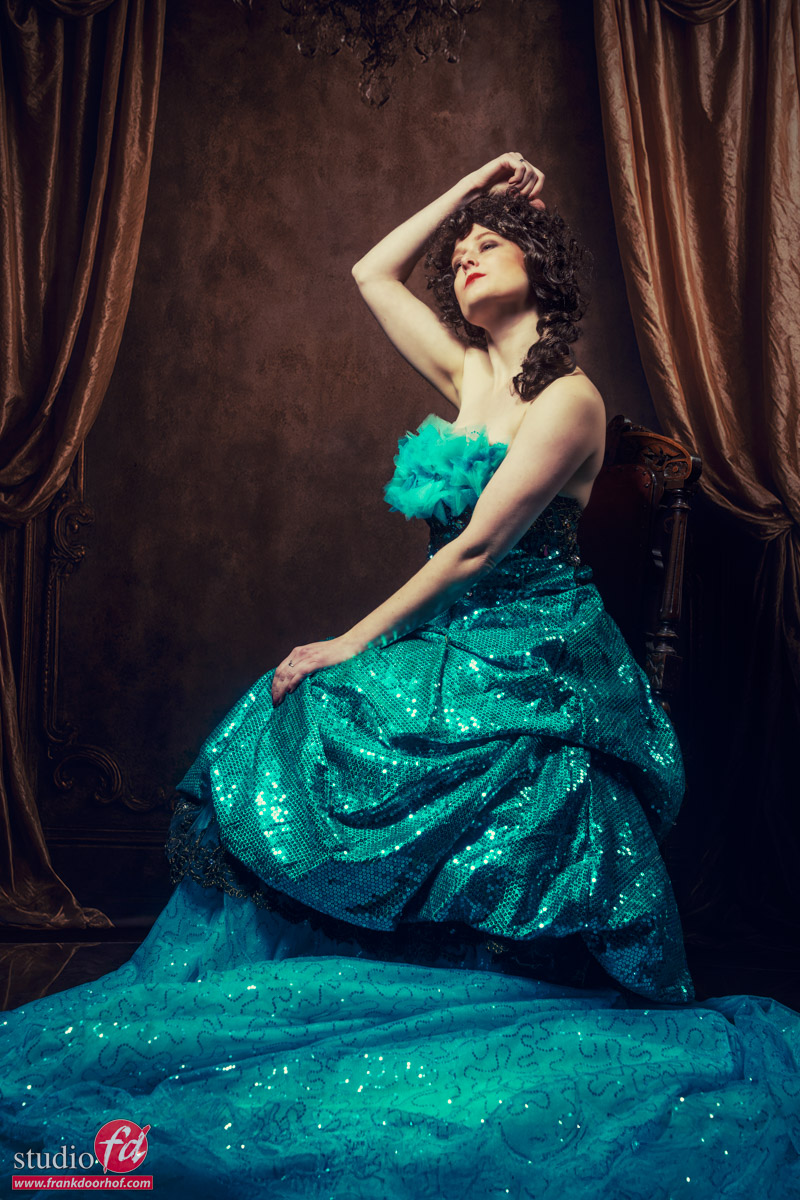
different looks with one backdrop

here, I cropped, so you don’t see the chandeliers in the backdrop
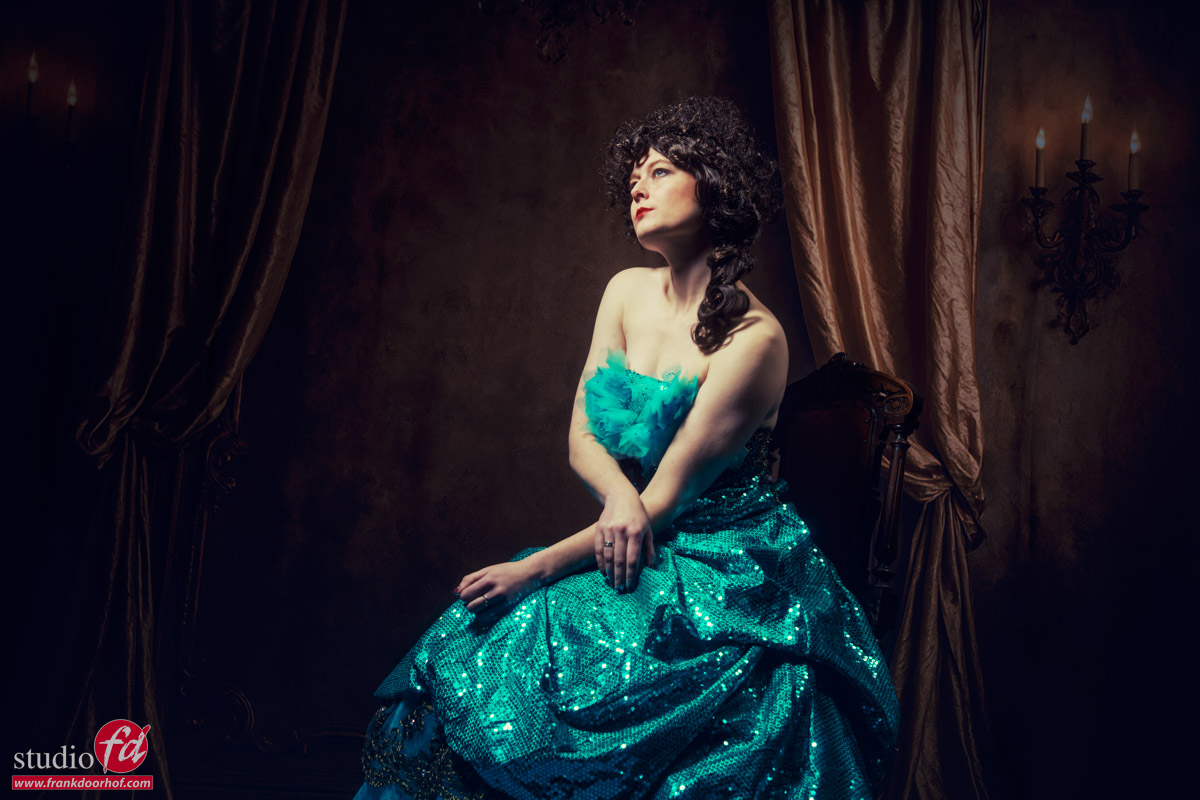
different looks with one backdrop different looks with one backdrop

A step further, with the same backdrop

It works and gives you great shots, but I also wanted to do something with the chandeliers.
And sometimes the solutions are much easier than you might think.
What about using the studio lights, for example, this gave me already a nice glow which could come from a chandelier.
We are going in the right direction.
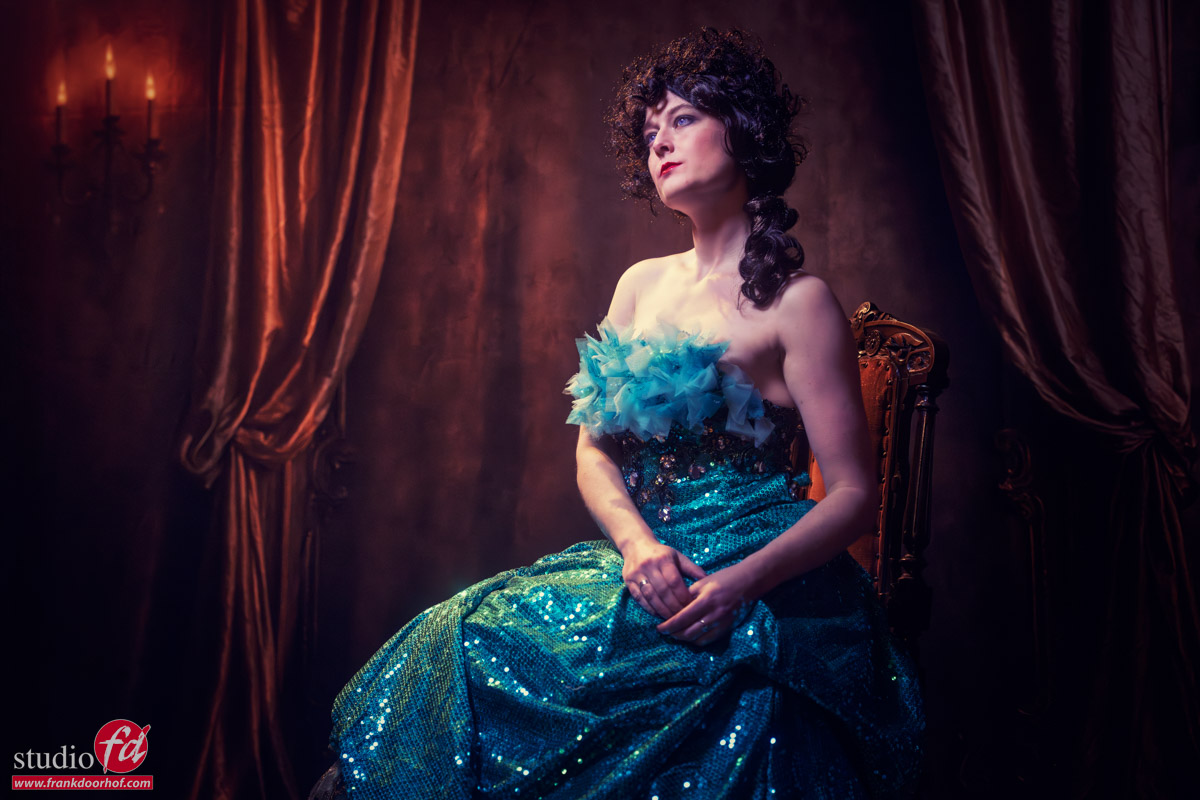
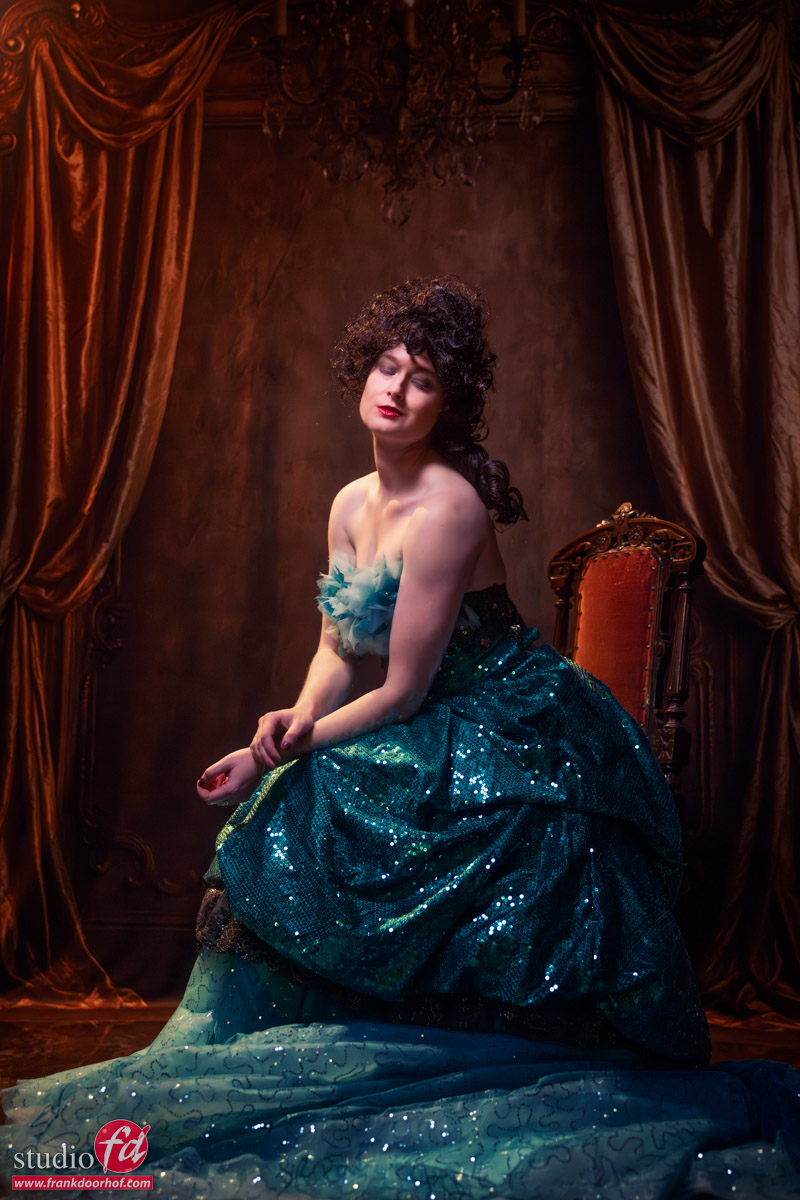
different looks with one backdrop

Storytelling with your backdrop

A model on a chair, a beautiful dress, and an awesome backdrop, who wouldn’t be happy?
Well, I do miss some storytelling parts.
Don’t get me wrong, not every shot should be a storytelling masterpiece. But with a background like this, my imagination starts to work in overdrive.

So continue reading how I made different looks with one backdrop

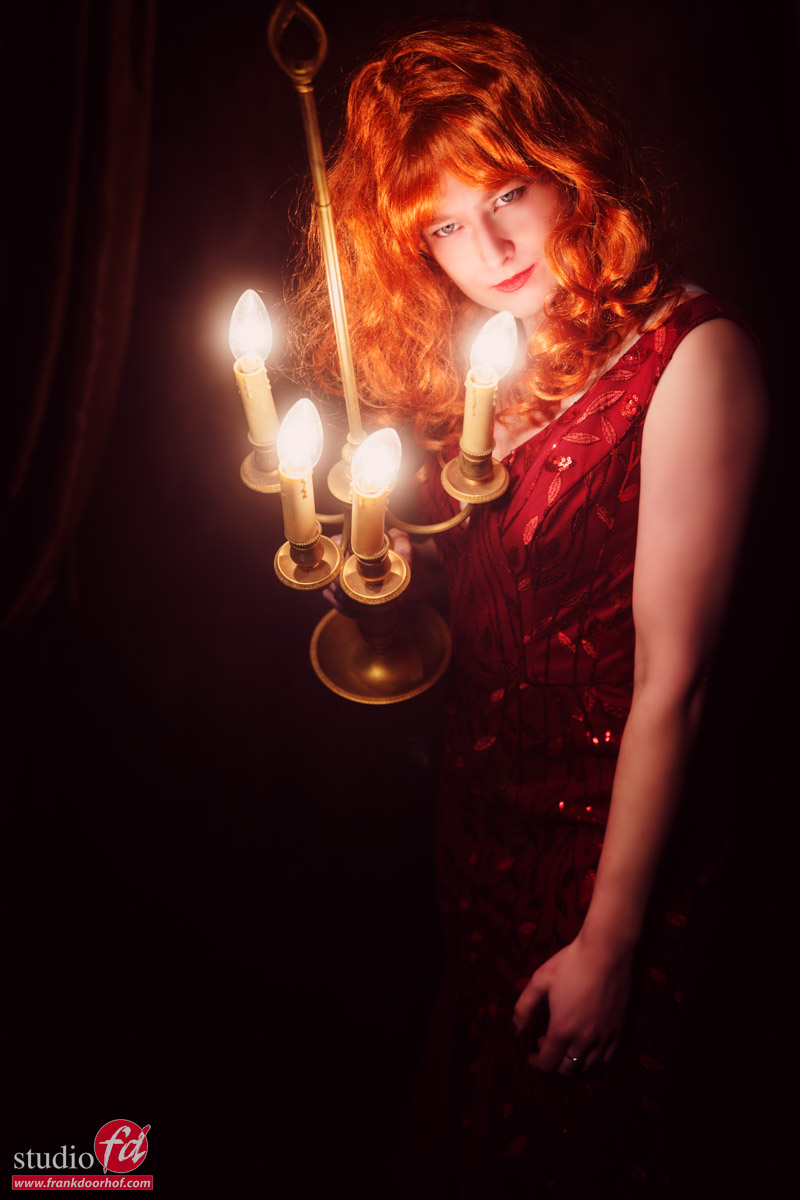
Because the studio lights worked great, we included a real chandelier.
Our model Linda was asked to imagine she was in a Scooby-Doo movie, and walking through the corridors of an old castle looking for the ghosts.

By using a longer shutterspeed you can let in more or less available light when you combine it with strobes.
If you use LED panels to open up shadows make sure you can control the LED panel to balance the chandelier and LED panel. If your LED panel doesn’t go low enough you can always move it further away, or bounce the light via the ceiling or walls.

I absolutely love these shots. This is another way to get different looks with one backdrop.
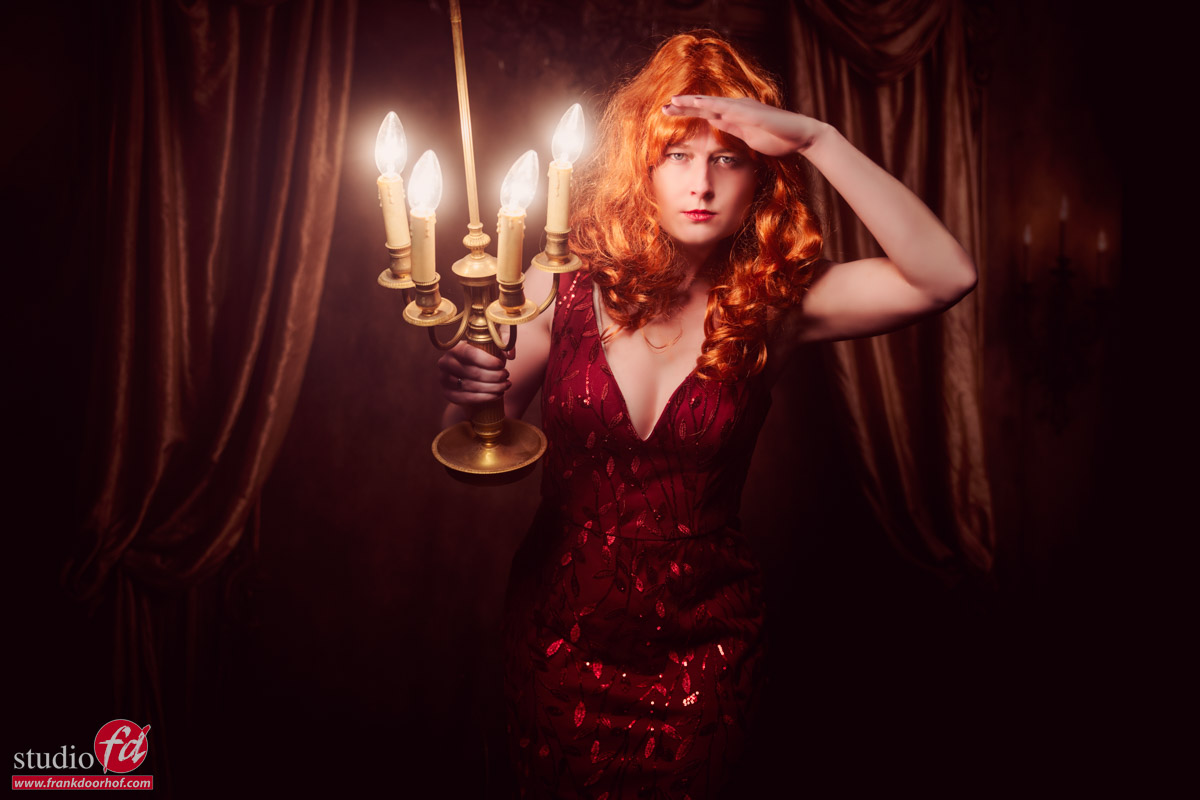
different looks with one backdrop

The lamps of the chandelier are a little crooked, but you can imagine the wind…
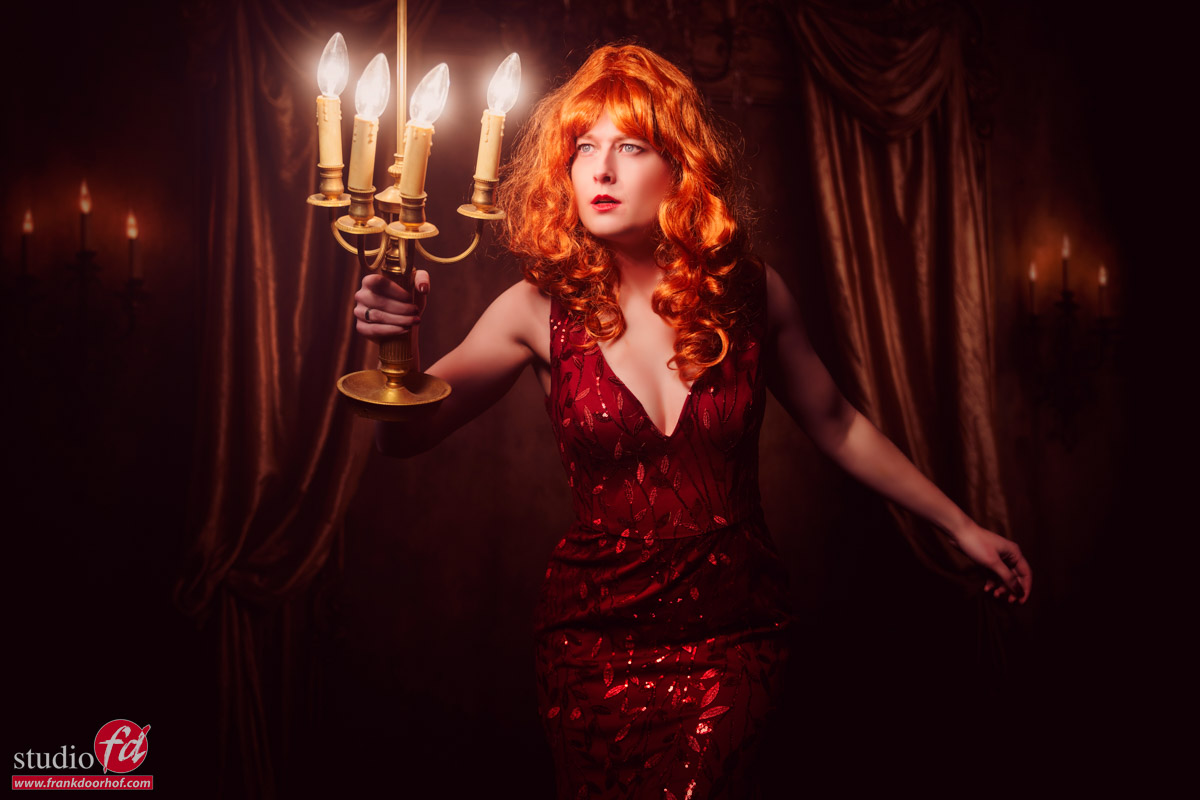
different looks with one backdrop different looks with one backdrop

Due the inverse square law (light falls off over the distance), the chandeliers in the print are again a bit more convincing, but…. we can do better.

The movie buff

As mentioned before I love horror movies.
And after the “Scooby-Doo” set, I thought it would be possible to make the chandeliers work a lot better and create a cool spooky vibe by using a bit of an alternative lighting setup.

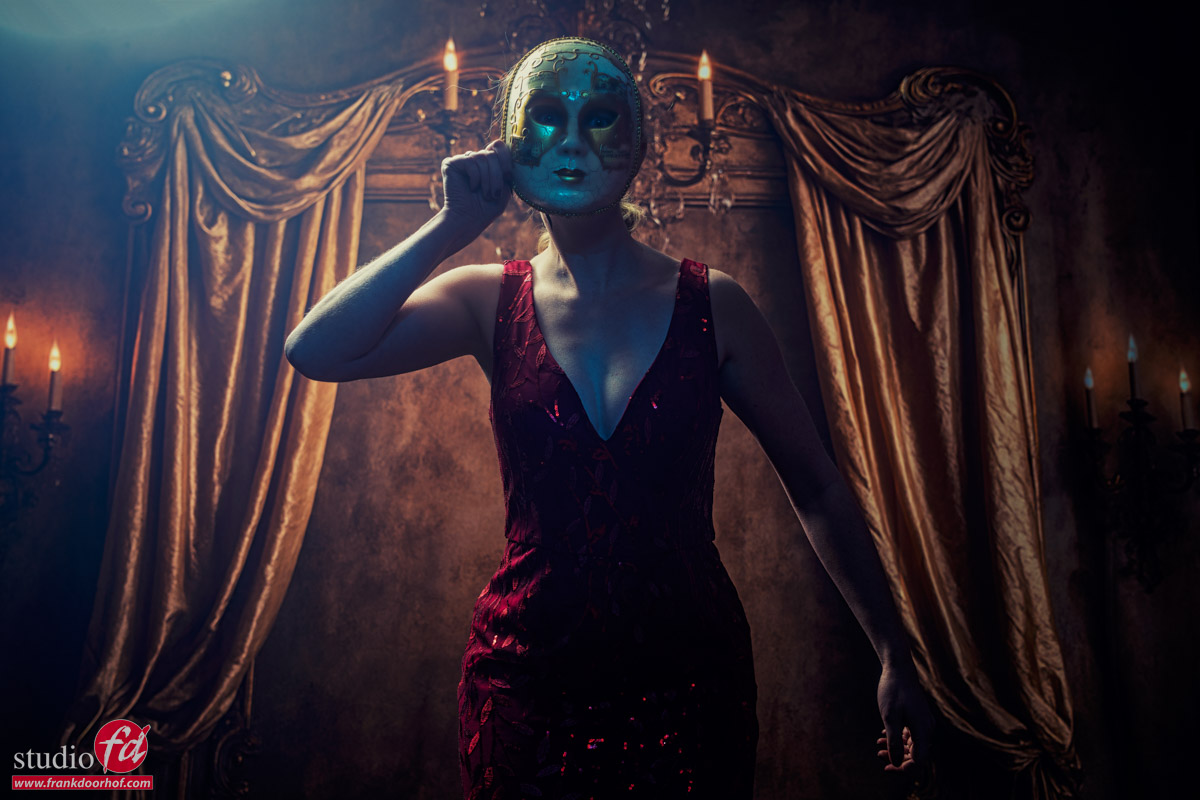
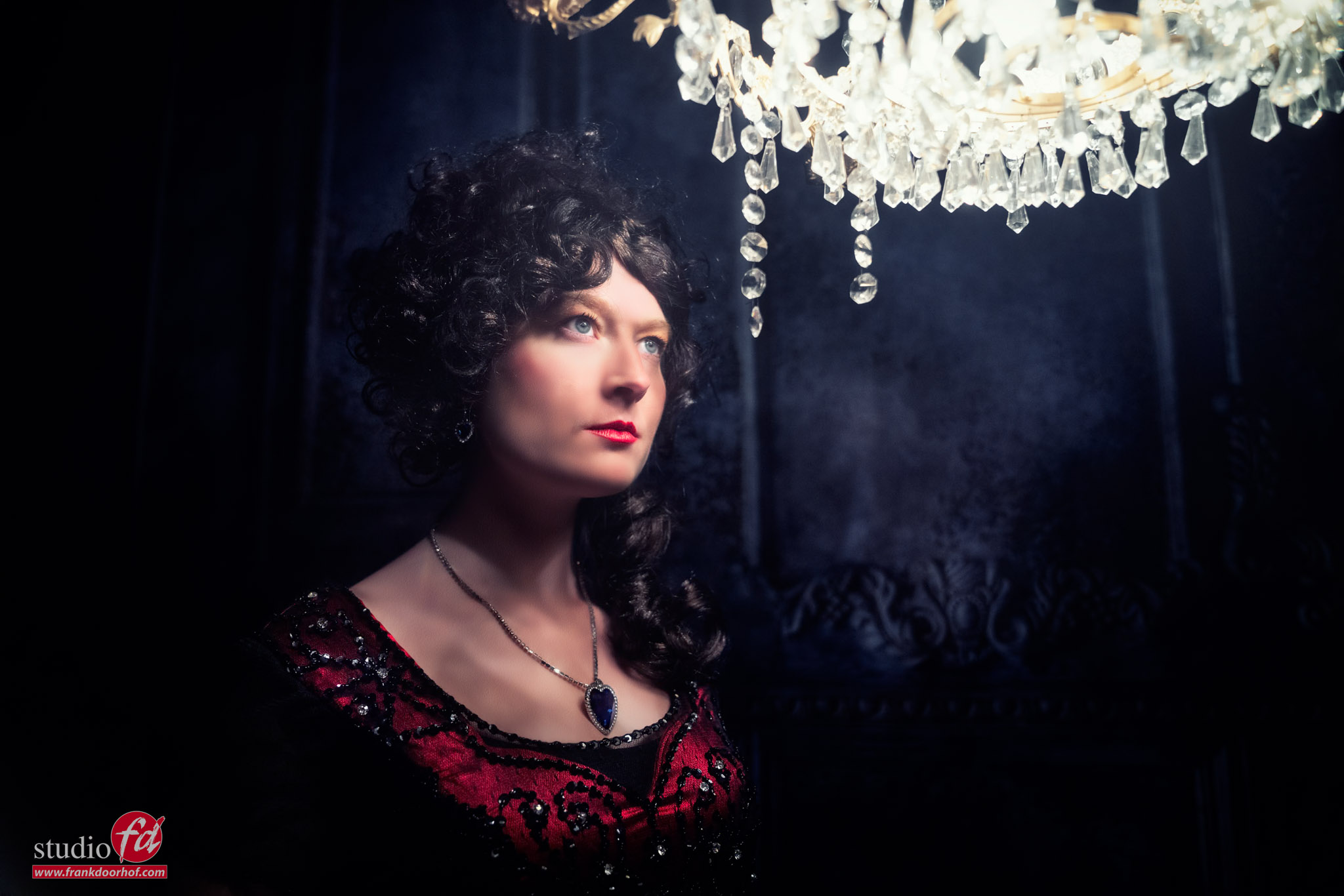
Lensflares always give the impression of light. And when you don’t see the light source, it works. But what if you can see the printed chandeliers and combine this with the lens flare?
That’s exactly what we did here.

I’m using a Geekoto lantern hovering above the model and slightly behind her.
The problem is, of course, that the model will be very dark from the front.
The advantage is that you get a very nice edge light and the lens flare from the lantern blends very nicely with the chandeliers on the print.

I could have chosen to let the model take a step back and use the light from above to light her face. But she has to look up for this which is very limiting in the poses.
I could have chosen to add a light from the side or even from the front. But that would take away the mood I was after.
The image I saw in my mind was like a clip from a 70’s Italian horror movie in an old theater with lights hitting a mysterious figure.

Search for props

One of the things I always advise is to visit flea markets, ask parents or grandparents if you are allowed to raid the attic and get as much “cool stuff” as you can store.
There is always a time when you can use something in a shoot that really makes the shot.
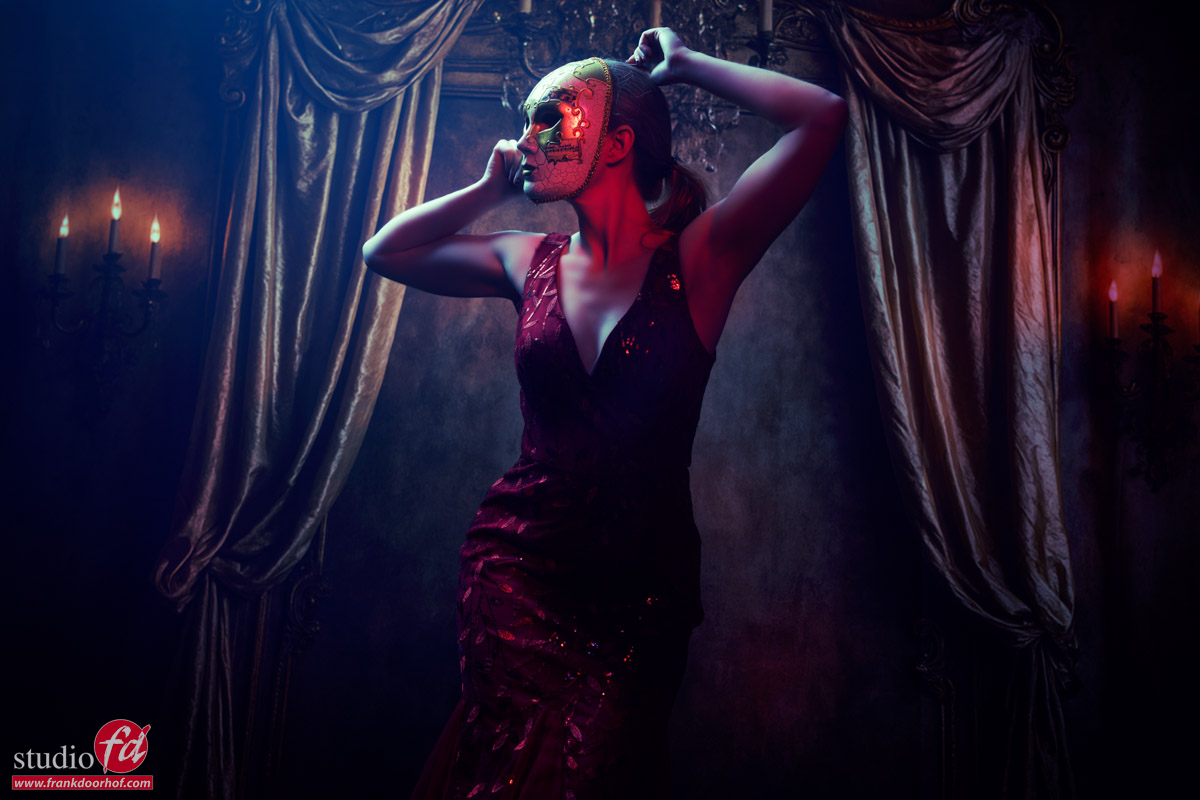
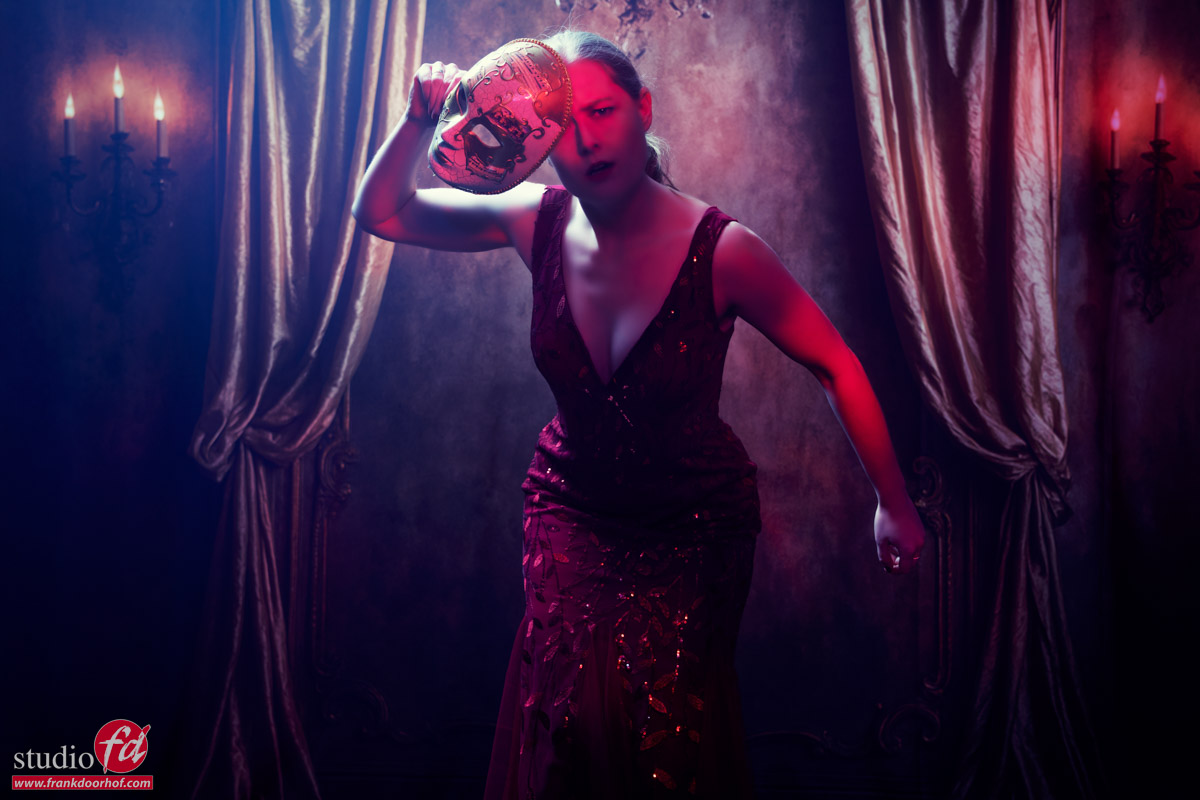
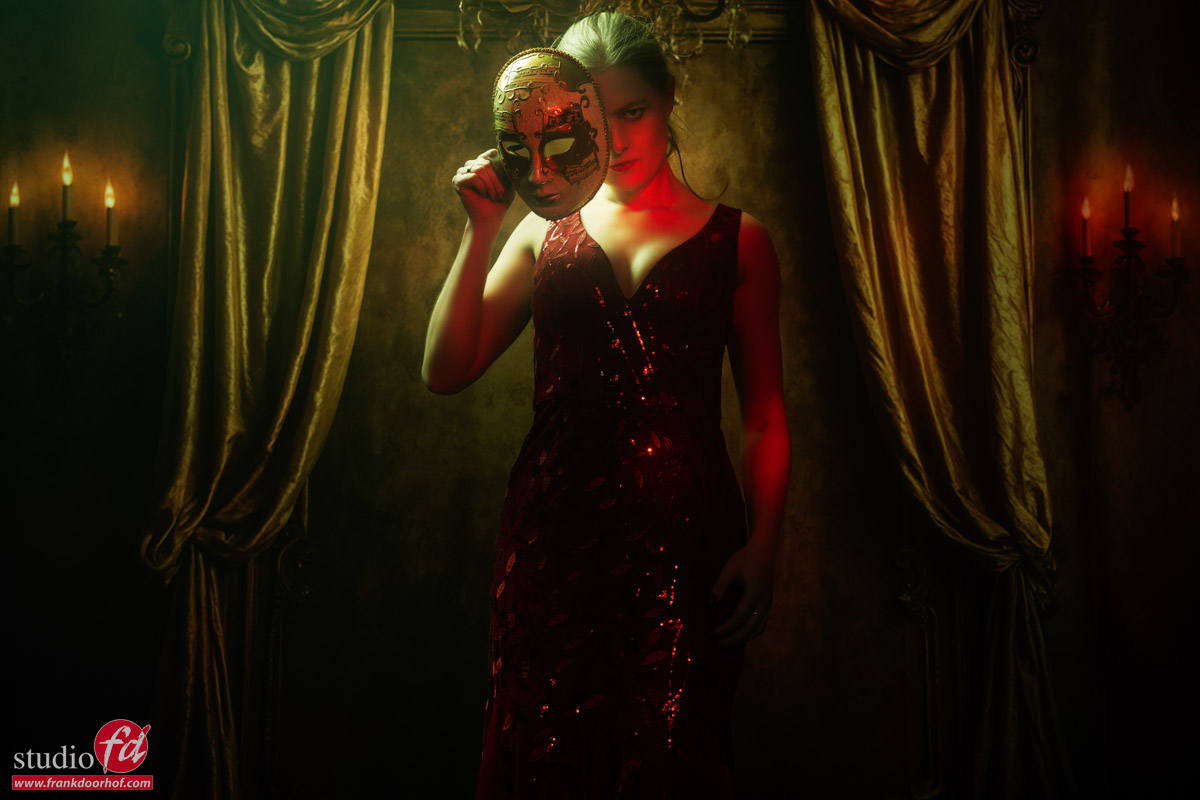
I always try to get masks when we visit markets. And this was the perfect moment for a mask.
The advantage is the same as with sunglasses; you can solve the problem of “raccoon eyes” by letting the model wear sunglasses or a mask. Our brains will now forgive us that the light is not aimed at the eyes. Or in other words, it just looks cool with high contrast lighting.

The next step is opening up the shadows.
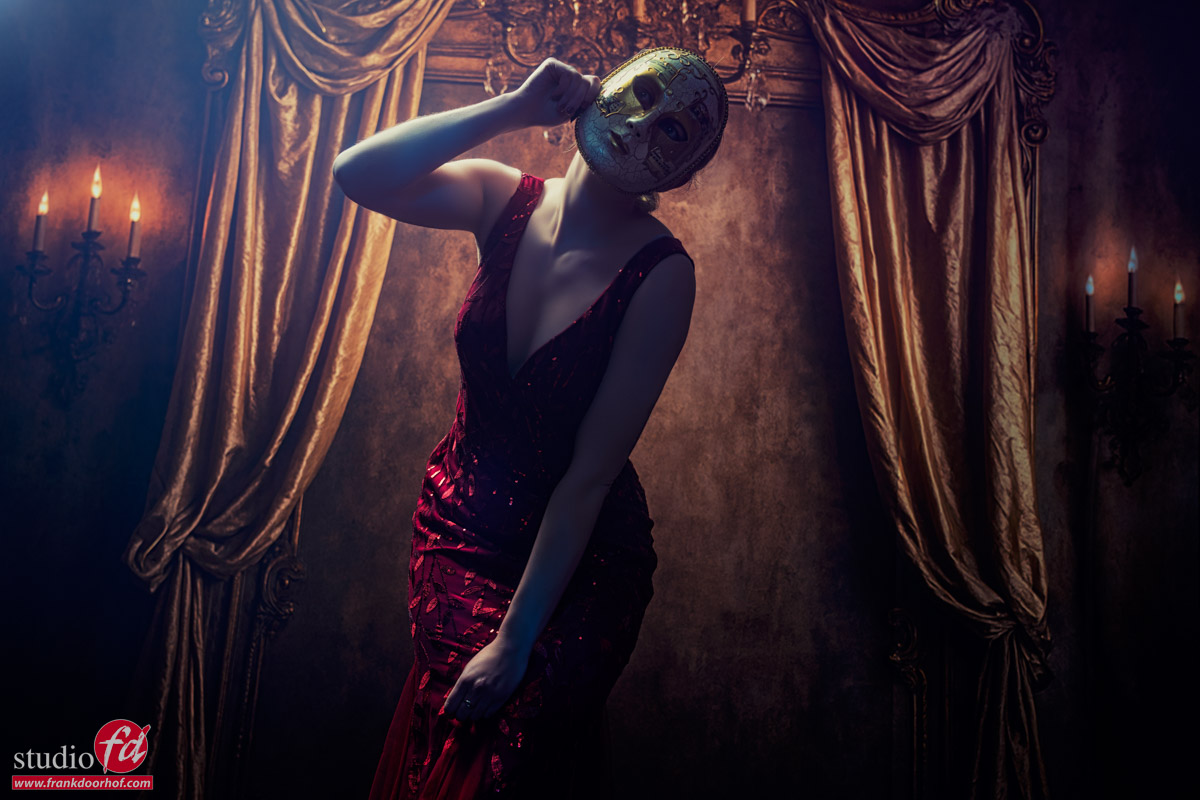
In this case I wanted to use colored lights to hit the model. However, I did not want them to clearly come from left and right, but to stay in the style of the movies I wanted them to nicely blend together.
To achieve this I’m using a mirrored surface in front of the model with two strobes aimed at the material which bounces the light back to the model perfectly blending the red and blue gels.
I will upload a video in the next blogpost showing the complete setups.

Here we use the surface as a background.
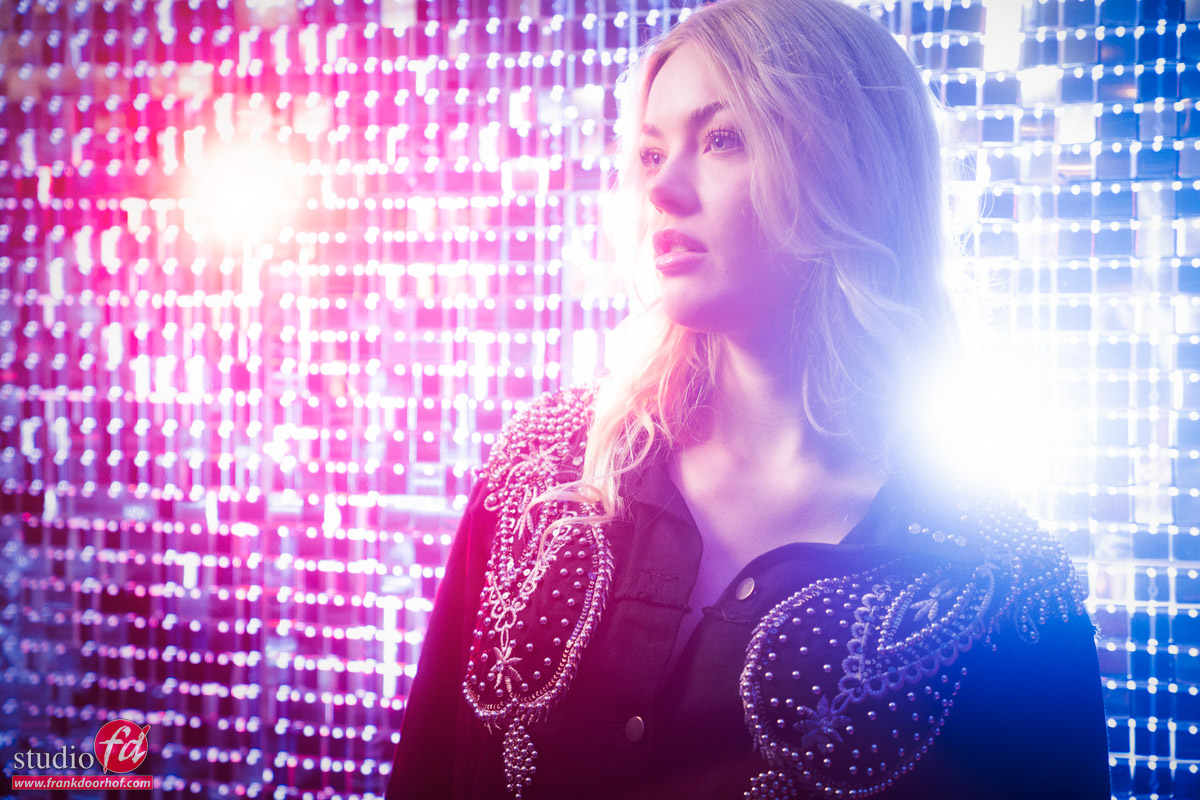
By changing the balance between the red and blue I could get a nice variety of results from this setup.
I started with the front lights just as a very slight fill, and slowly started to add more power to the colored strobes.
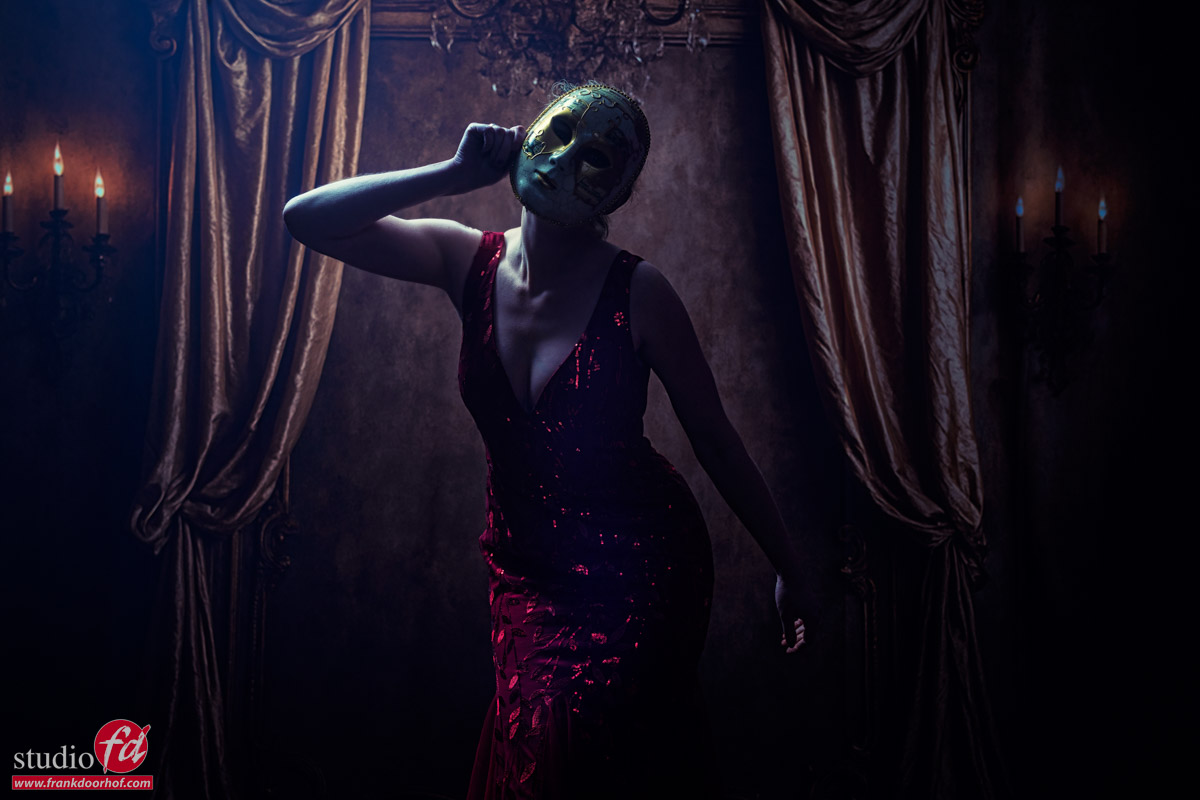
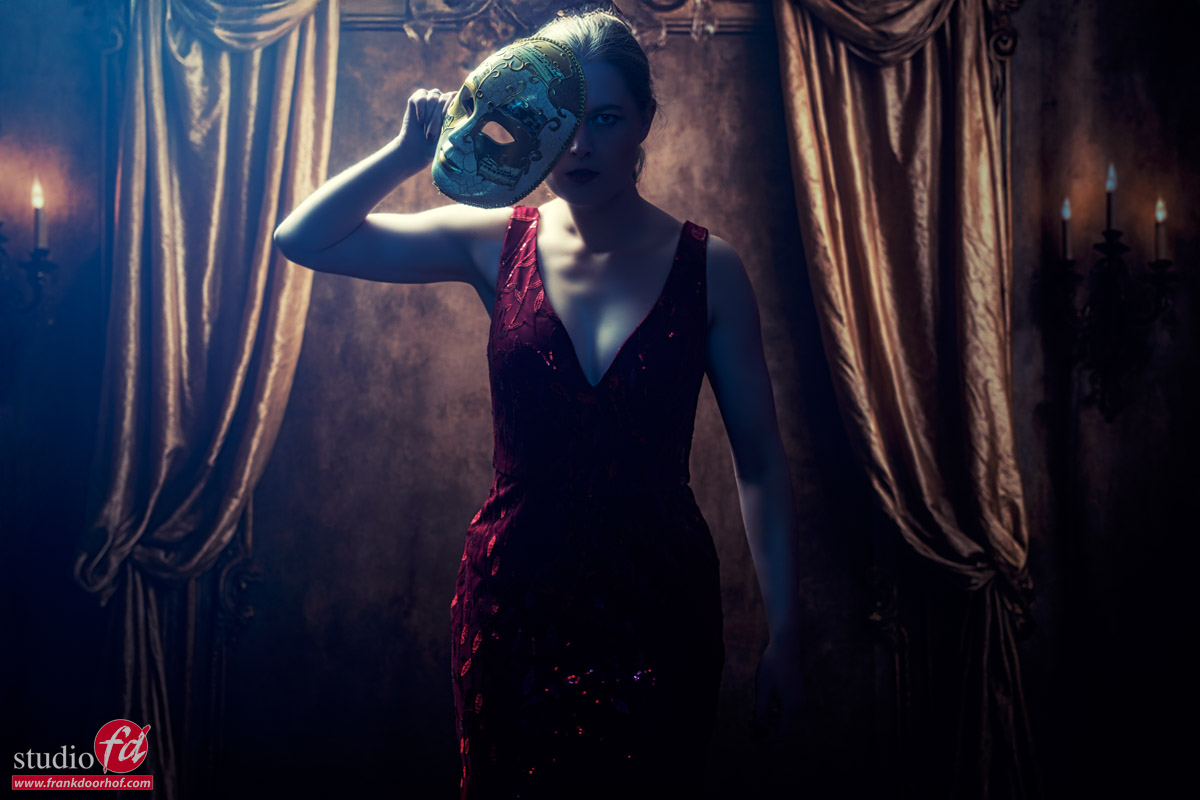
different looks with one backdrop different looks with one backdrop different looks with one backdrop

Play with colors, so you get different looks with one backdrop

You probably already guessed, seeing the number of shots, this was one of my favorite setups of the day.
By changing the balance between the strobes with gels you can get a lot of different looks. Don’t be afraid to change the output from slight fill to “almost” main light source. As you can see, I did this with the red gel in the final shots. In Lightroom/Photoshop you can also manipulate the colors by using the temperature slider (Red and Blue are on the same axis).

And of course when you play with color, we also have to include… a BW version.
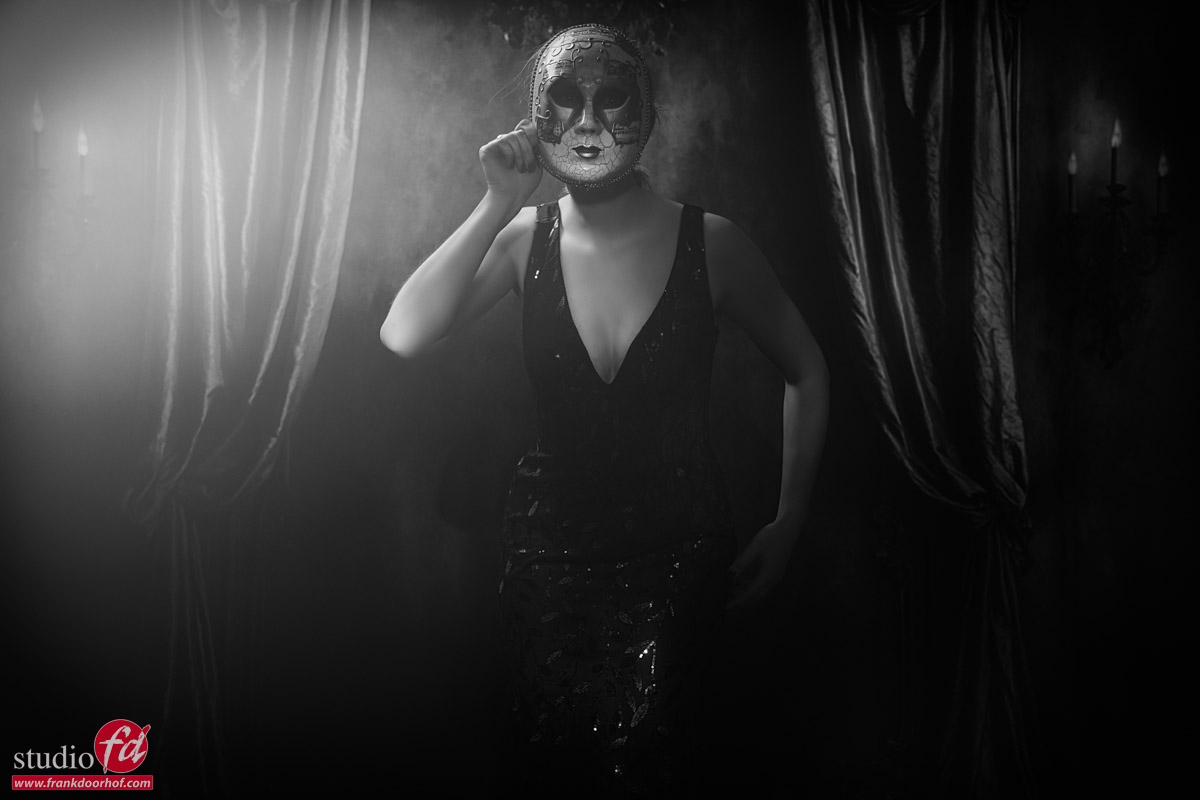
different looks with one backdrop

Conclusion: different looks with one backdrop

99.9% of the backdrops work straight out of the box.
With 90% of the backdrops, you can a lot more than you might think at first.
But sometimes you get a background that might not immediately work.
Don’t give up right away. By experimenting, you can probably get much more creative shots, and also learn new techniques you can use for other shoots. So try to make different looks with one backdrop.

Workshops

Believe it or not but this was just one of 3 sets we did during a workshop day.
There are a lot of workshops out there that are aimed at shooting great portfolio material, and there is nothing wrong with that.
In my workshops you will shoot great portfolio material (see above results) but most of the time is spent explaining the setups, why something works, or not.
How to coach the model for the perfect expression/pose, the retouching process and a lot more.
Most attendees are pretty tired at the end 😀

If you also want to experience a workshop that really goes in depth about lighting and model photography?
Visit www.fotografie-workshops.nl for the Dutch workshops.
If you don’t speak Dutch, let us know a few weeks in advance and we switch the workshop to English.
Can’t travel?
Also no problem, you can book one of our online 1:1 workshops which can be taught at the time slot that fits your time schedule.
 

Reflective backgrounds are awesome

Anything can be used as a background, but some are better

I love to experiment with backgrounds.
Of course, you can create something with AI, but where is the fun in that?
Plus, it never looks 100% convincing if you follow the lights in more complex setups. (yes it’s getting scary good, I know).

There are many websites where you can get cheap materials that can be used in your photography.
When I saw this material, I immediately knew this was going to be fun: a reflective background made from tiles with tiny mirrors.

Today, in a Digital Class tutorial, I show you how I shot this one, and more.

isabella for the reflective background

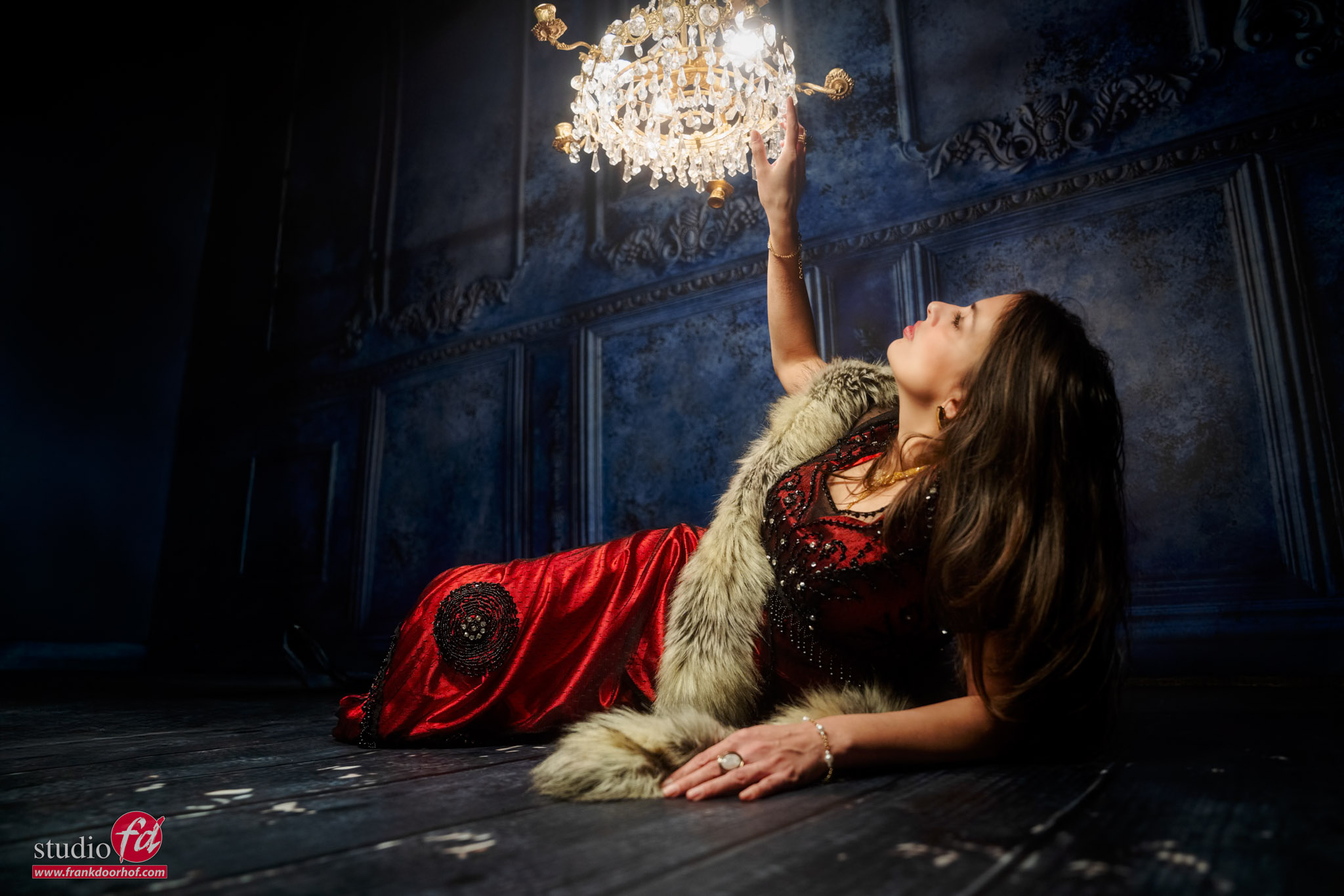
Mixing strobes and a chandelier

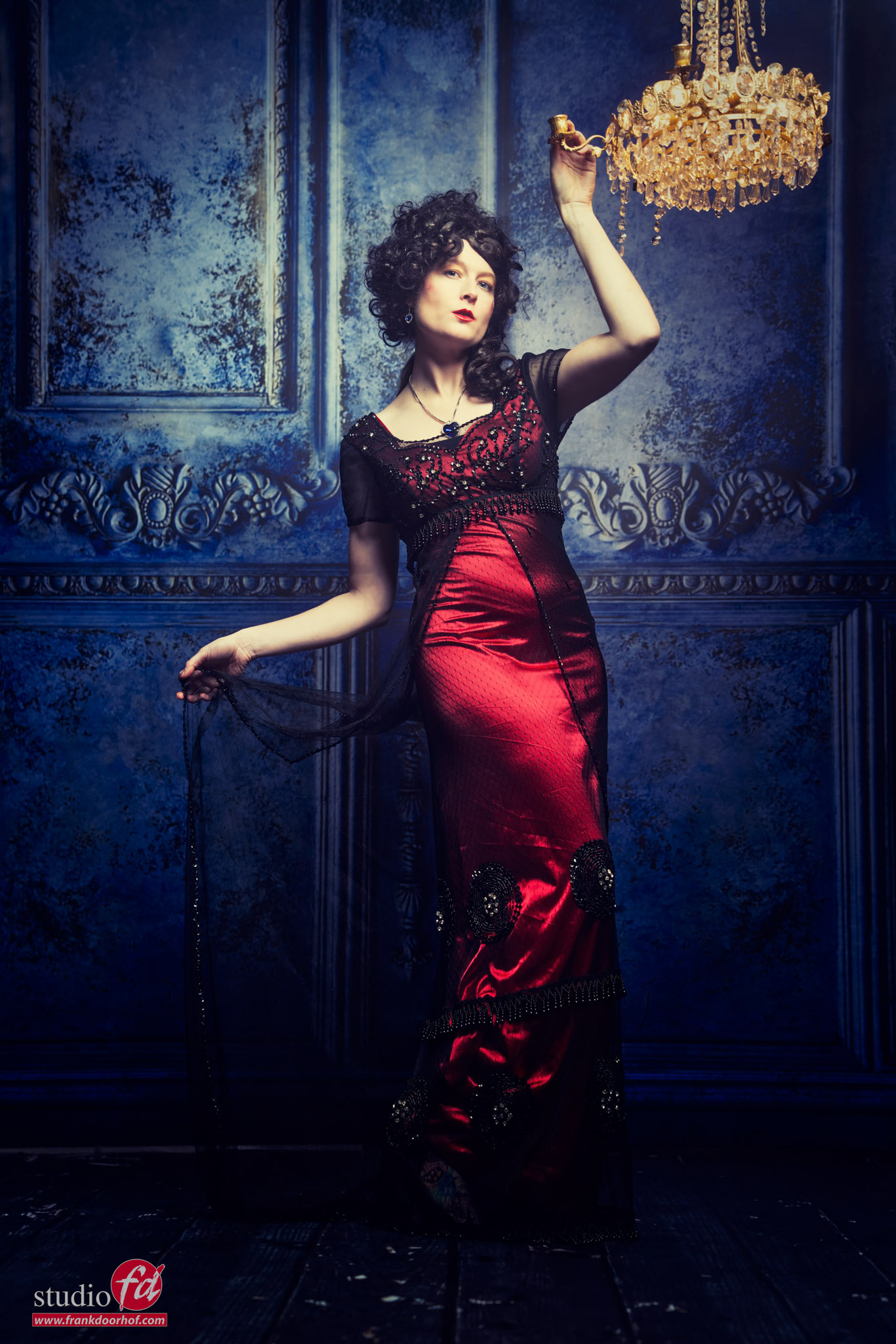
A chandelier is always fun

You can get them pretty cheap at flea markets, or maybe you still have one somewhere in an attic.
We have a small collection of chandeliers in our studio, and sometimes during the workshop,s we take one (or several) out to spice up a set. And today we are doing the same. Some pictures of the workshop, Mixing lights

But how can you easily shoot a chandelier?

Or any other continuous light source when combining it with strobes?
The whole process is actually pretty simple, but there are several routes.

First, there is the option to shoot it without strobes.
In that case, I would place the chandelier as close as possible to the model to make sure the chandelier doesn’t blow out, but still has enough light to light your subject. Plus, by placing it closer to the model, the light fall off is much nicer.
You can get an effect like this quite easily.

mixing lights: a chanelier and strobesThe only thing I do with an image like this is lower the highlights in the chandelier.
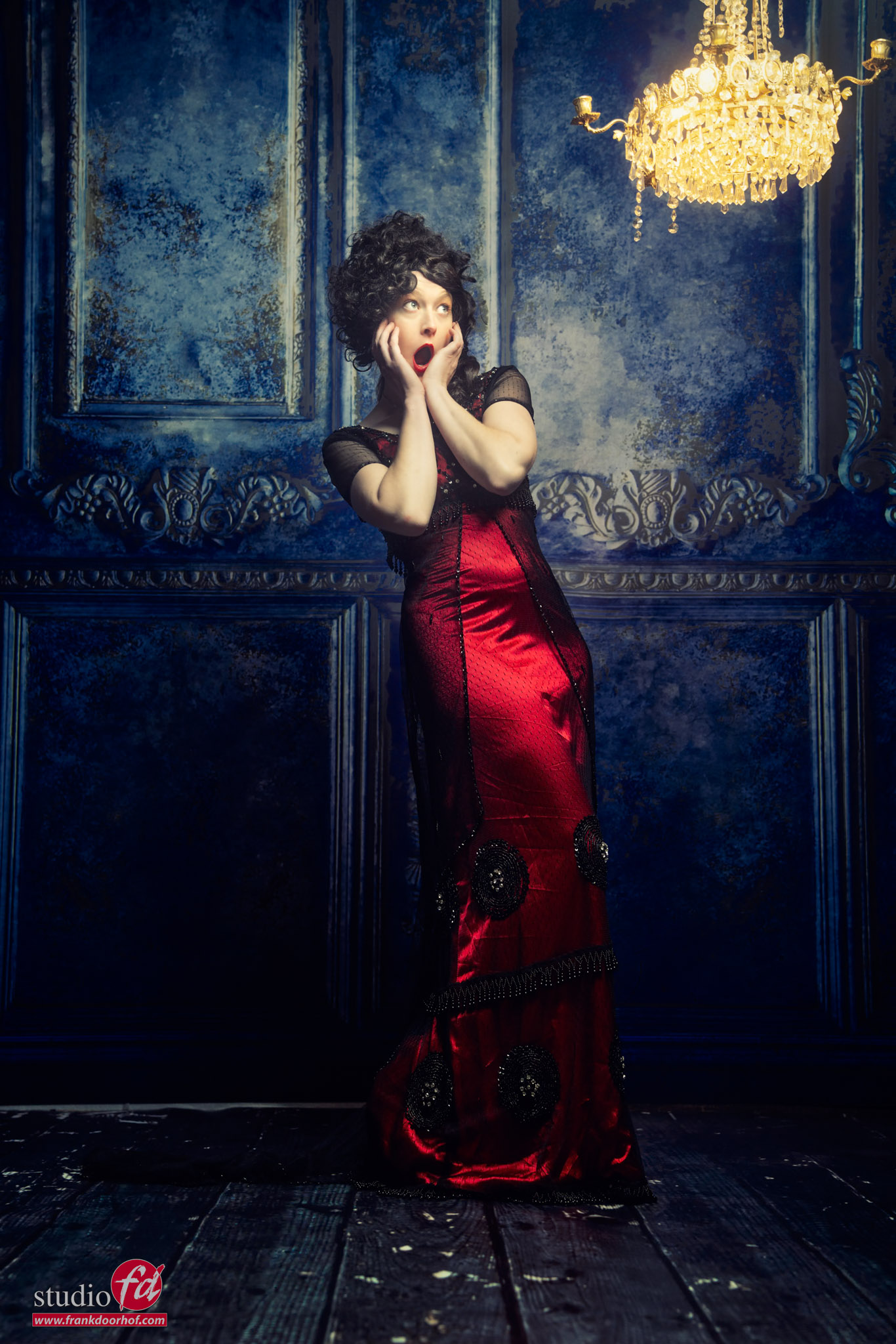
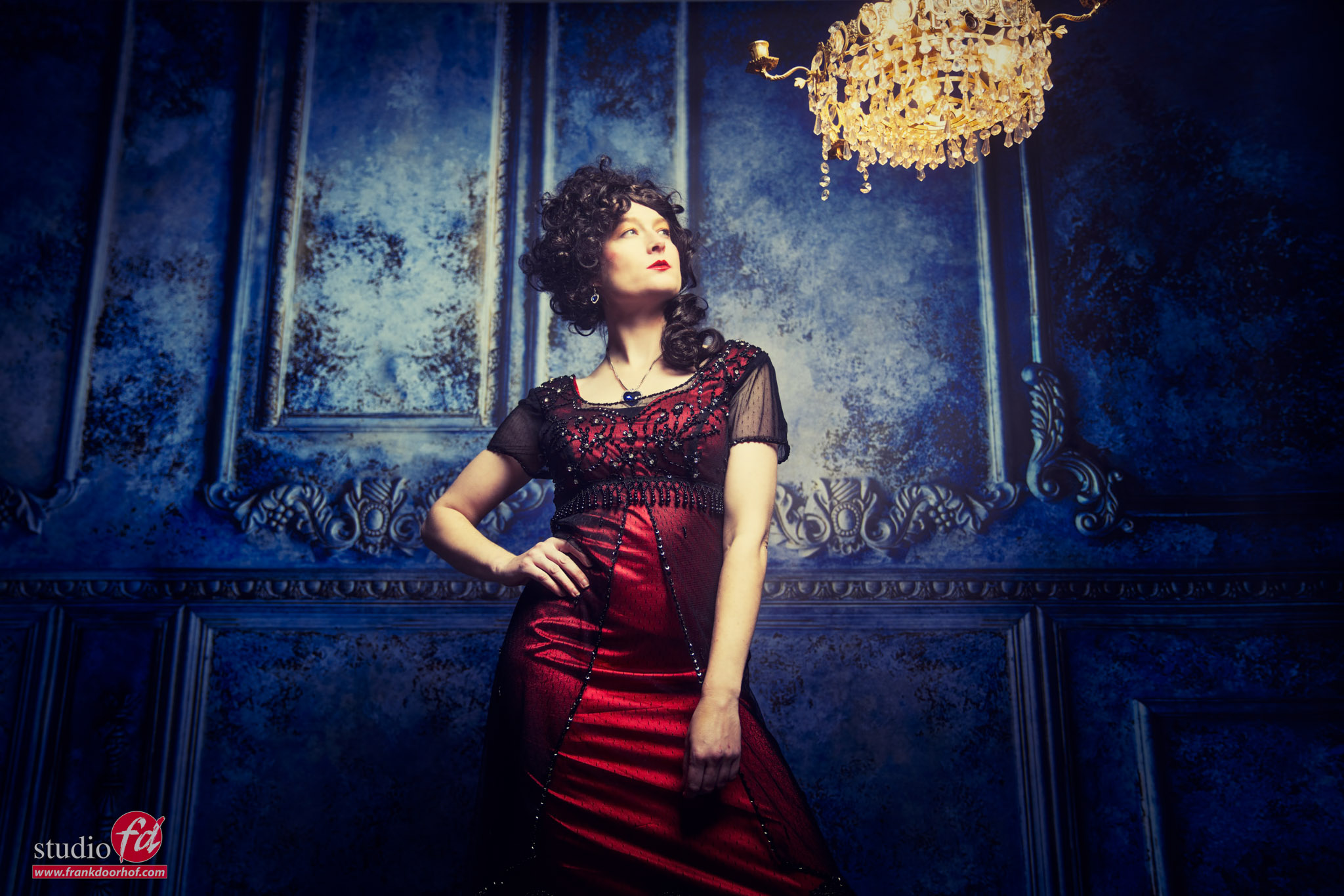
This is very easily done in Lightroom, and it might surprise you that if you place the chandelier in the correct place, you don’t even need a lot of adjustments.

But today we are mixing lights: a chandelier and strobes

Well, ok, one strobe.
When we combine a strobe with continuous lighting, you always have to take a few things into account.

ISO: the sensitivity of the sensor, higher means more noise.
Shutter speed: how fast you “freeze” the frame; lower means a greater chance of blurry images
Aperture: the wider the aperture (lower number), the more light enters the lens, and more shallow depth of field.

Continuous lighting: builds up over time; there is no limit to shutter-speed, as long as you can handle the camera (or use a tripod)
Flash/strobes: a flash of light, that is there for a fraction of a second (the flash duration) and is gone after this.

The problem with strobes is that we have to deal with something called the X-sync. In short, this is the maximum shutter speed you can use without seeing a black bar in the frame.
For most cameras, this is 1/125. This is also why we often take this shutter-speed as the standard maximum in the studio.

There is a new system from Sony where you can shoot at every shutter speed.
HOWEVER, do take into account that if you shoot at a higher shutter speed than your flash duration, this will cut your light output.

Steps to make it work

I think it’s clear that the chandelier/continuous lighting is the light source with the least output.
Also, we cannot change the output of the chandelier. You could use a dimmer, but this will only result in less light. So, we don’t want this.
This means we are basing the whole image on the output of the chandelier.

What you can do next is use your EVF in “lighting emulation mode/setting effect” and see how you like the chandelier.
Because we are using strobes, it’s not important where the chandelier spreads. It’s only important that we get the nicest looking chandelier. So, I personally like it when it blows out just a little bit around the lights and gives a slight glow, but you can still see all the details.

When we use the chandelier without strobes, you can correct this with the highlights slider. But with strobes, let’s try to get it right in camera.
Now my advice is to set it up as dark as possible, so you can see every single detail.
My own workflow is that I choose the aperture first; in most cases, this is wide open for the lens I’m using.
I will fix my shutter speed on 1/125 and now change my ISO till I get the result I want.
If I already see the ISO is getting too high, I will lower my shutter speed. I’ll explain in a moment why this is important.

Add strobes

When you have a shot you like, it’s time for the strobes.
Probably the whole set will be dark with just a floating chandelier.
But you now know the aperture, the ISO, and the shutter speed (which is not important for the strobe, as long as it’s below 1/125)
So get your lightmeter and set up your meter to meter the light, and the only thing you have to do is set the meter to the ISO you selected and adjust the strobe till it hits the desired aperture. You now have a perfect 1:1 mix.

And now the fun part.
Because we are shooting with strobes, most of the model will be frozen by the very fast flash-duration, the chandelier doesn’t emit a lot of light so infection on your model is minimal. You could even make your model move around and freeze the motion.

When you use continuous lighting that is too strong, you will see some slight ghosting around your subject. This is literally the build-up of the continuous light combined with the strobe, which, of course something we don’t want and is often a problem when shooting with strobes in the sun and freezing motion on 1/125. Here, HSS can be a great solution.

Mixing lights: not enough light from the chandelier

And if you feel the chandelier doesn’t emit enough light? You just lower the shutter speed, and the chandelier will become brighter.
As long as you ONLY change the shutter speed, only the chandelier will change in output. Especially for clients that don’t know anything about photography, it sometimes seems like magic when they see you changing nothing (:D) and still the lights get brighter. You have a client for life because they think you’re a magician.

Of course, it’s still important where you place your strobe(s) and which one you use.
For example, you could use something like a Geekoto Lantern straight on the model. But also a more focussed lightsource from the side, and you can even feather the lantern.
As long as you make sure there are no weird shadows going on, you are free to create cool effects.
And of course, if you think there is too much light in the set, you can always use a slight/strong vignette.
Personally, I think the vignette is one of the most powerful additions to draw the attention of the viewer into the frame, so don’t feel bad adding it in.

mixing lights: a chanelier and strobes mixing lights: a chanelier and strobes

And of course, never forget to also take some images with just the chandelier.
Because the more choices you have after the photoshoot, the better.

Workshops about (mixing) lights

Want to learn everything about light control?
Want to visit a workshop where it’s not just shooting a model with a fixed lighting setup, but see how the setup is built and adjusted to the taste of the group?
And of course learn how to work with poses, backgrounds, small sets, styling, retouching, and a lot more…..

If this all sounds awesome, visit fotografie-workshops.nl and book your workshop.
If you don’t speak Dutch, no problem, let us know a few weeks in advance, and we can switch the workshop to English.
Not possible to travel to the Netherlands?
We got you covered with our 1:1 online workshop.
We have a full streaming setup in our studio. 4 detail cameras and of course the retouching software, so you can see every detail and of course ask questions during the day. Plus, you get all the RAW files after the workshop.


See this other blog about Mixing lights: a chandelier and strobes 


Just a lightbulb and a comic

Sorry, graphic novel (not a comic)

And indeed, it’s spicy!
Anyway, some of our models become famous actresses, some become musicians, and one decided to write a comic/graphic novel.
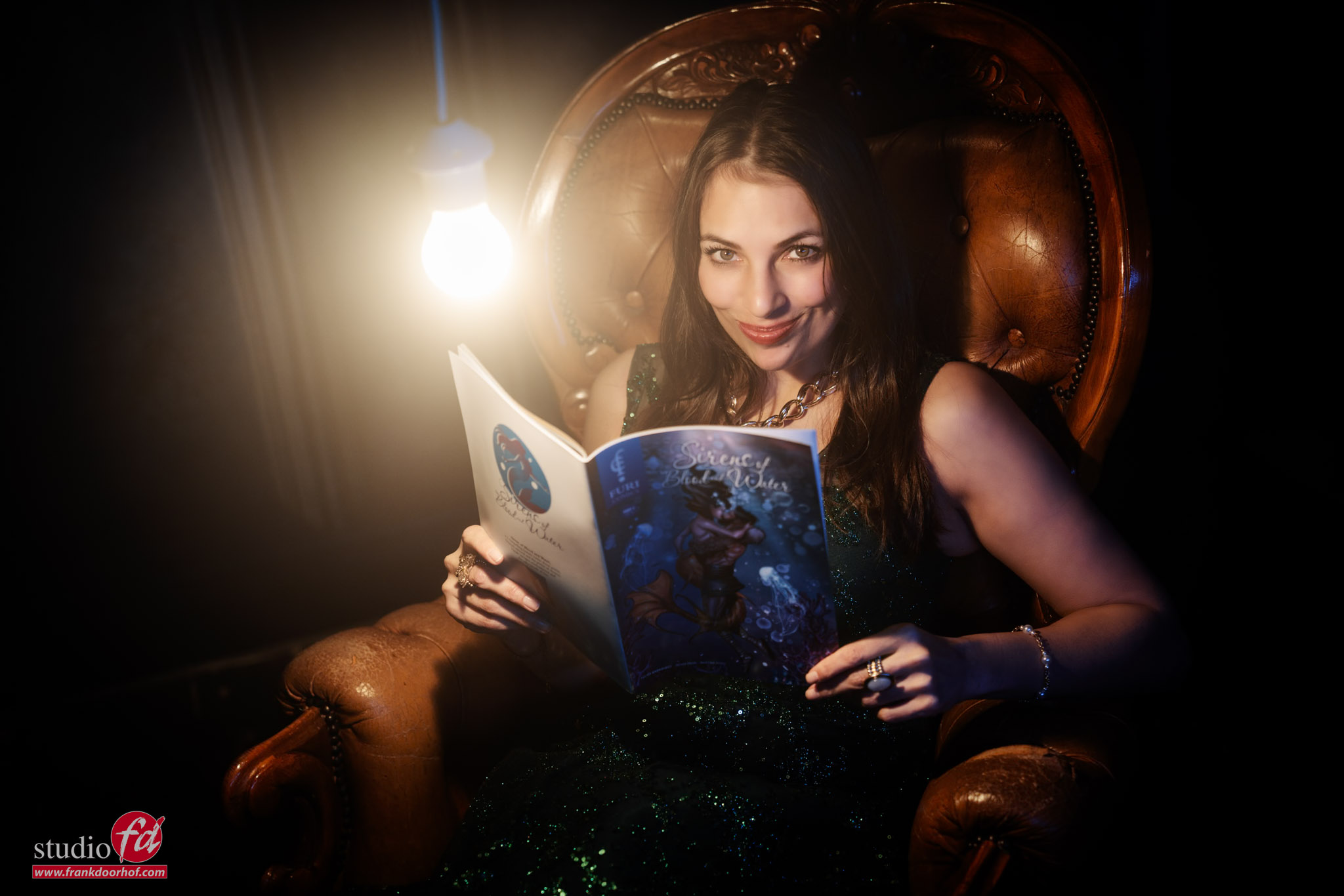
And when it’s released, we need some images, of course. This  blog is about how I shoot this portrait with just a lightbulb and a comic.

Workshop Alternative Light 

During the workshop “alternative light,” we work with light sources that are not designed for photography to create our images.
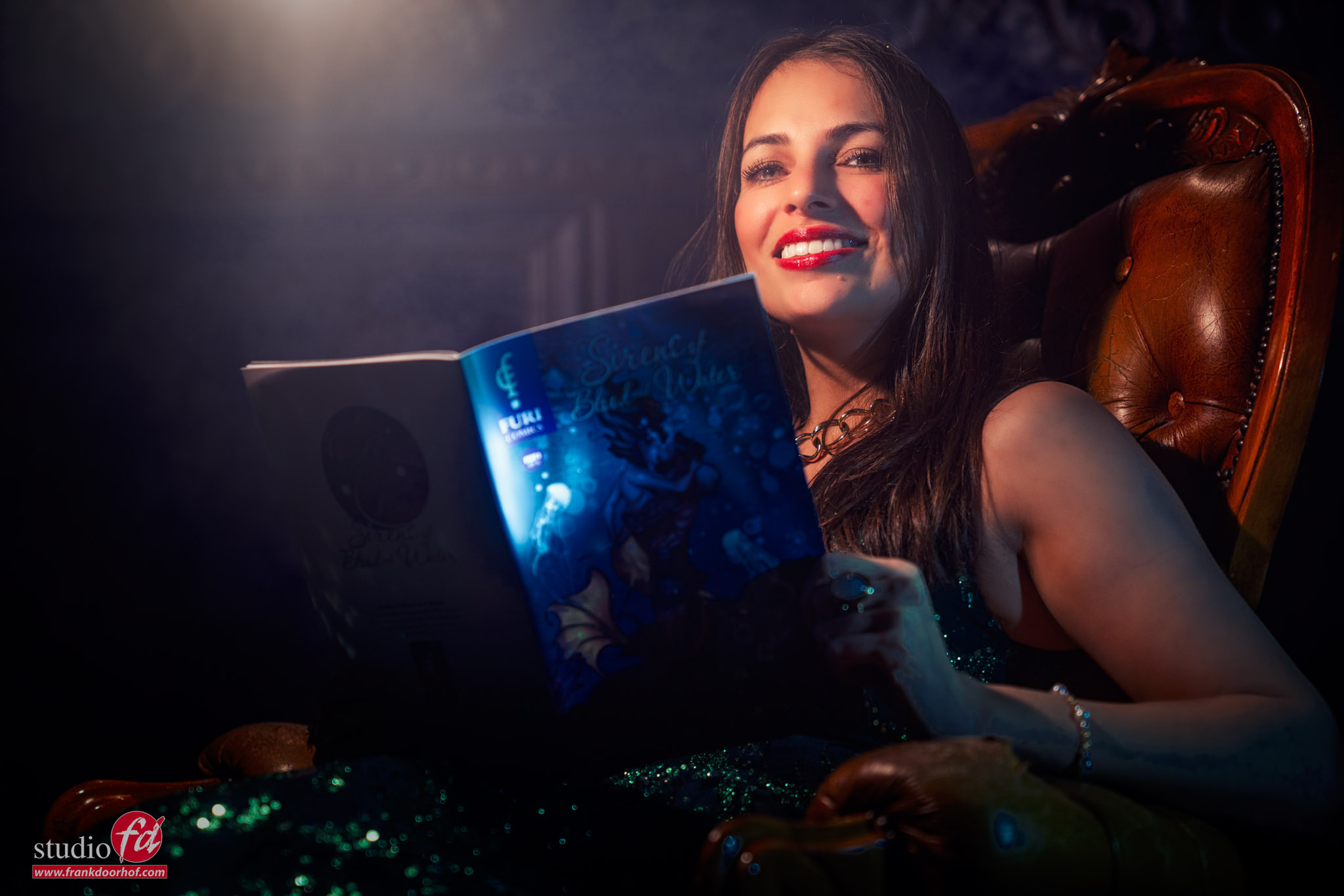
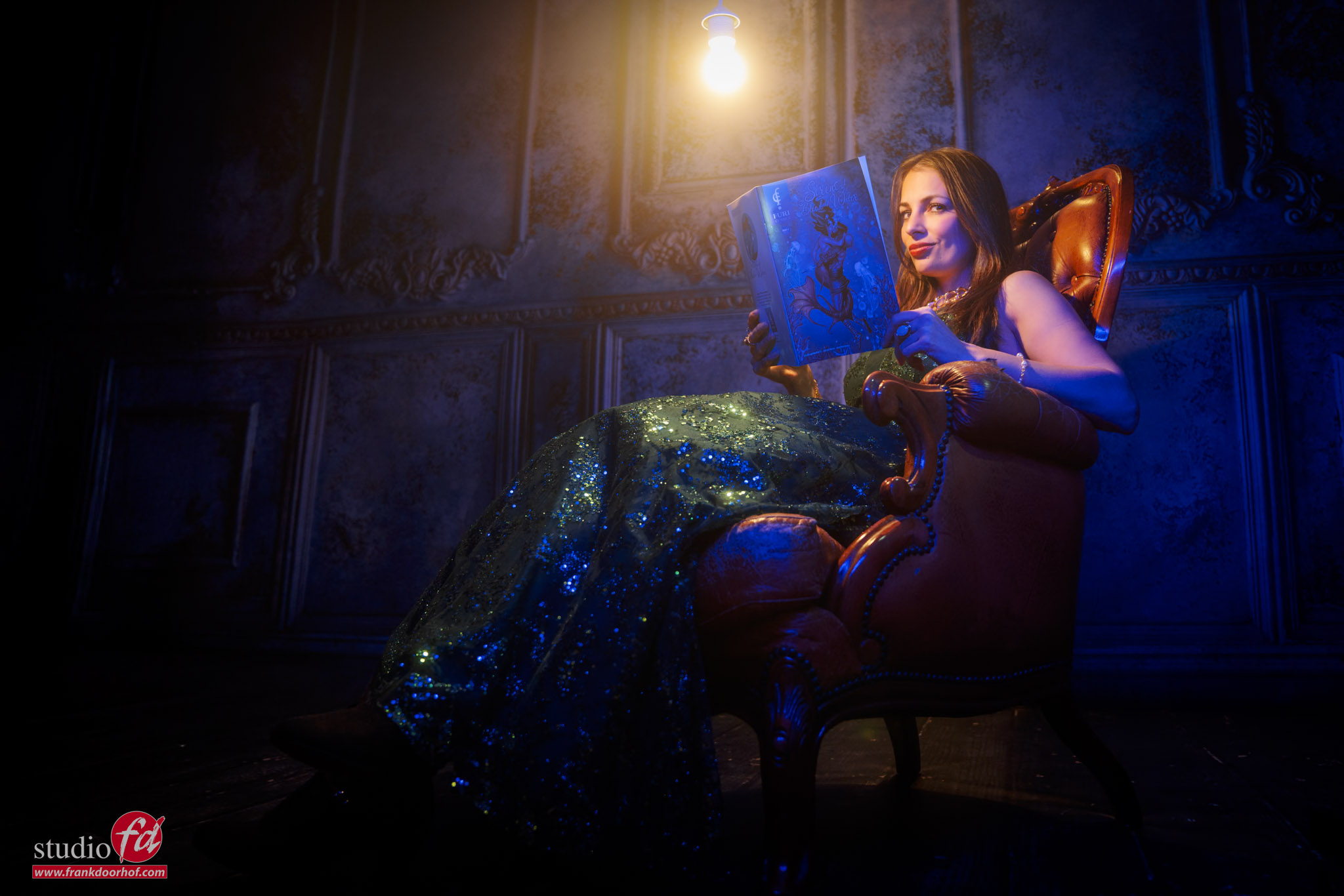
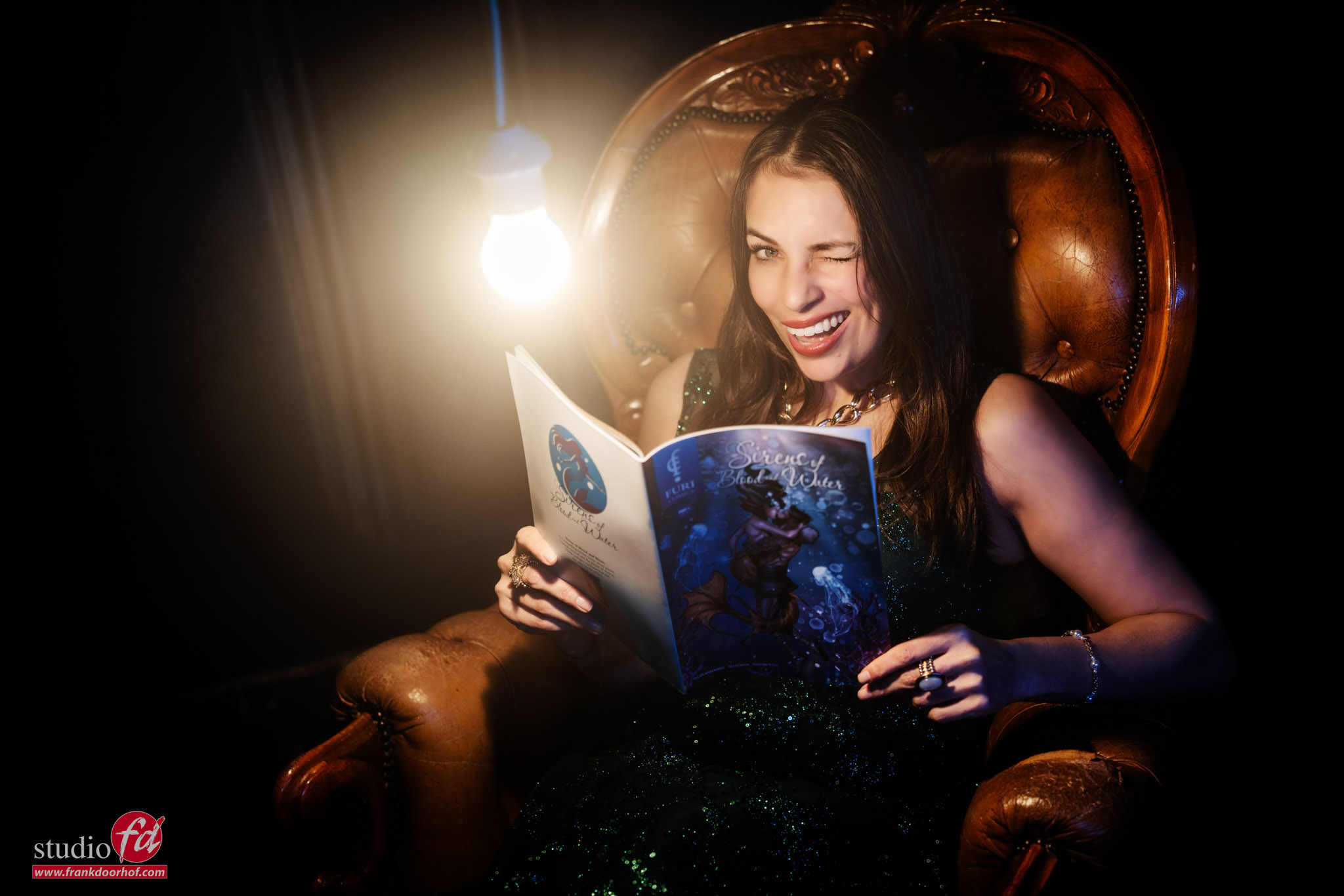
My idea was to place Felisa on a chair, reading her comic.
Lighting-wise, just one light bulb. And don’t underestimate the power of one bulb.
Place it close to the model and you can get some great results.

To open up the shadows on the bottom, we are using a Nanlite LED tube on a very low blue setting, just to add some extra detail and reflection in the dress.

The problem is, of course, the lighting on the comic.

The light bulb is behind the comic, so there is no light hitting it.
Normally, we would grab a snoot, but in this case, we have to rely on alternative light, so one of the attendees held a small torch and kept aiming it at the comic.

Results of just a lightbulb and a comic

I think you will like the results.

Just a lightbulb and a comic

Angles

Although they are nice, they did not really “hit the spot” for me.
And as you probably have read many times from me… change your angle.
These are less interesting, maybe lighting-wise, but I like them a lot more personally. Also, due to the expressions of Felisa, for a comic promo they just work better.
The cool thing… the model can choose what fits her ideas or use them both, of course.

Just a lightbulb and a comic Just a lightbulb and a comic

Conclusion

Never underestimate a light source. You can really create stunning images with light sources that you would probably never thought about. One thing you have to take into account is noise. So make sure you have a nice, large aperture lens, use a tripod if necessary, and use the proper Lightroom noise reduction, or your favorite software, of course.

Workshops

Want to learn everything about light control?
Want to visit a workshop where it’s not just shooting a model with a fixed lighting setup, but see how the setup is built and adjusted to the taste of the group?
And of course learn how to work with poses, backgrounds, small sets, styling, retouching, and a lot more…..

If this all sounds awesome, visit fotografie-workshops.nl and book your workshop.
If you don’t speak Dutch, no problem, let us know a few weeks in advance, and we can switch the workshop to English.
Not possible to travel to the Netherlands?
We got you covered with our 1:1 online workshop.
We have a full streaming setup in our studio. 4 detail cameras and of course the retouching software, so you can see every detail and of course ask questions during the day. Plus, you get all the RAW files after the workshop.