Tag Archive for: wibi soerjadi

A special Christmas concert from Wibi Soerjadi

A special Christmas concert from Wibi Soerjadi

I love concert photography

Just like I love creating my own music, working with musicians is always inspiring, and shooting a live concert is the ultimate situation.
The performance, the music itself, and of course, the lighting.
A live concert is continuously evolving and has a boatload of challenges. This blog is about concert photography with  Wibi Soerjadi in 2025

So let me start by clearing something up.
I’m incredibly lucky in my position with Wibi; we’ve been friends for years, and this means I can move around freely during the concert.

And this is probably the biggest problem with live concerts.
In most cases, you’re lucky if you can shoot 3 songs, or if you’re not the encore.
Often you will get an assigned location, and that’s it, for m,e that’s fun too, but it’s also very limited.

I remember the first time I shot the Christmas concert.

A really special concert

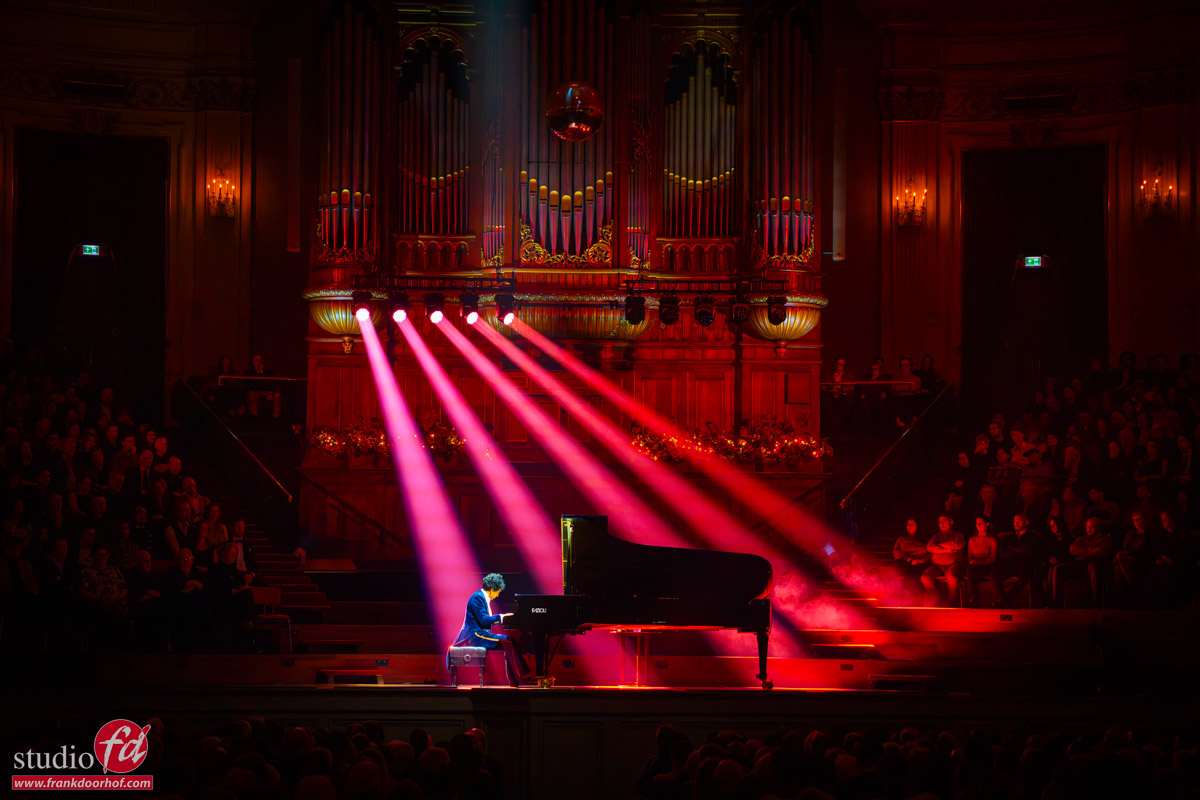
The Concertgebouw in Amsterdam is already a special place (awesome acoustics), but playing there every year for 31 years in a row is something no one has ever done before.
I still remember the first time. Annewiek and I were sitting with the family and friends on the balcony, and I was shooting with a 70-200, just being able to shoot some “nice” shots of the stage, and with a wide angle, some images from the audience. It was not a lot more than what you can do with your phone nowadays.
The lighting was ok, but standard.

At one point, we started to brainstorm how we could have some fun and great images during this special concert.
And if I remember correctly, I said (as a joke) “Dude, I can get awesome shots when I’m under the piano, nobody does that.”
And yes, that was a joke, you might not realize this, but in reality, I’m a pretty shy guy, so when he said “awesome next time we do that,” I thought he was joking.
He was not.

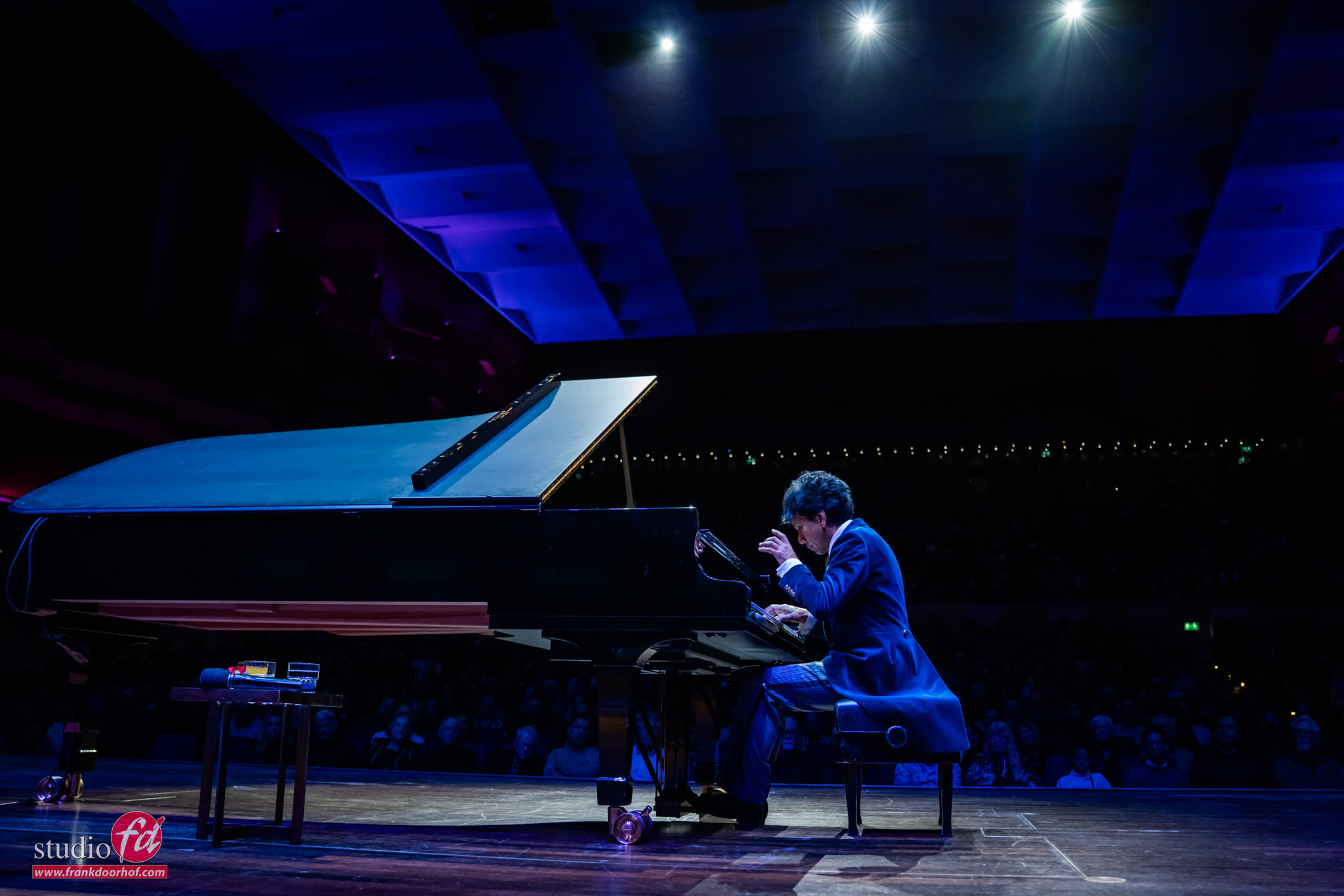
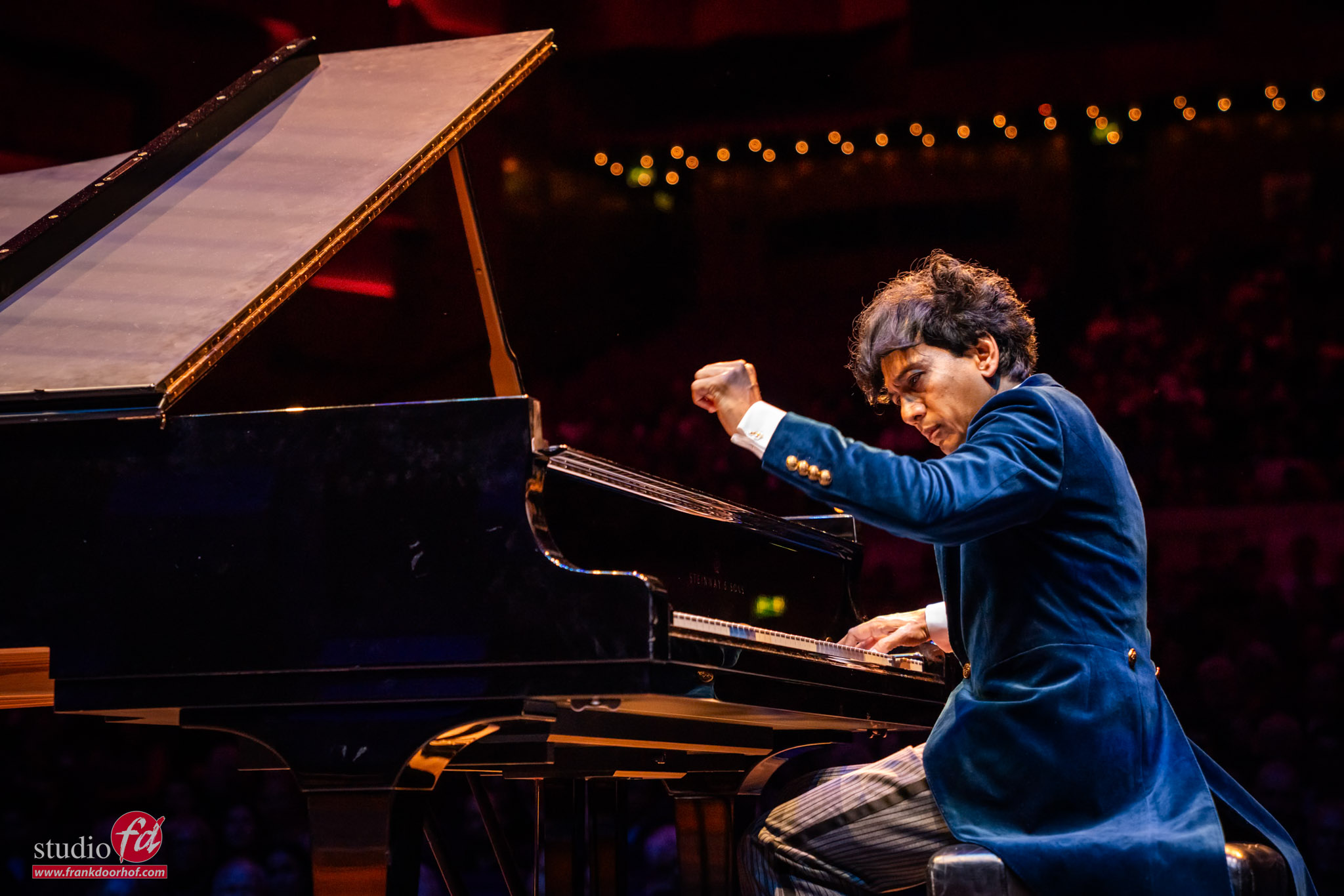
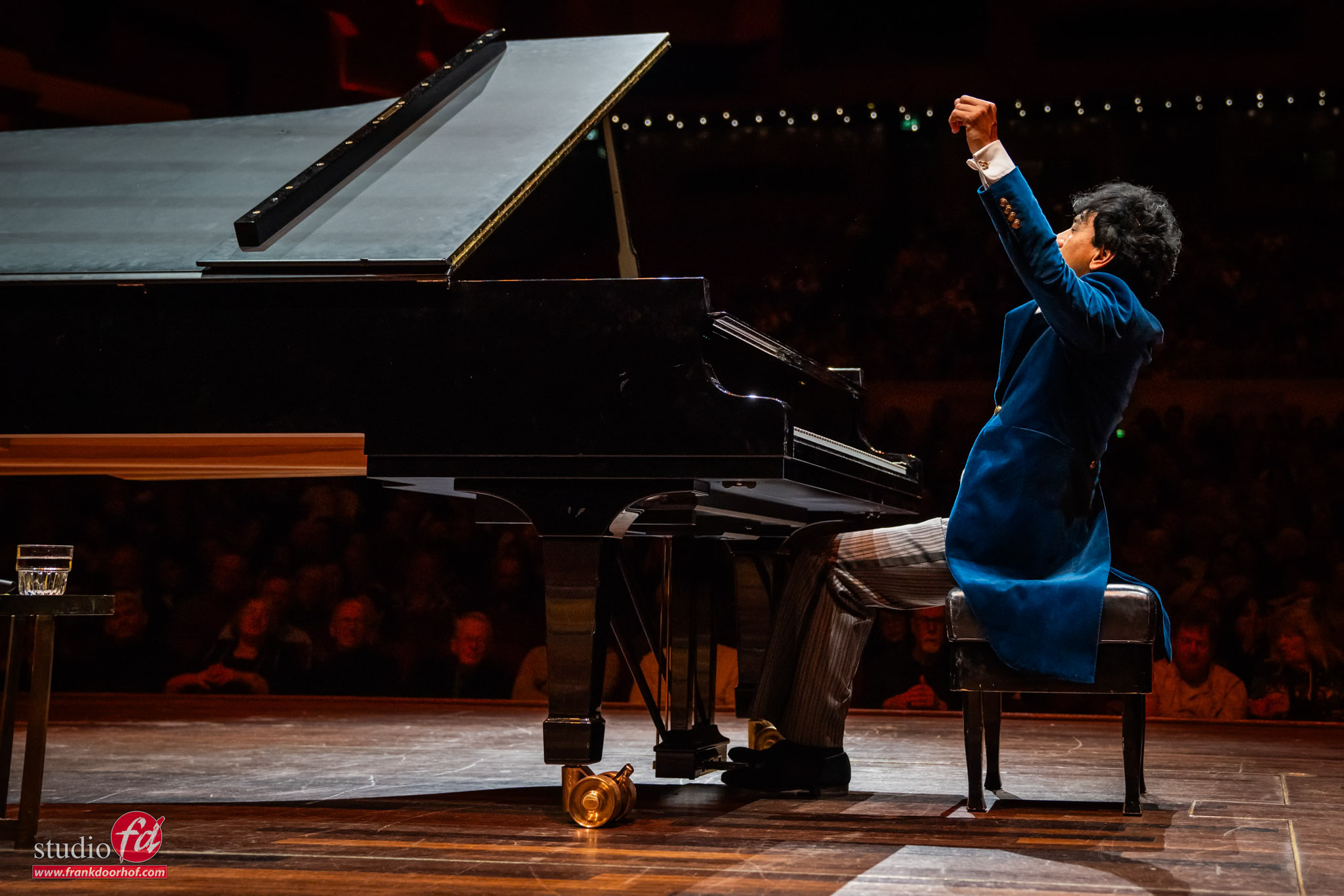
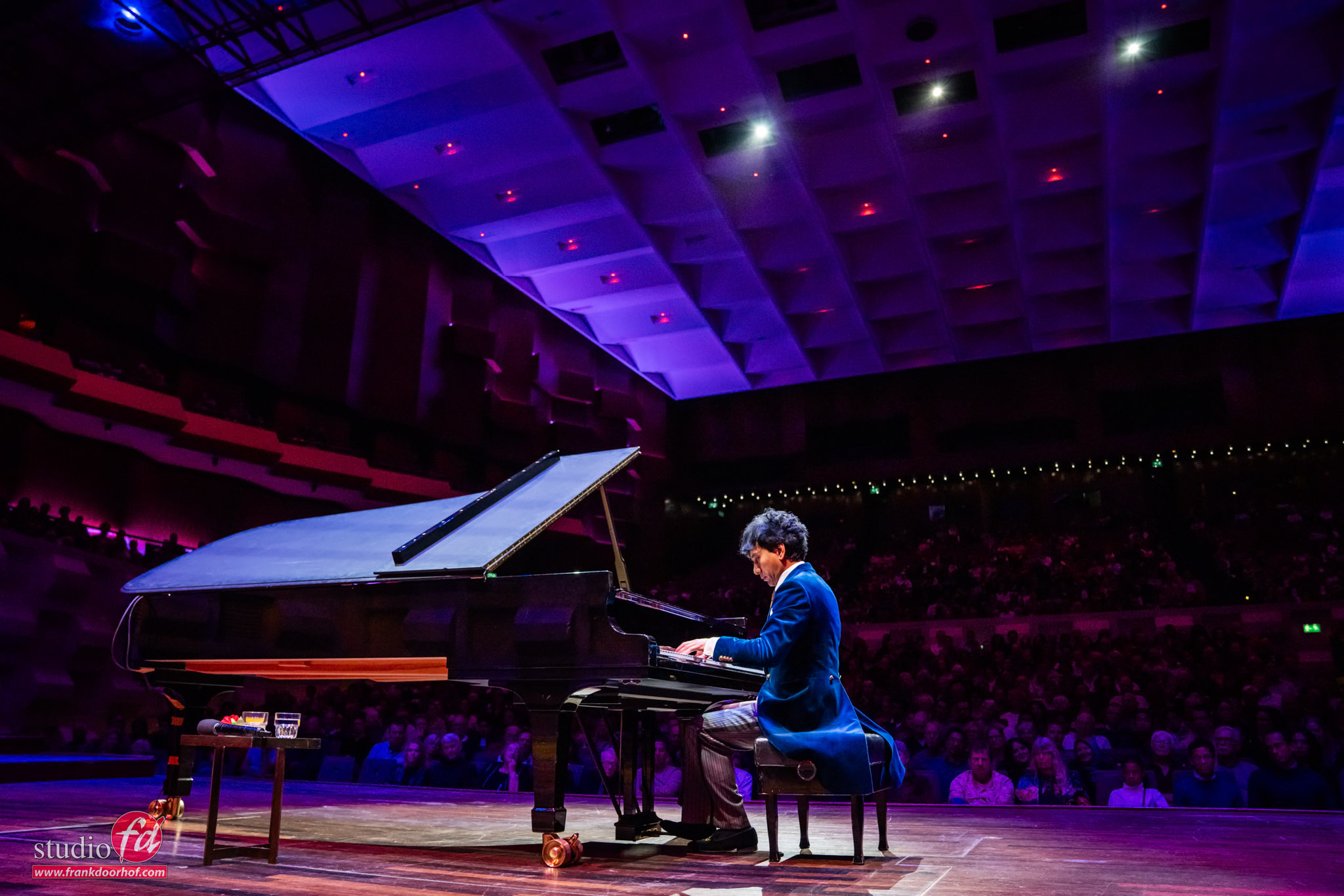
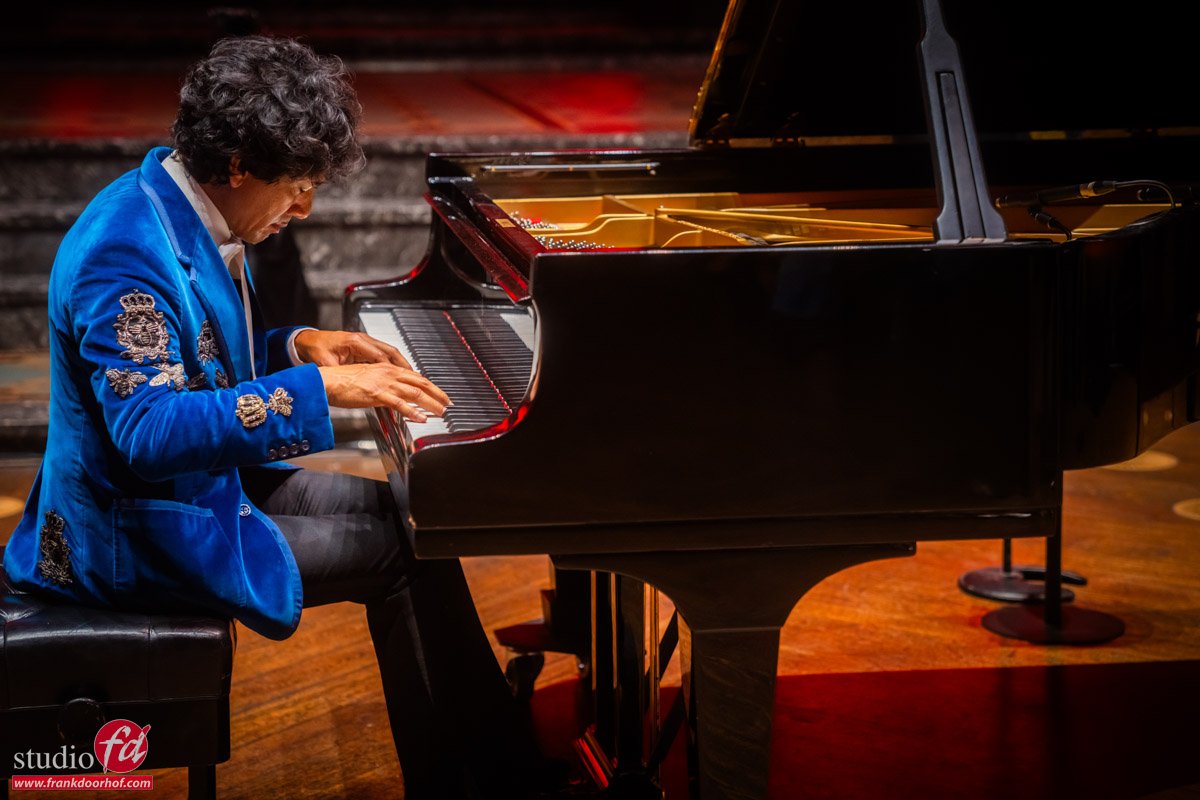
I did not end up under the piano, but I did end up less than 1 meter away from Wibi on the stage.
Let me clarify immediately that this is NOT allowed in ANY situation except when you have a 100% confirmation from the artists AND the venue.
I still remember a few times being escorted out of the room, after which I was allowed back in again, of course.
Over the years, this has become a lot easier; you get to know the people, and they get to know you, which helps a lot.
If you want one tip from this blog post (besides the photos).

Always be nice to all people (especially at concerts)

You might think you are working for the artist, but always remember that people in the venue paid a lot of money for the tickets. So, having a photographer running around, standing in front, and using a camera with focus assists (beeps and search lights) is incredibly annoying, and it will 100% get you banned, no matter how close you are with the artist.

I have a few things I always follow.
First of all, get to know the security and stage assistants. They will help you move around the venue MUCH faster and easier.
In my case, I always try to know what’s going to happen. Where are the breaks when I can move to another location? Where is the perfect spot for lighting in set 2, etc?
Do your homework.

Respect the audience at a concert

But most of all, earn the respect of the audience.
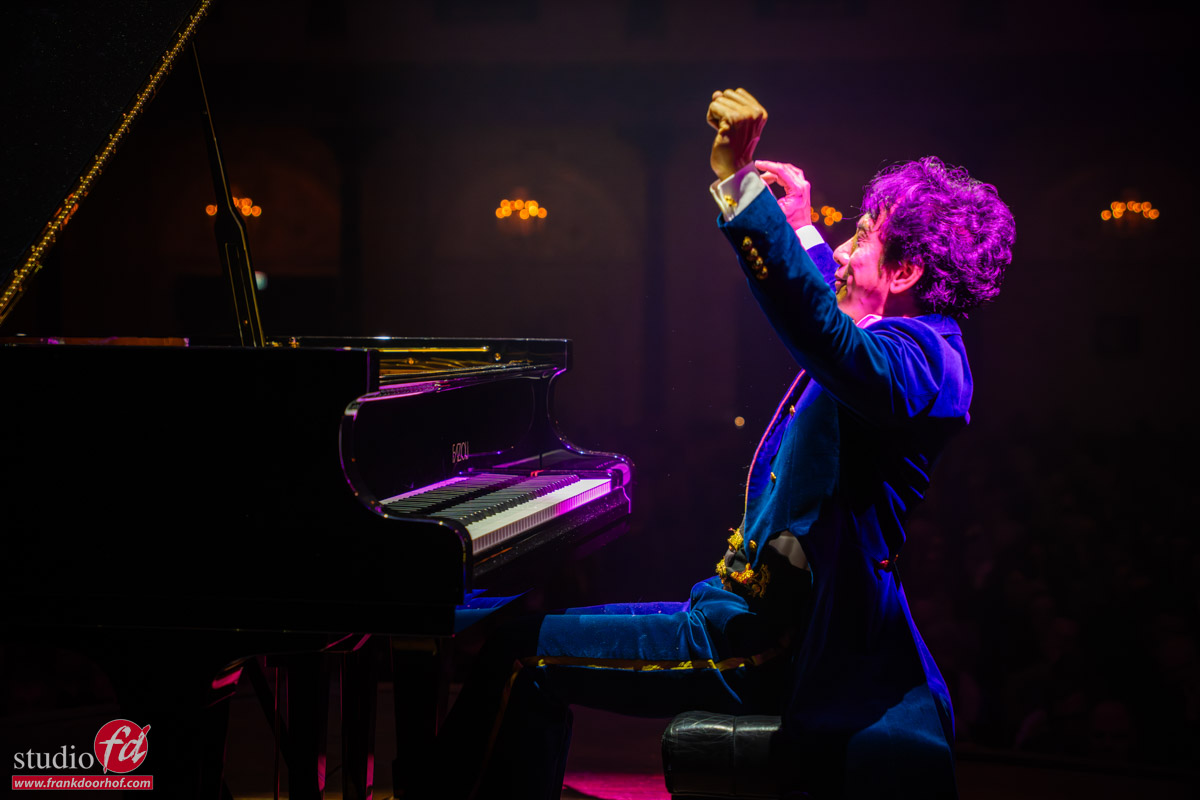
I will normally start on the stage close to Wibi for the first part of the concert.
If there is an audience there, I will start to introduce myself before the concert. Take some photos of the people with their phones, and just make sure they know I’ll be there working.
Over all these years, I’ve never had a problem, and the fun thing is that a lot of people know me by now and actually help out with getting a good spot, especially at the encore. This helps a lot because at that moment I’m literally in front of the front few rows of the audience.

Of course, there are also video cameras running.
In most cases I will check the display and see when I’m in the frame and mark that spot on the floor.
If there are several cameras, I’ll still try to stay out of the frame but will ask permission to sometimes block the view (but only when necessary, in most cases, you just use a different angle or zoom in just a bit more). But there is more to tell about Concert Photography Wibi Soerjadi 2025

Camera and lens choice

Over the years, a lot has changed with the concerts I shoot for Wibi.
When I started, it was all pretty standard with the lighting. If I started on the stage and moved around the venue ,it was purely to get more variety in the angles.
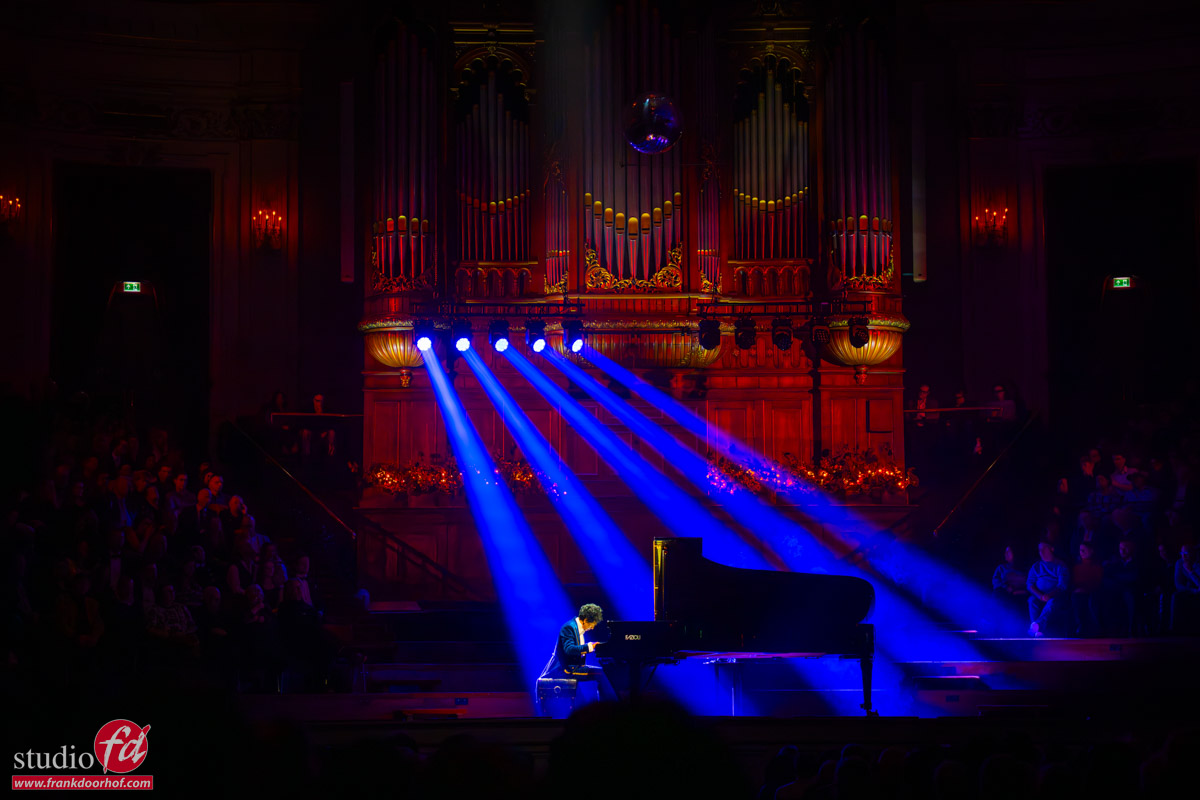
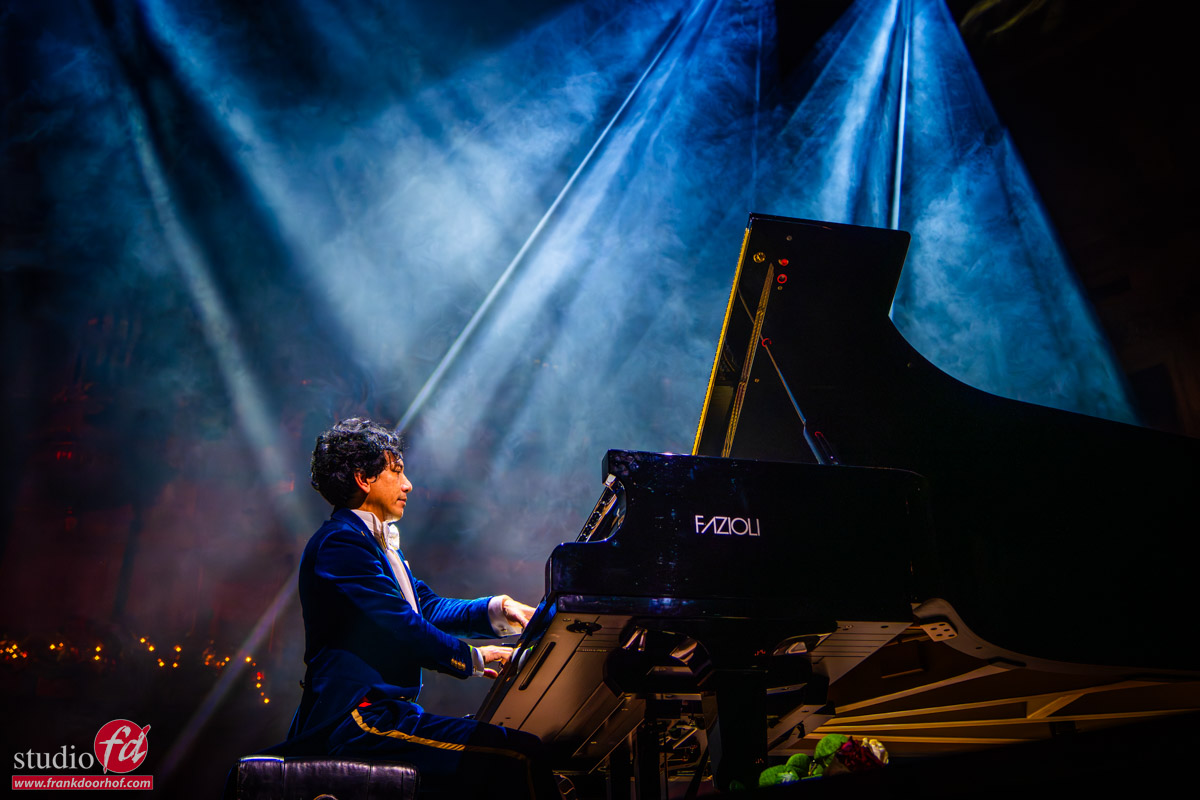
When I look at the images I shot this year, it’s a totally different ball game, and sometimes I have the feeling Wibi is secretly pushing me to test the limits of my gear.

I’m using the Sony A7RV and as a main lens the 24-70 F2.8 G-master, which is a razor-sharp lens with super accurate and fast focus.
You have to realize that during the concert, I’m in silent mode and have all focus assist functions disabled. I immediately notice the difference when I switch to my backup lens, the 12-24 Sigma, focus becomes hit and miss, and most of the time the camera really struggles. Don’t get me wrong, I LOVE that lens, but with these kinds of situations it’s not a lens I trust like the Sony, but it does get me some jaw-dropping results.

Lightroom

Software-wise, I’m using 100% Lightroom.
Because I have to be able to freeze the hands (he’s fast), but the dynamic range is “insan,e” I often shoot 2 stops under exposed, and ISO is often hitting the 32-64K.
Which in the past meant I had to scrap certain images due to excessive noise, great for black and white, but terrible for commercial work.
Nowadays, I don’t really worry about noise anymore. In this case, all images went through Lightroom noise reduction, and when it’s really bad (or if you missed focus slightly) I can always use software like Topaz PhotoAi, but in this case, all was done in Lightroom.

Setting-wise, I’m still using the center focus point, focus, compose, and shoot.
I’ve tried face recognition, and in all honesty, it works, but I feel much more confident doing it manually. There is no way to ask to do it again 😀

Ok, enough talk, let’s take a look at the images

Because I’m allowed to shoot the whole concert, I have a certain idea in my head.
You can focus on just the performance, but often the images in between are much more important for the artist.
These are the shots that are often not published but also not taken by the “real concert photographers” because they do not have the opportunity to shoot them.

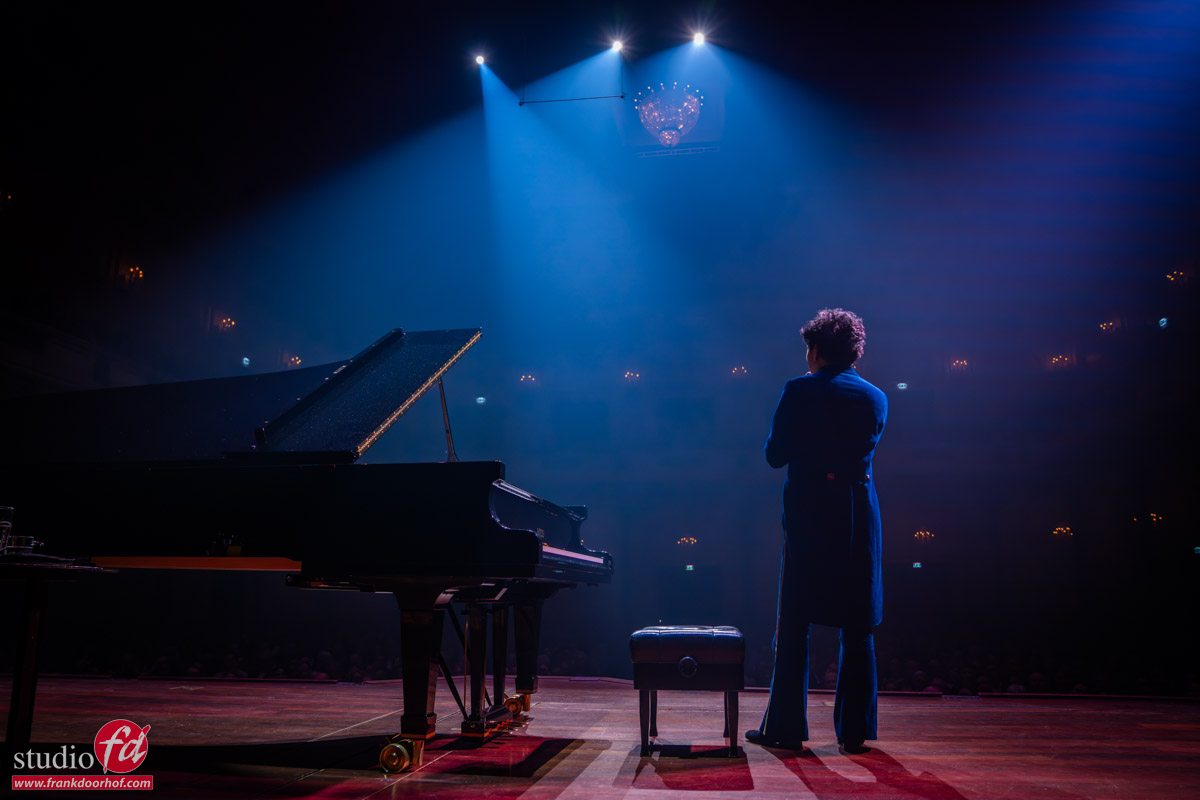
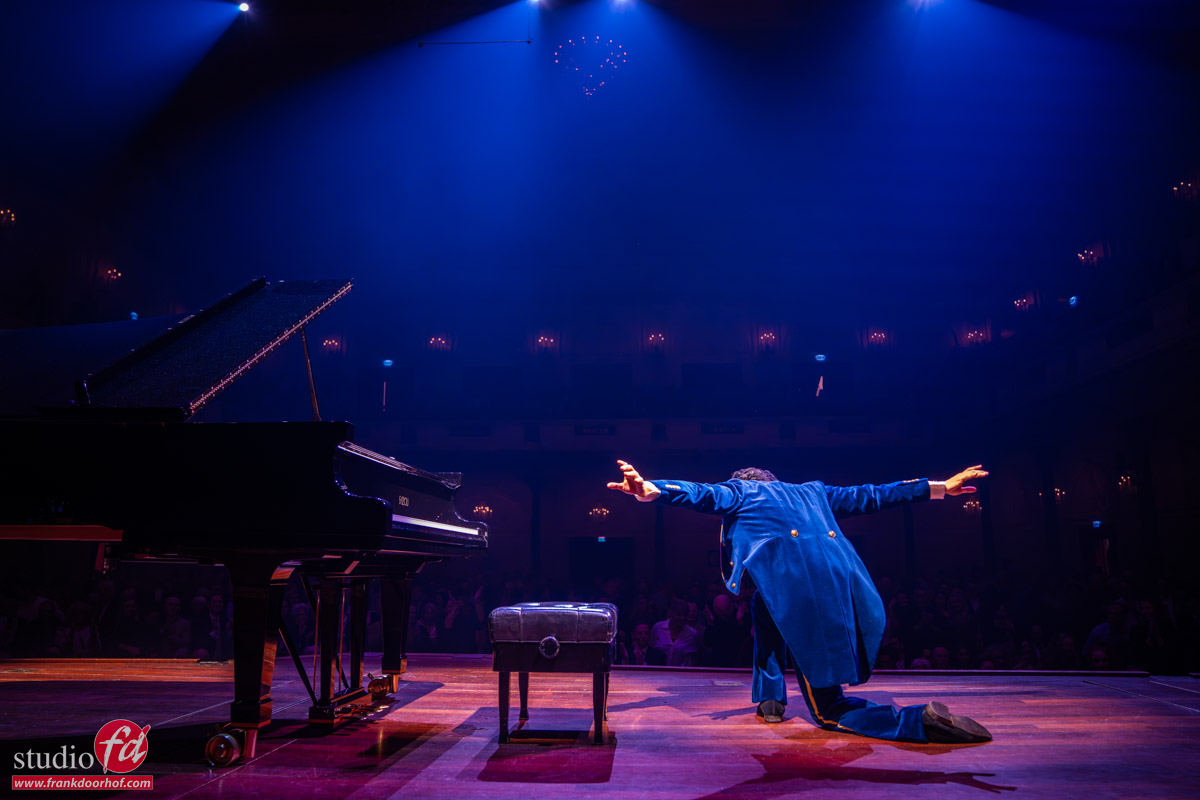
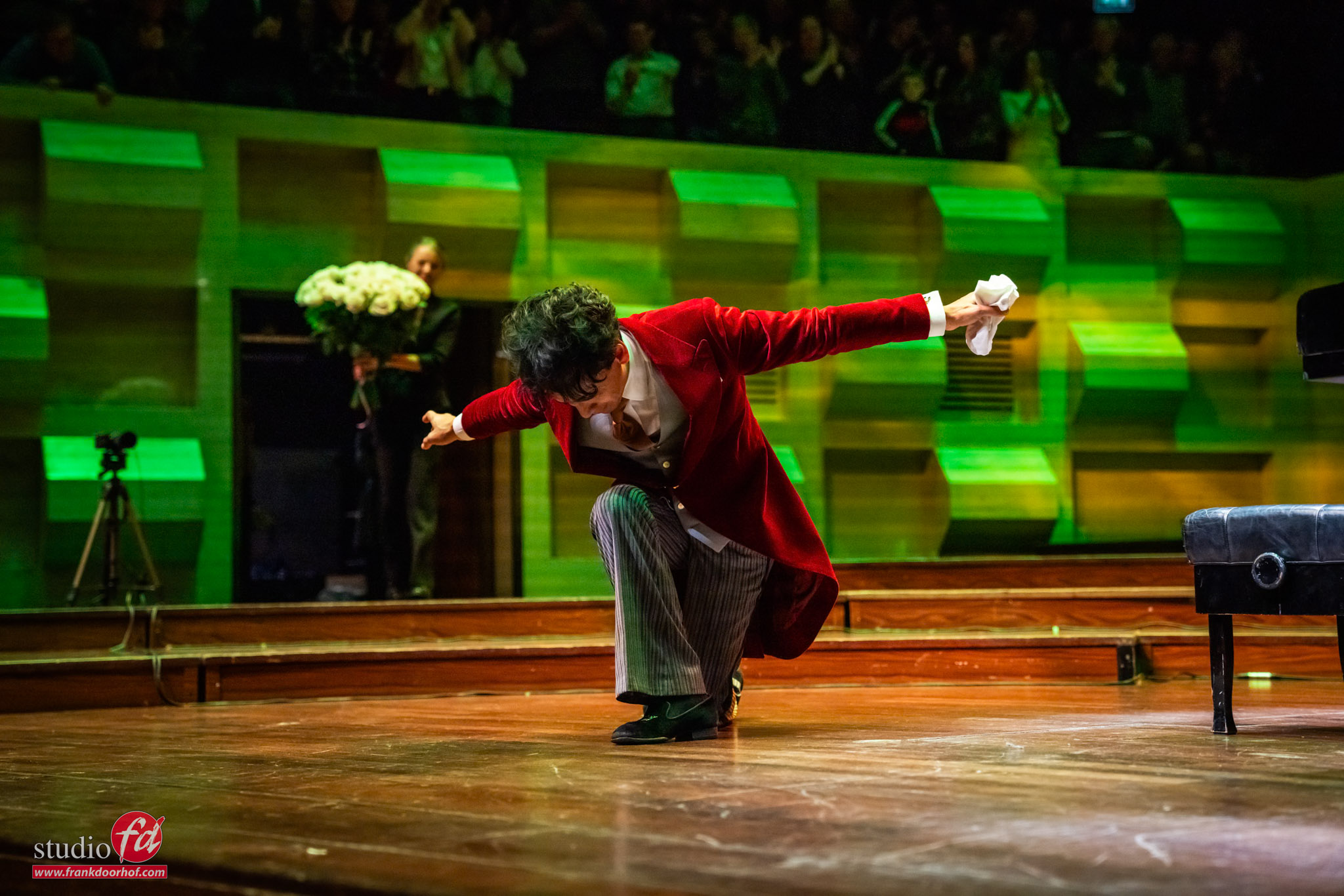
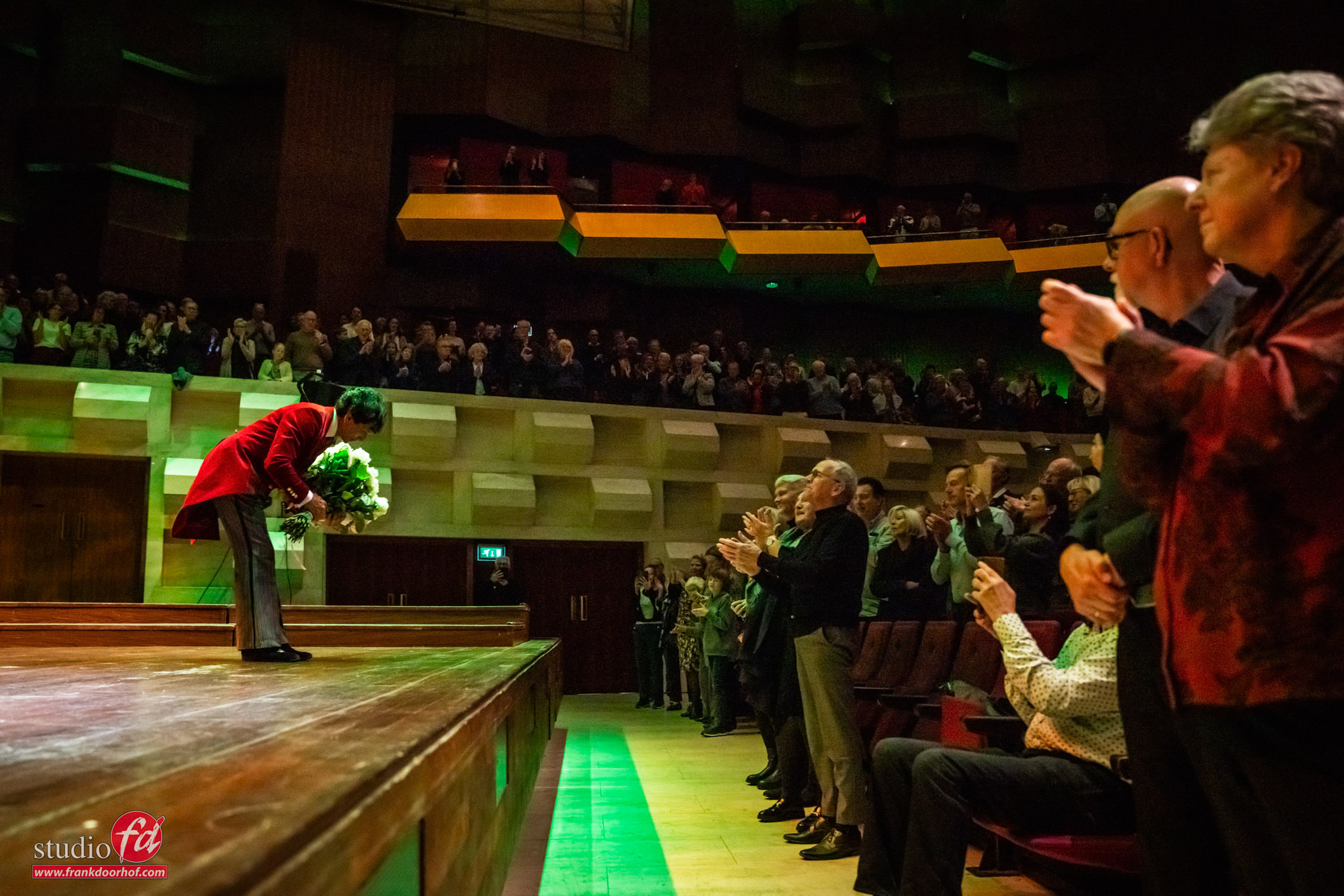
For me, the moment Wibi arrives on the stage is one of those shots, but also the moments he bows for the audience, and one of the things I love about Wibi is that he always takes time to explain what he’s playing, and of course , these shots tell the complete story.
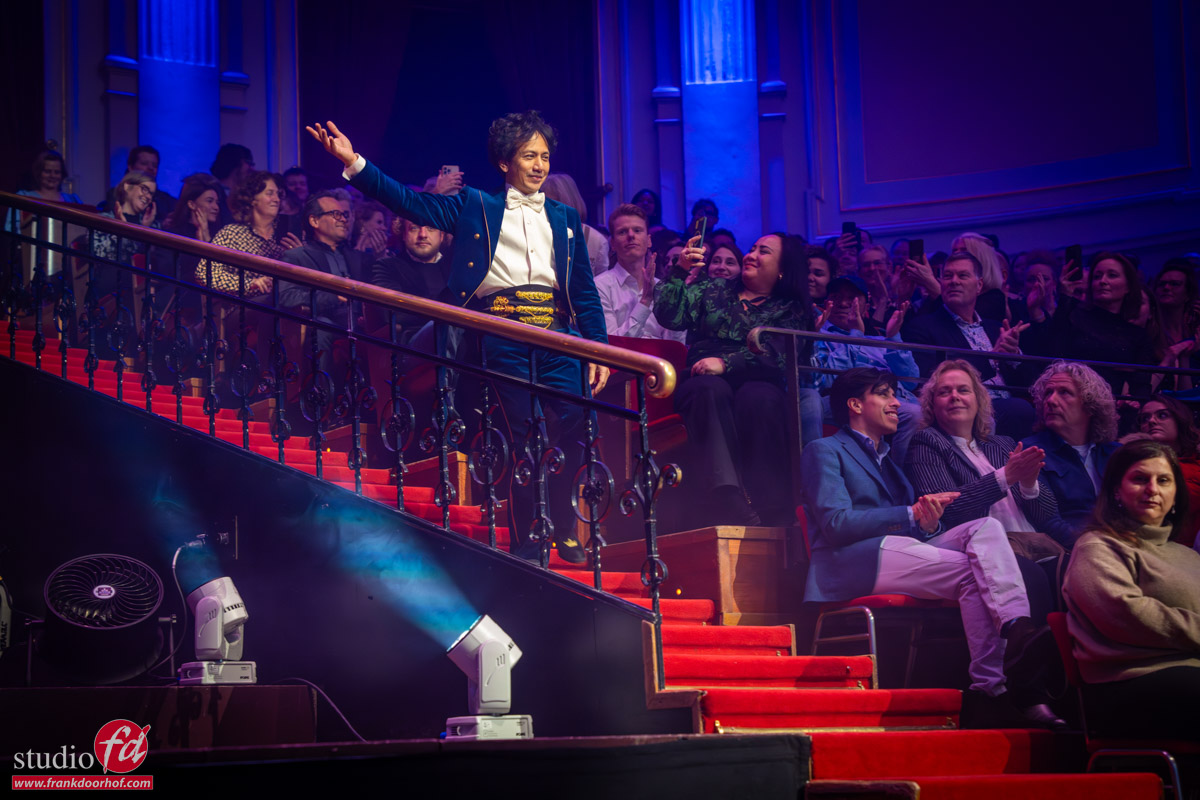
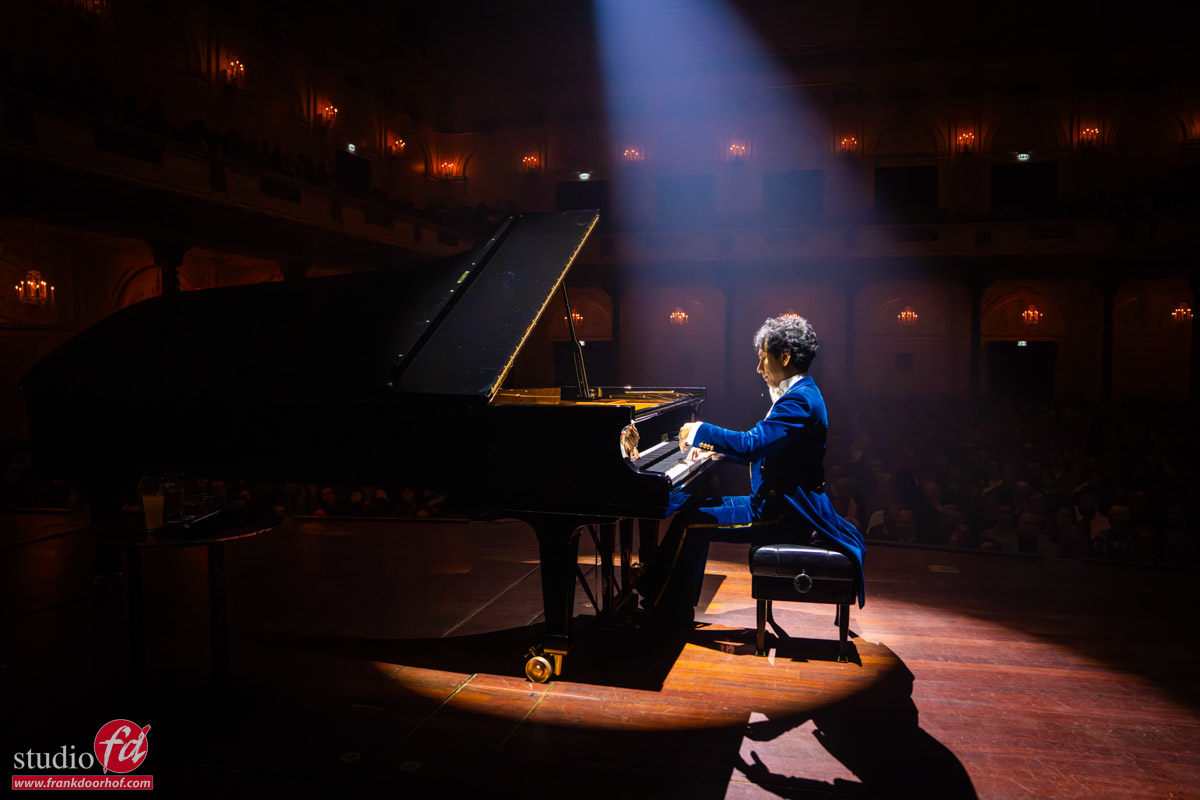
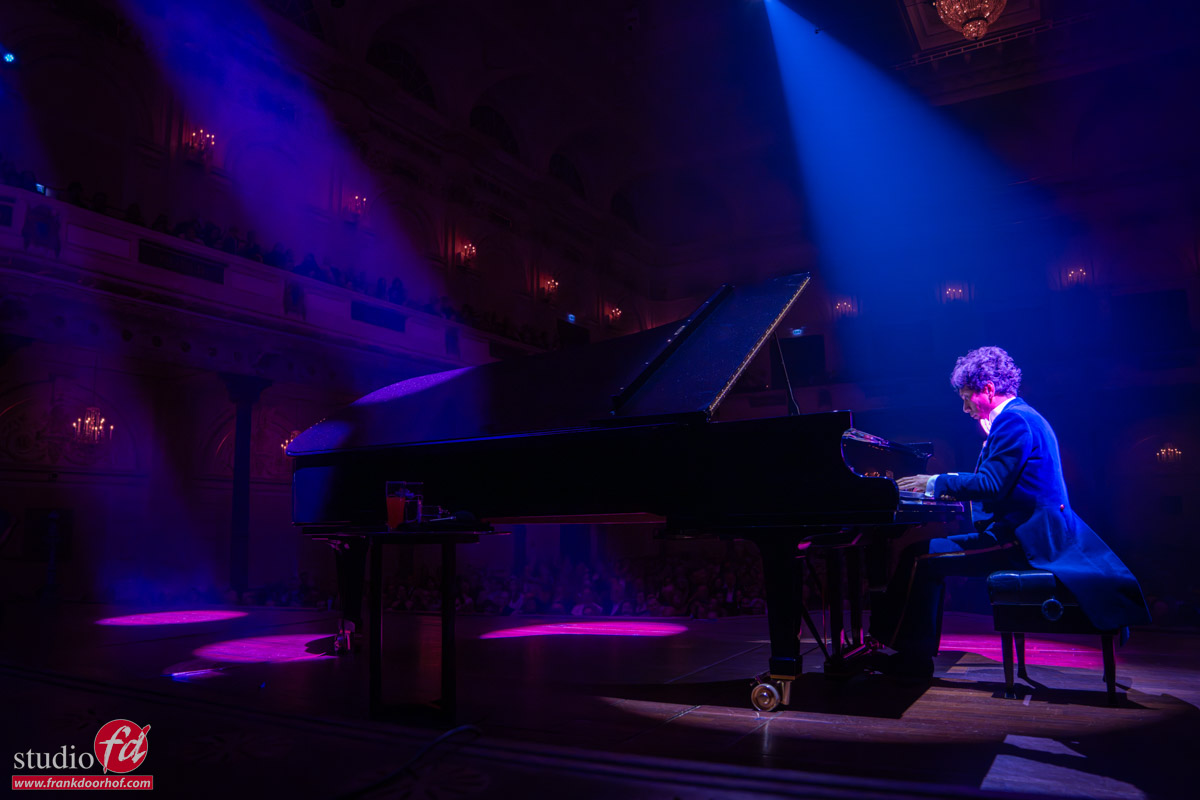
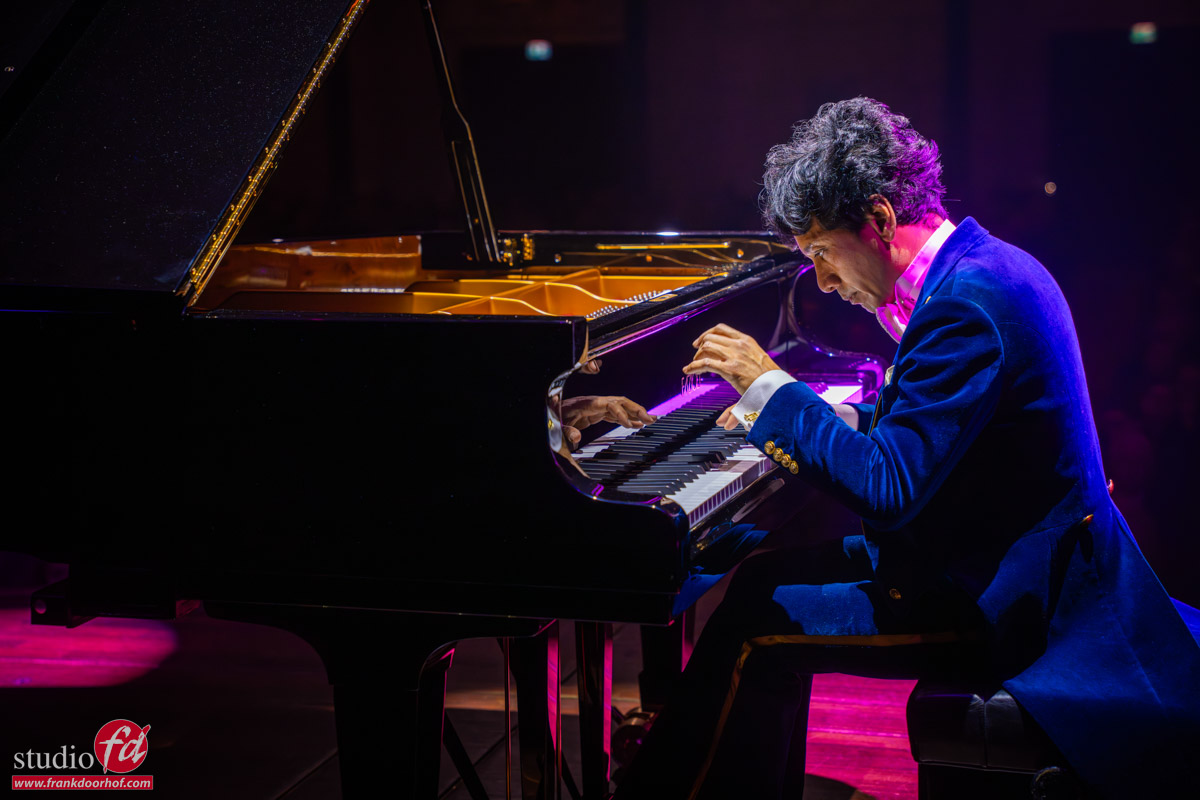
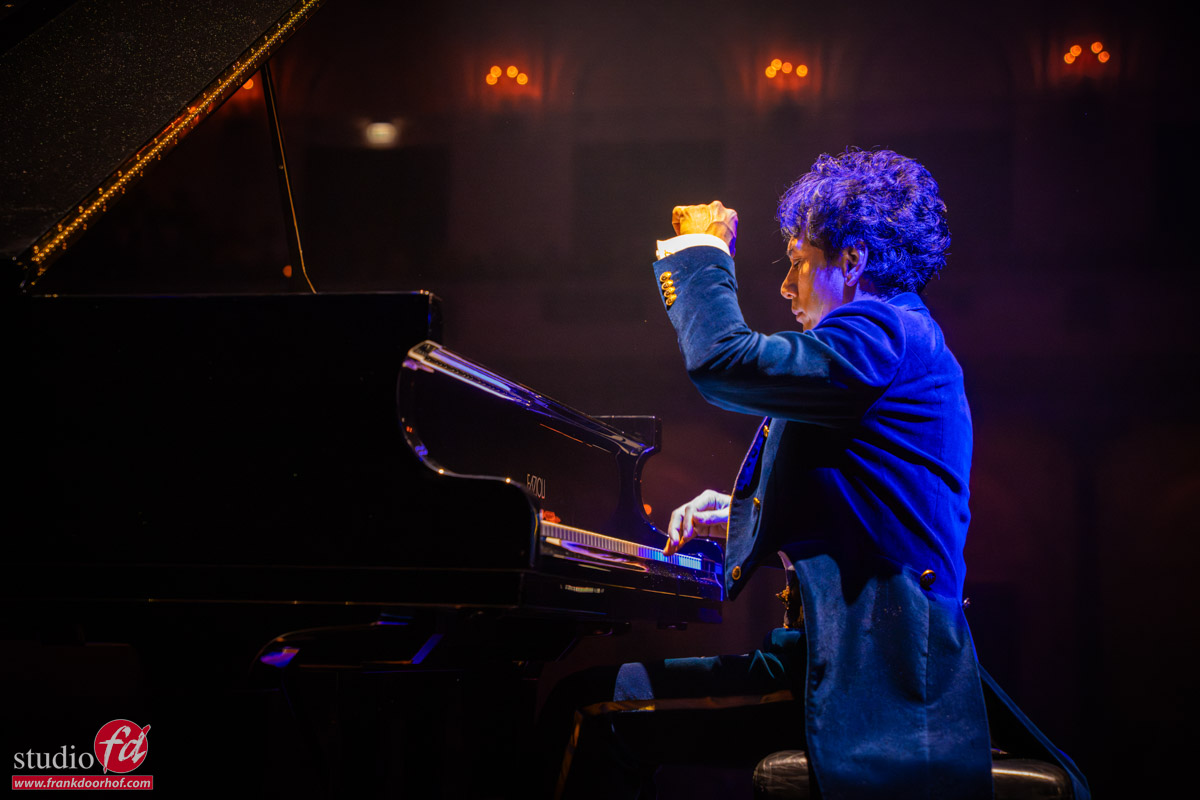
Concert Photography Wibi Soerjadi 2025

In this blog, I show you a very small collection of the results.
In the end, we ended up with 180 commercially viable shots.

The bow and stories

A very important part of the concert is thanking and talking to the audience.
So these have to be in the story, of course.
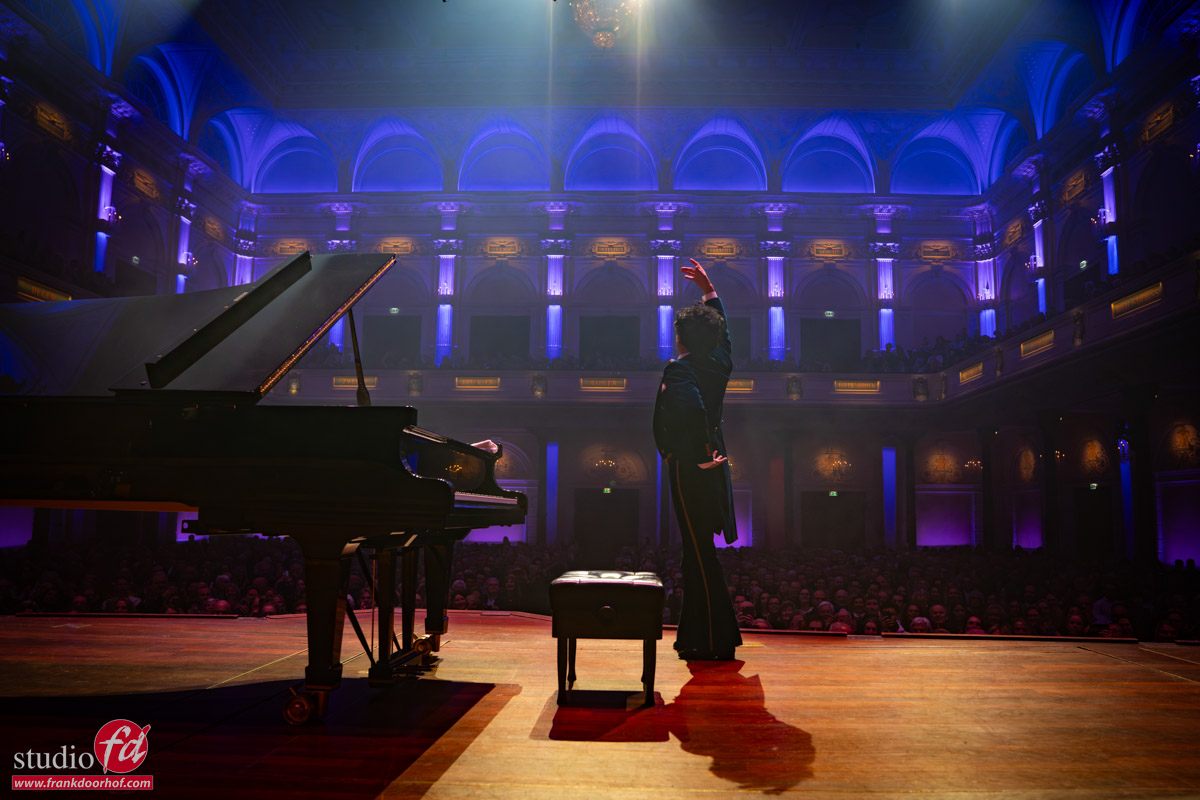
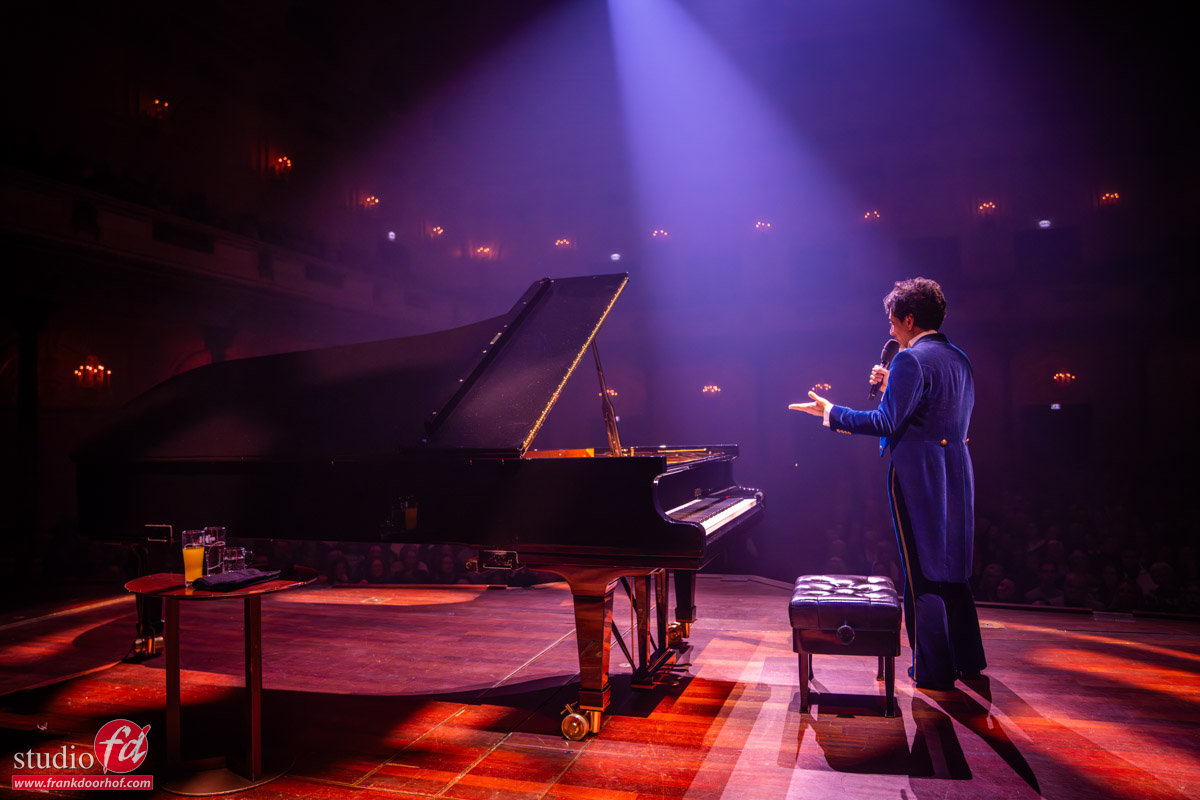
Concert Photography Wibi Soerjadi 2025\

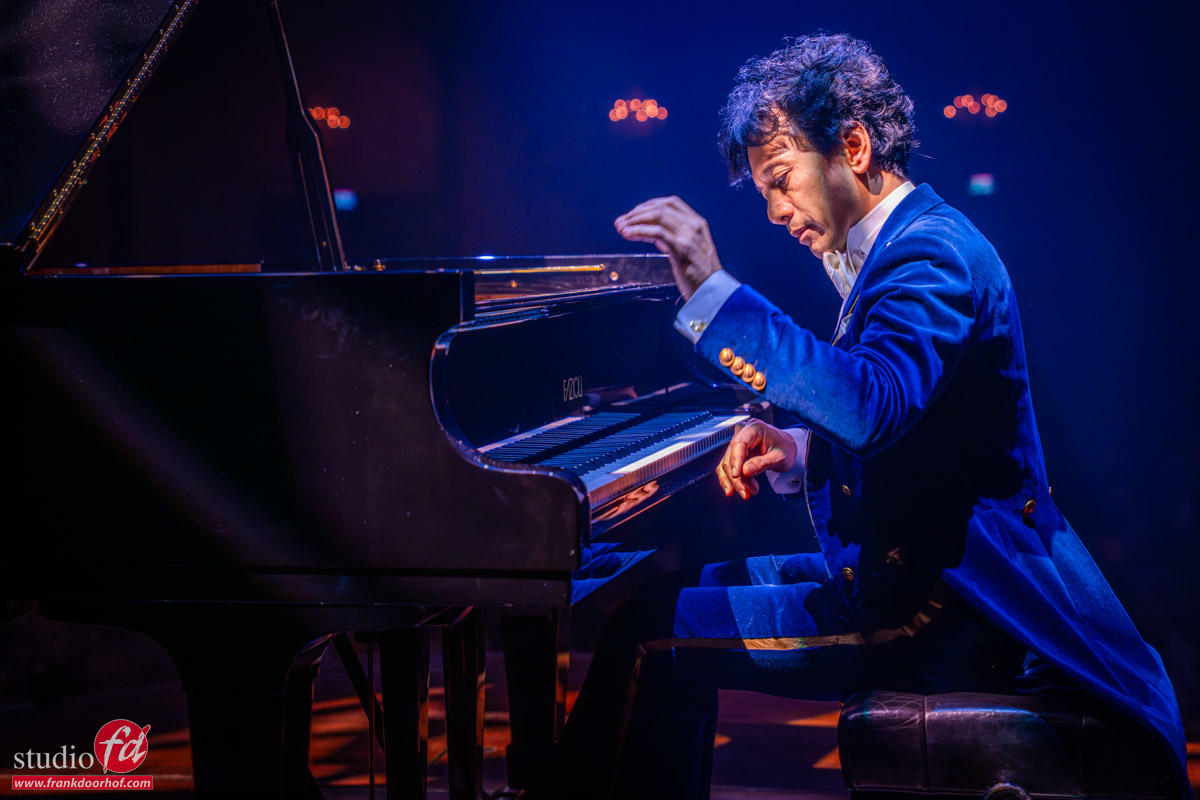
Close ups

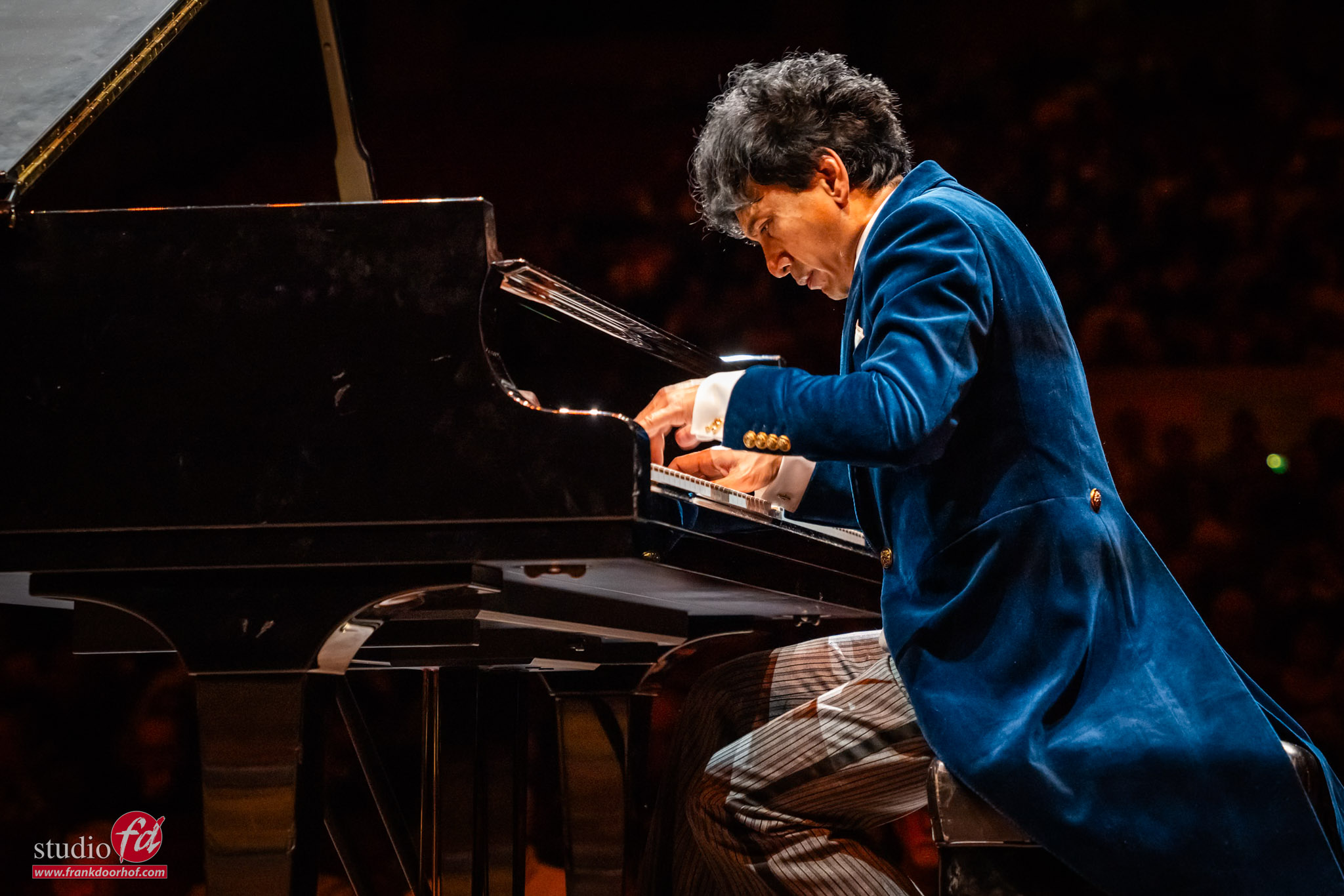
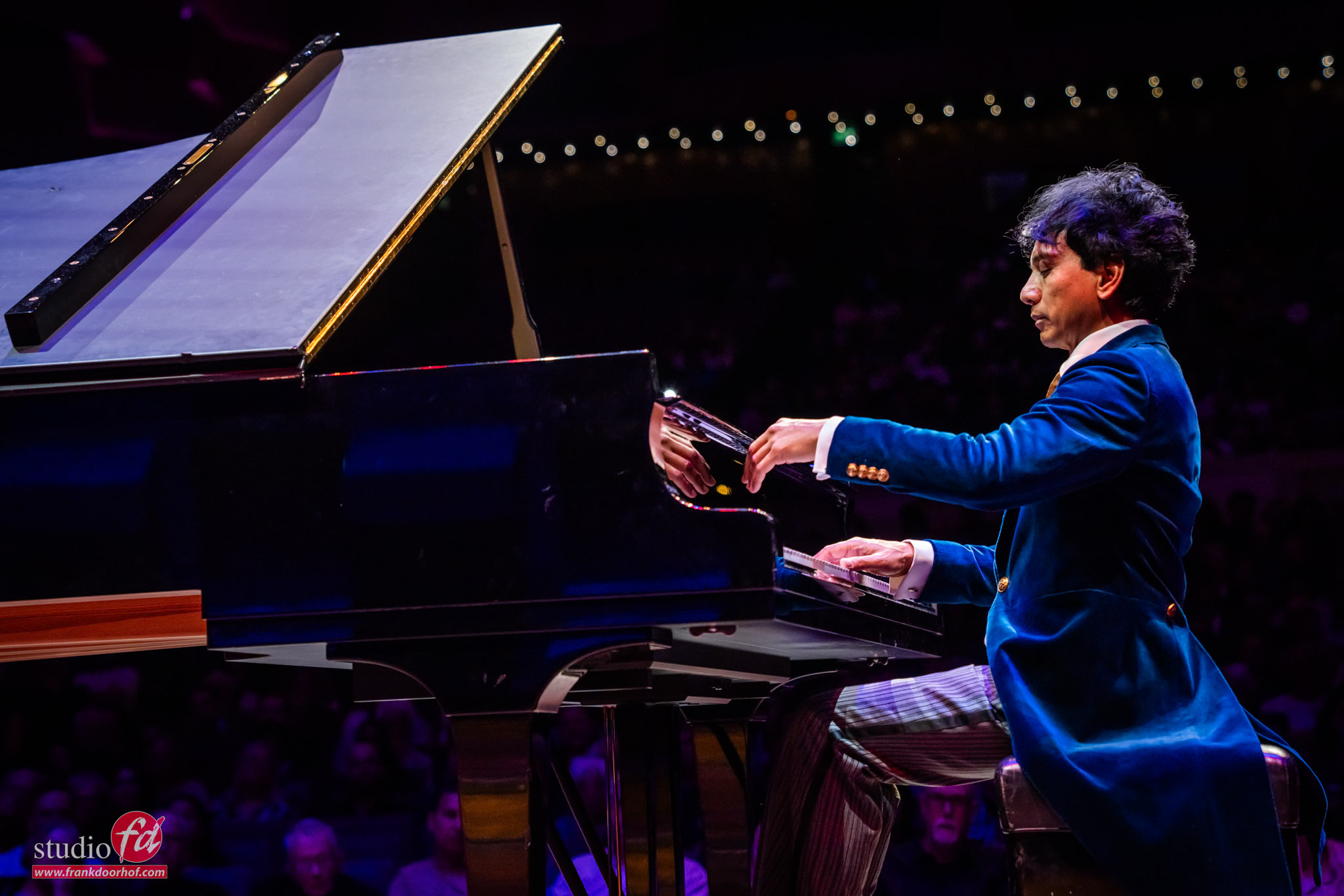
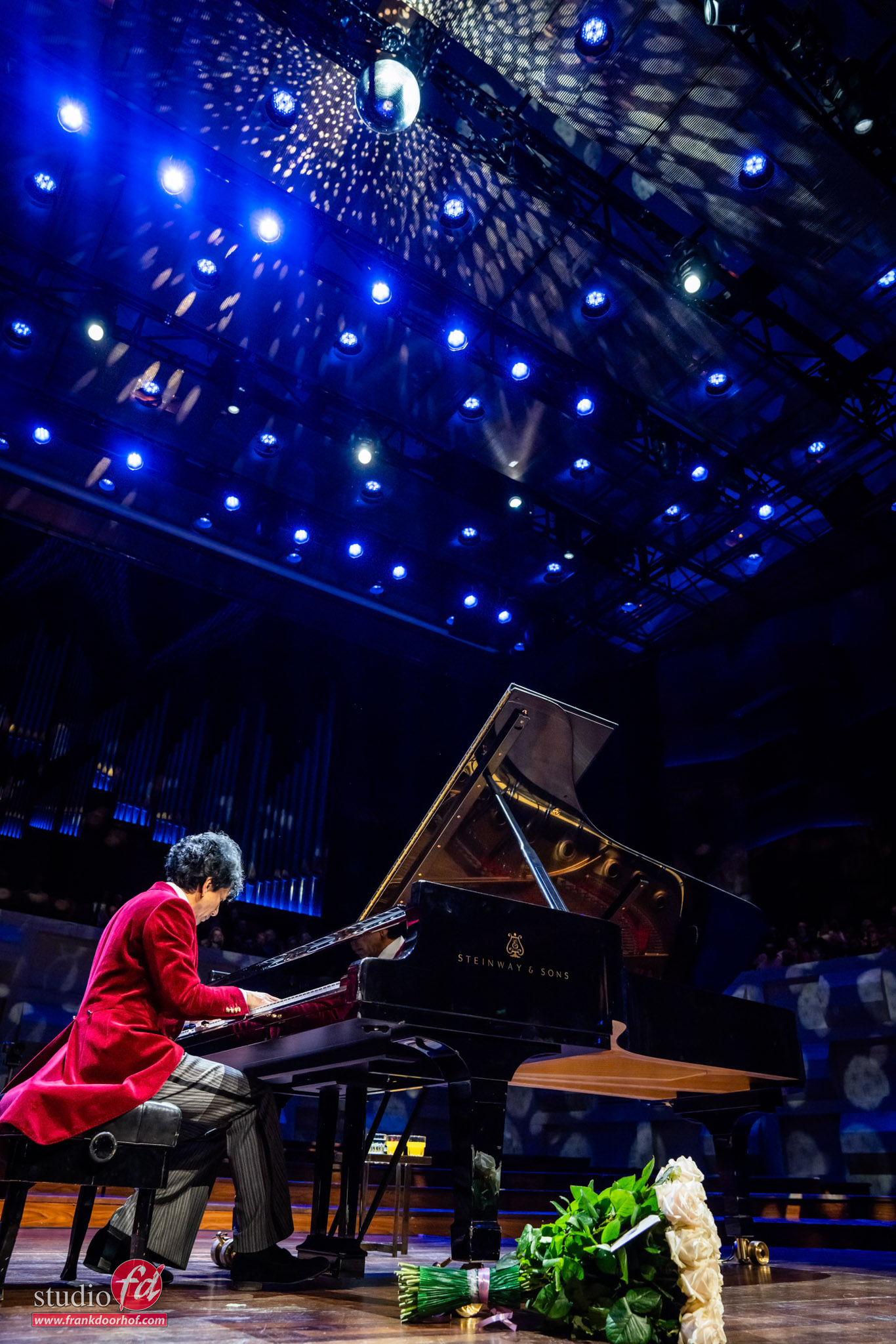
The first part of the concert I’m shooting from the stage and switching between the wide-angle and a standard lens.
In all these years, I’ve been super quiet, but this year…..
The lens hood of my Sigma is a bit loose, and you guessed it…. I dropped it when switching, of course, during a silent part. In my nightmare, it rolls down under the piano pedal, but in reality, it just dropped down. I thought nobody would have heard it… But you remember that awesome acoustics of the Concertgebouw…..
During the break, I moved to the balcony, and while talking to a nice gentlema,n he asked me “did you drop your lens?”…… no hiding 😀
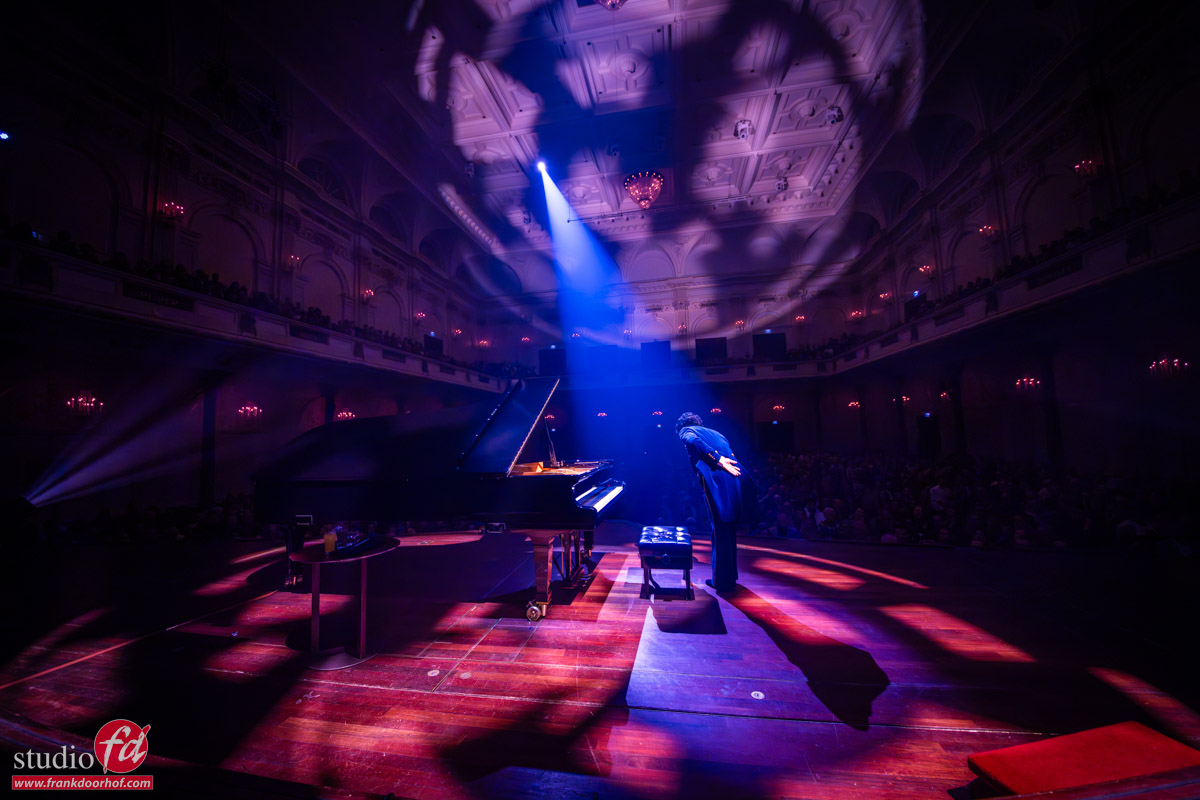
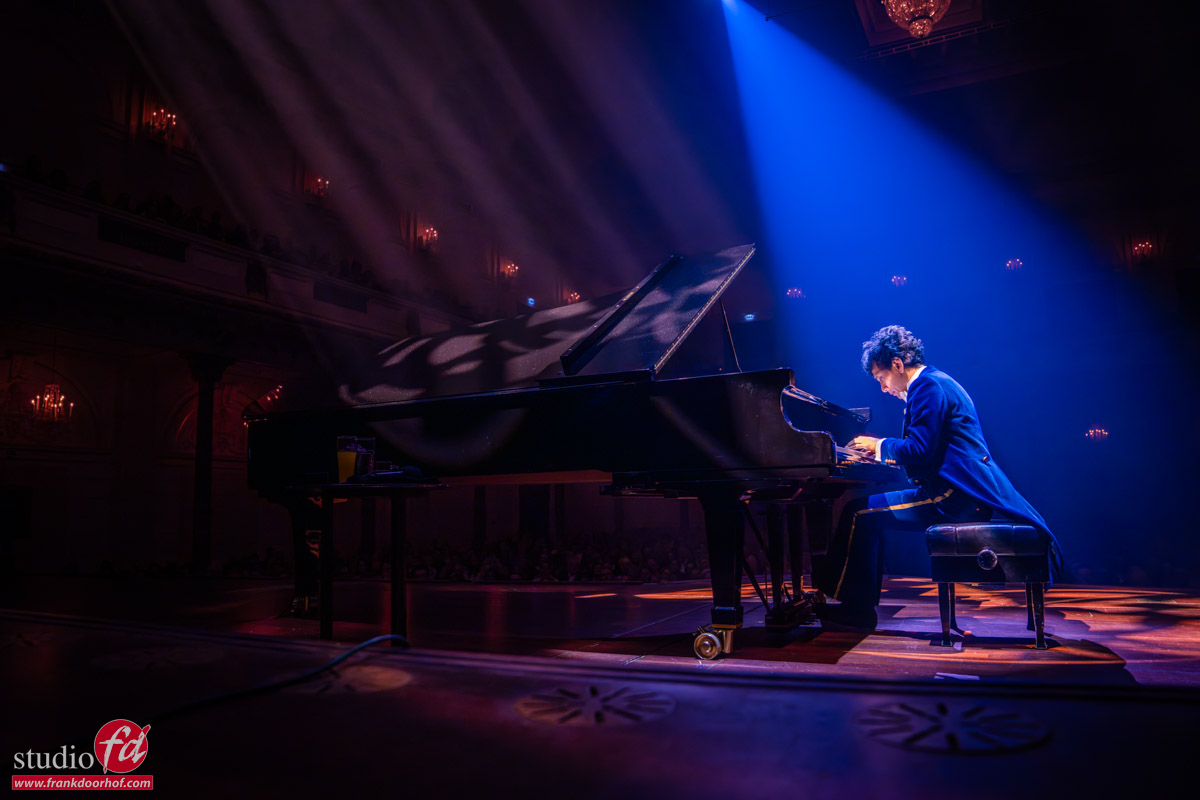
Concert Photography Wibi Soerjadi 2025

The balcony

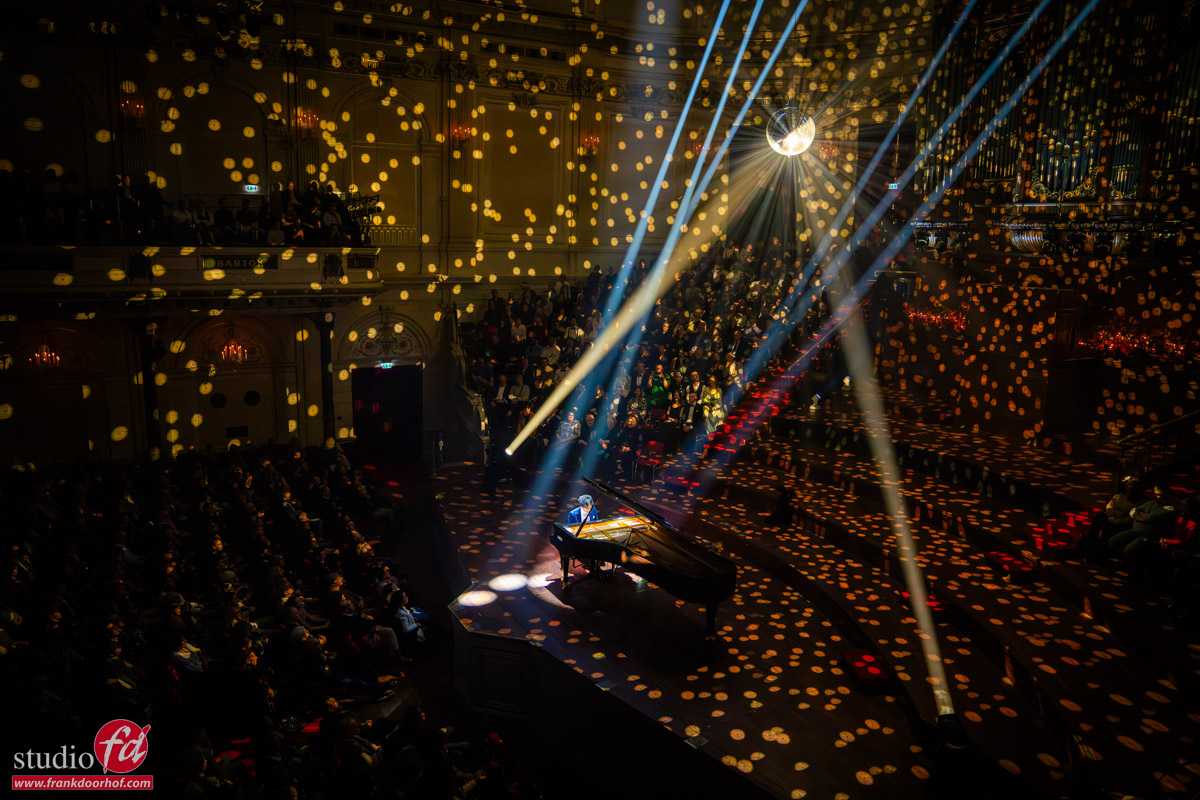
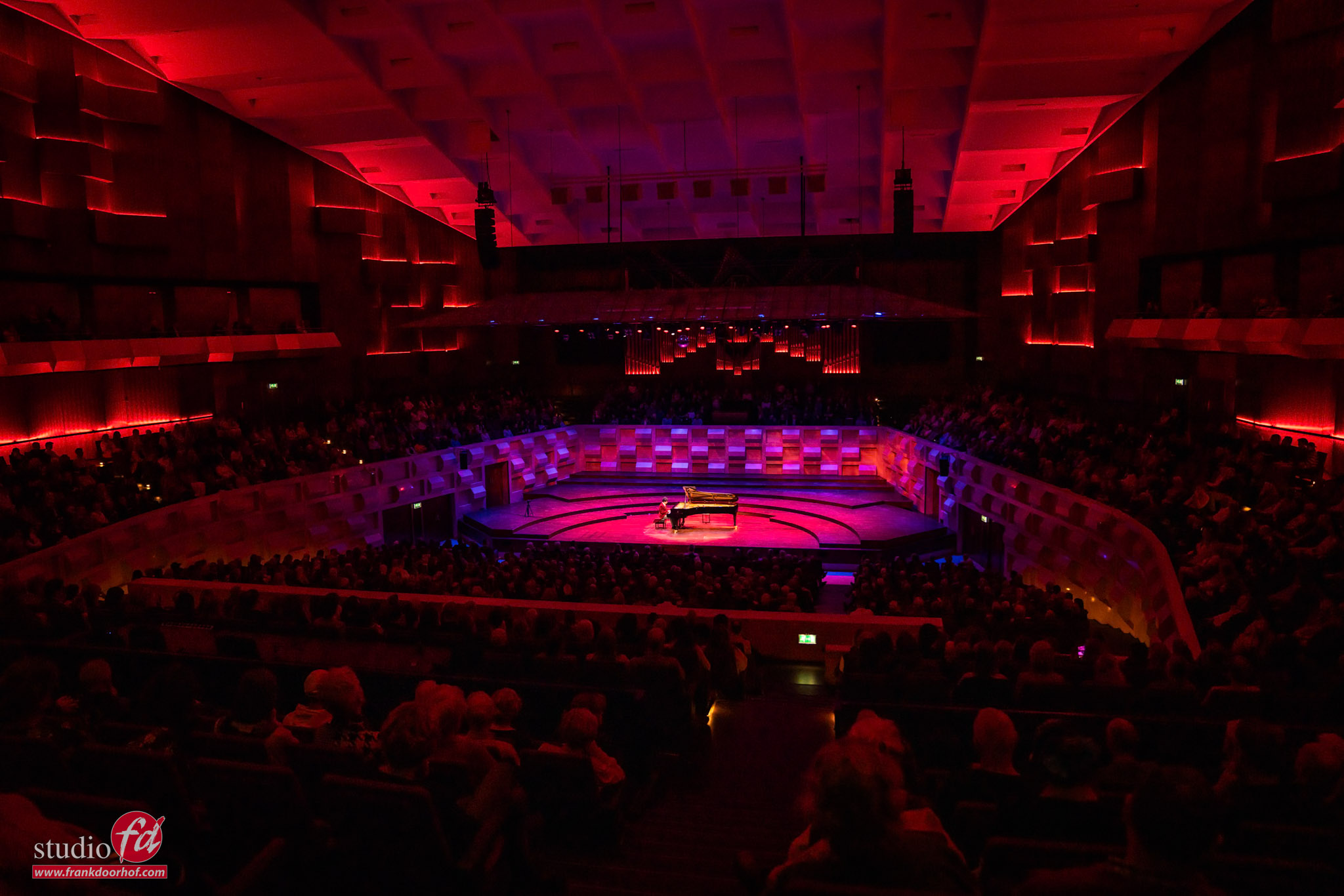
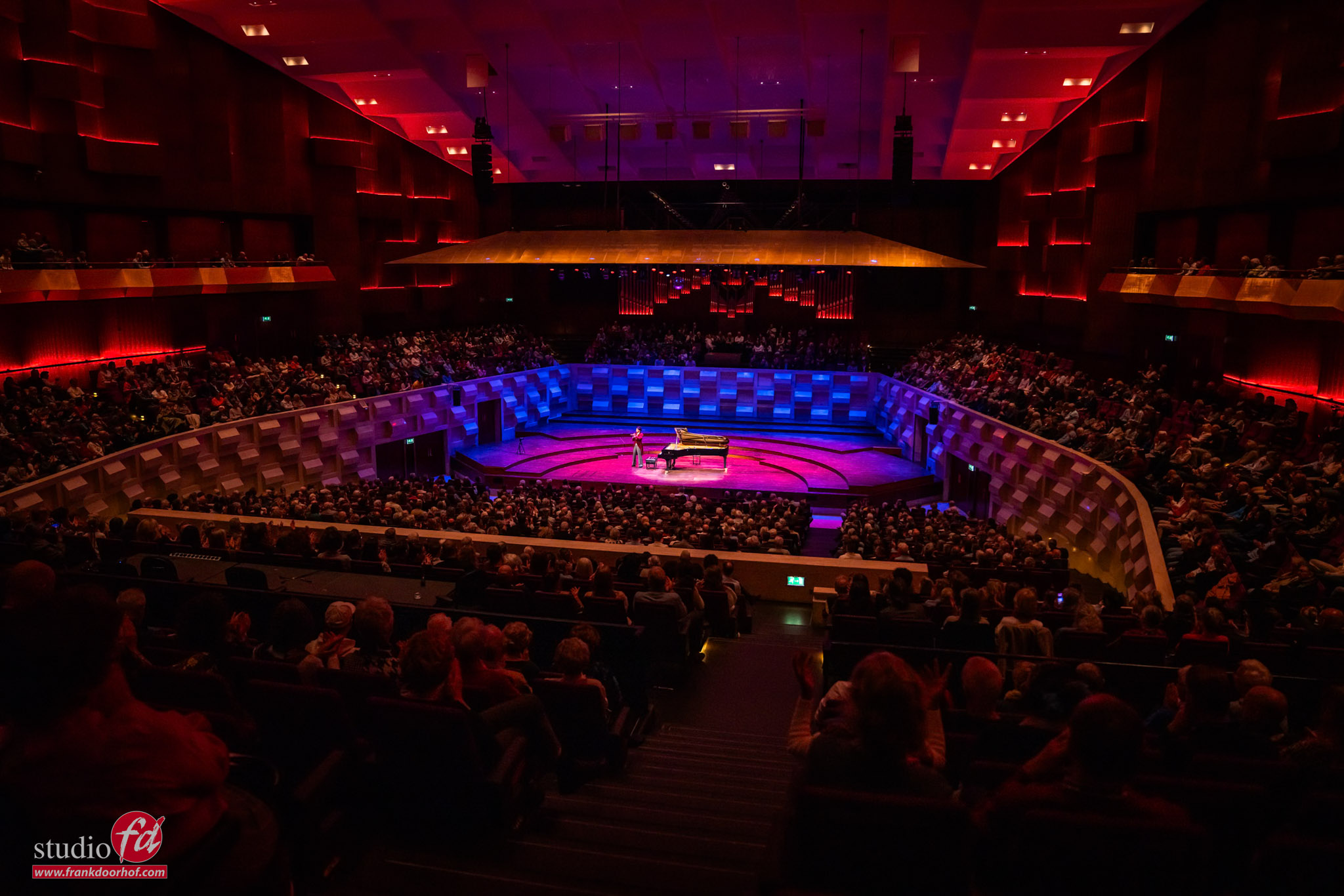
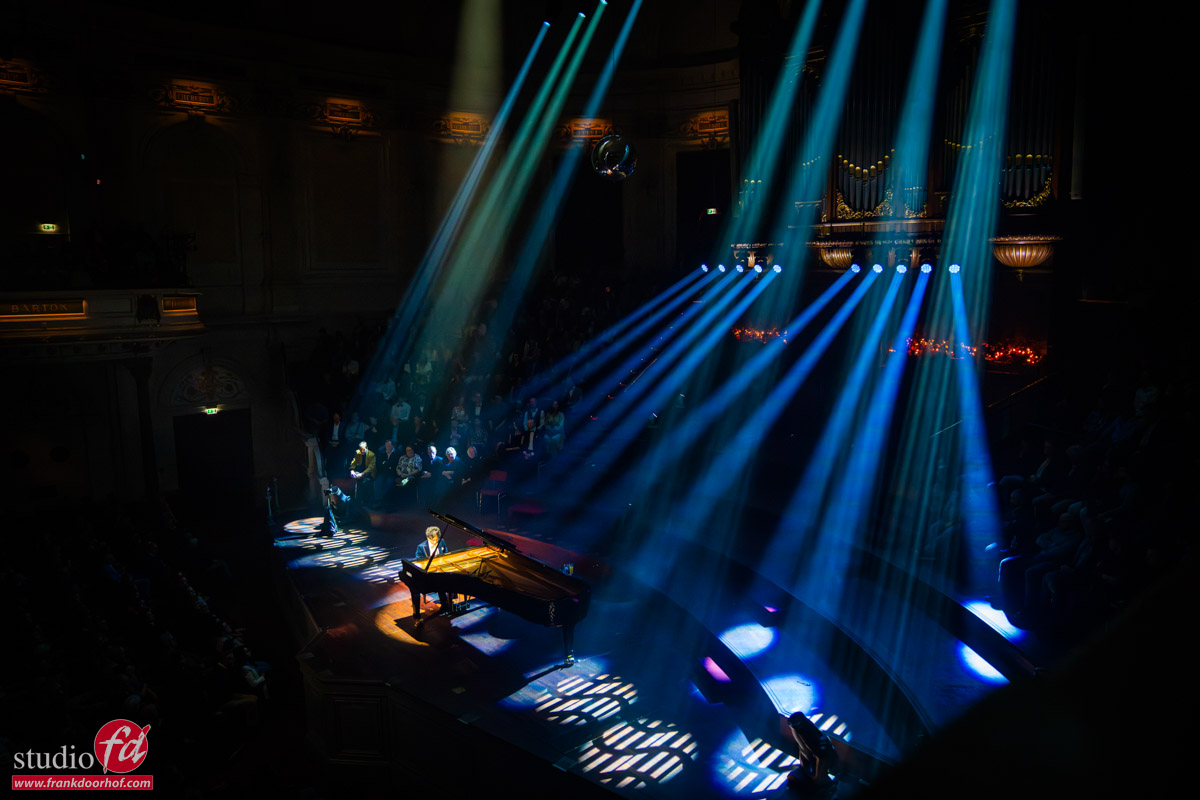
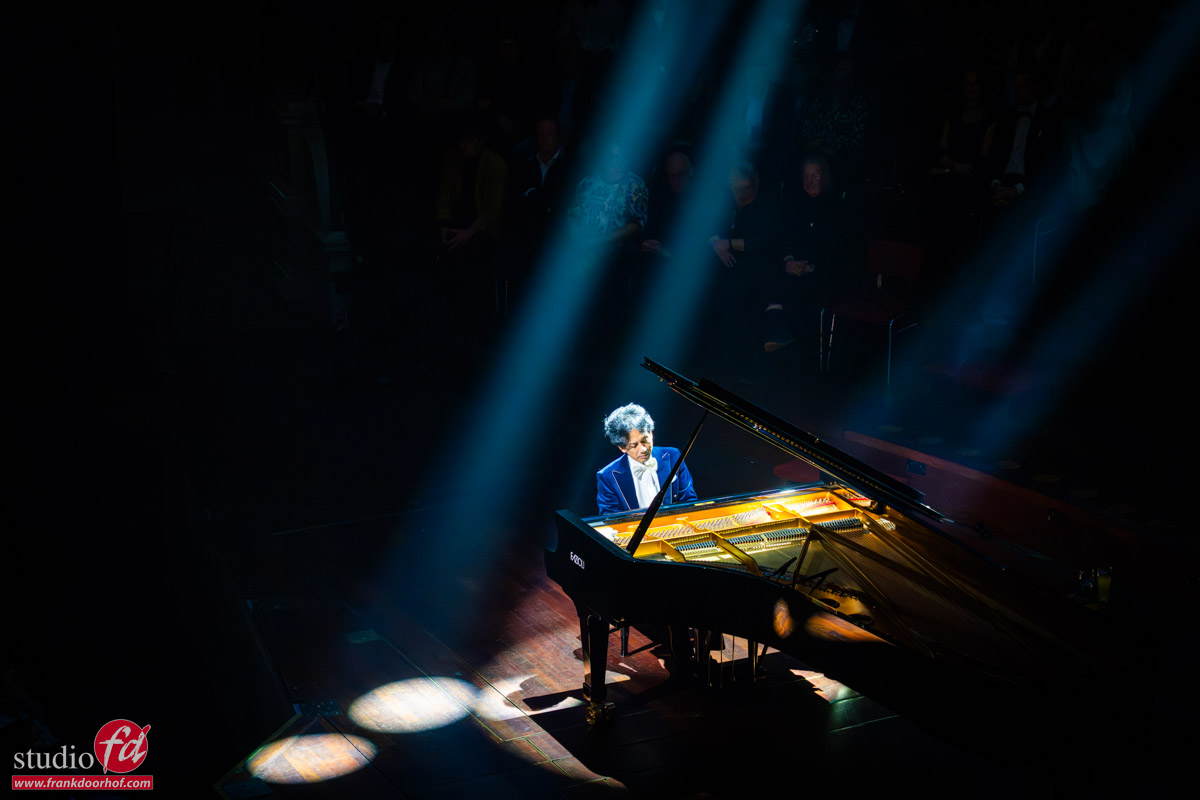
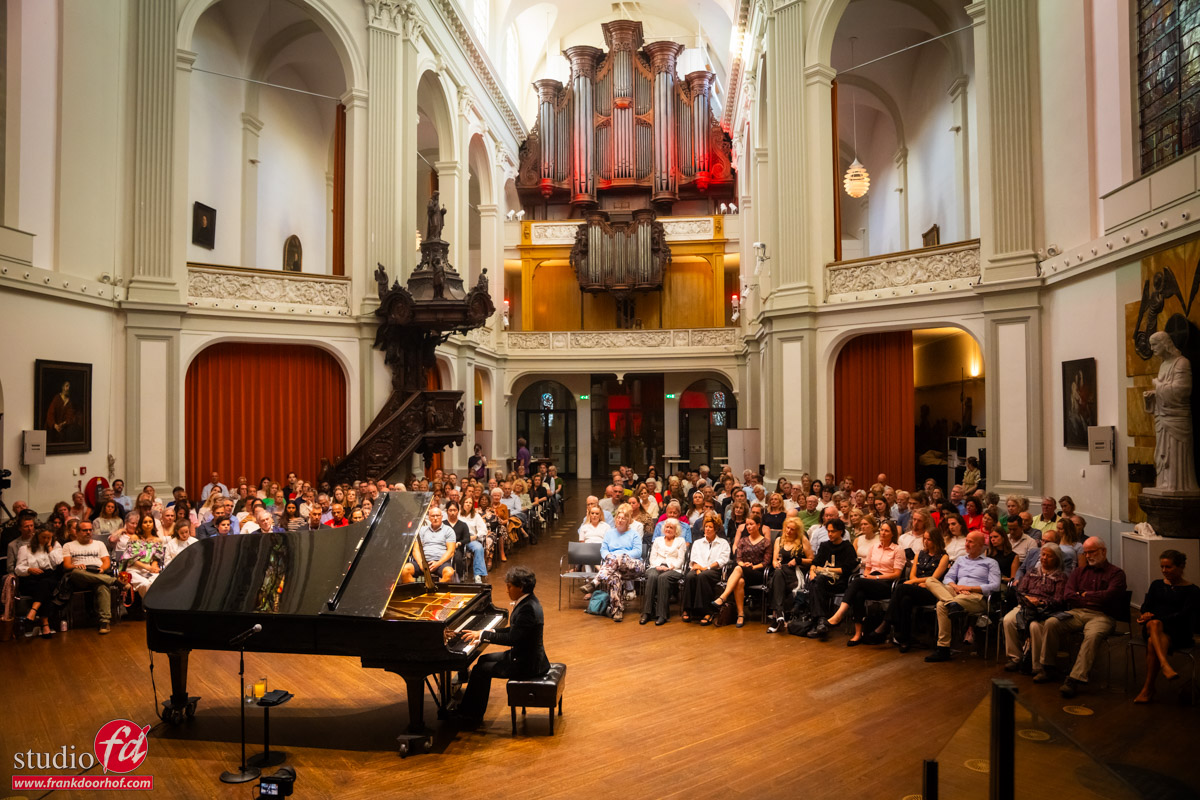
For the second part of the concert, I moved to the balcony.
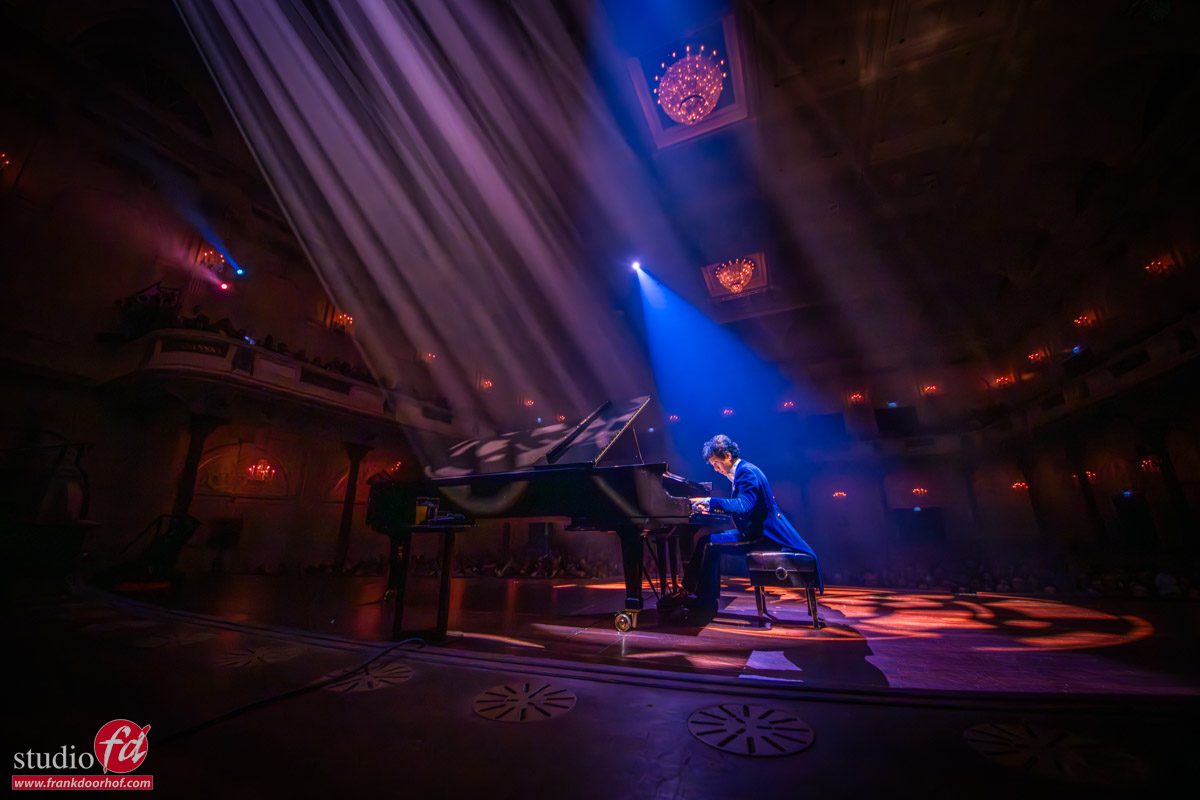
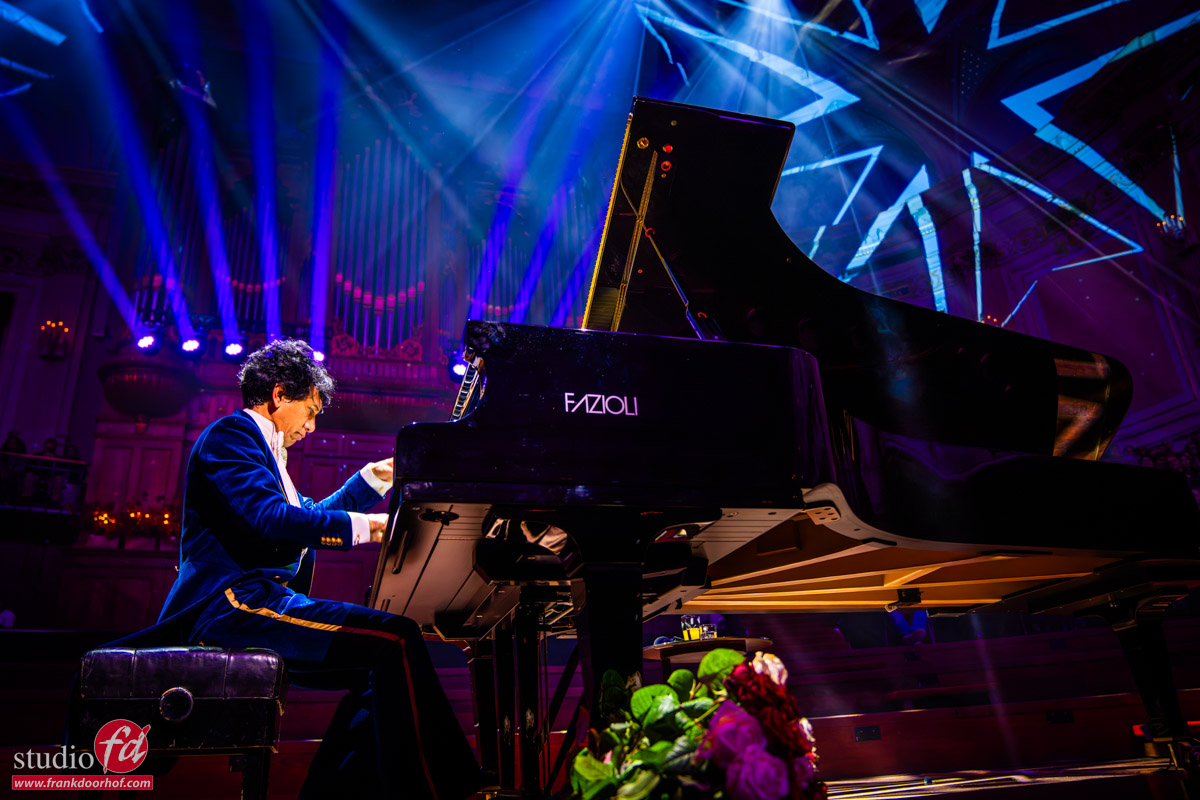
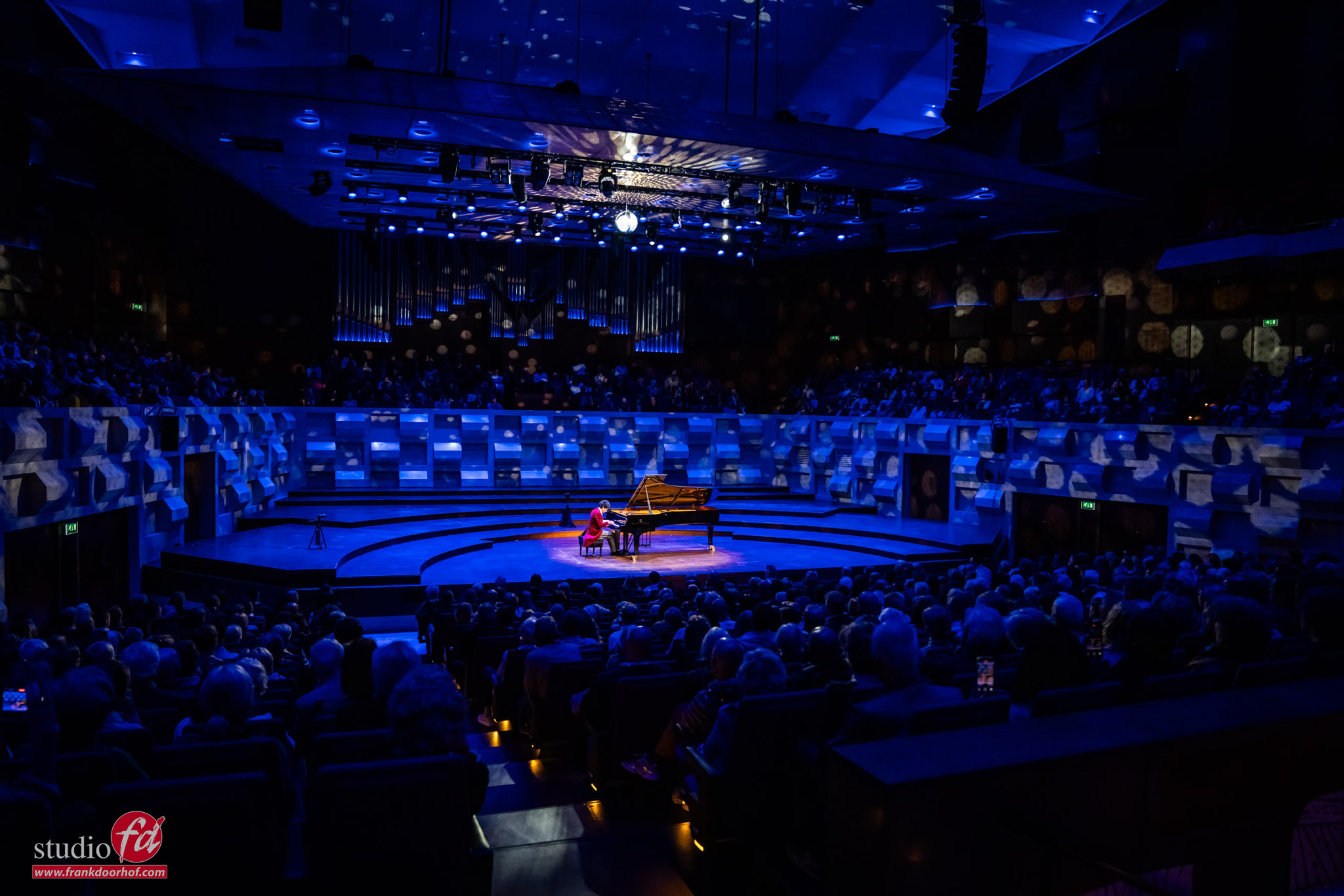
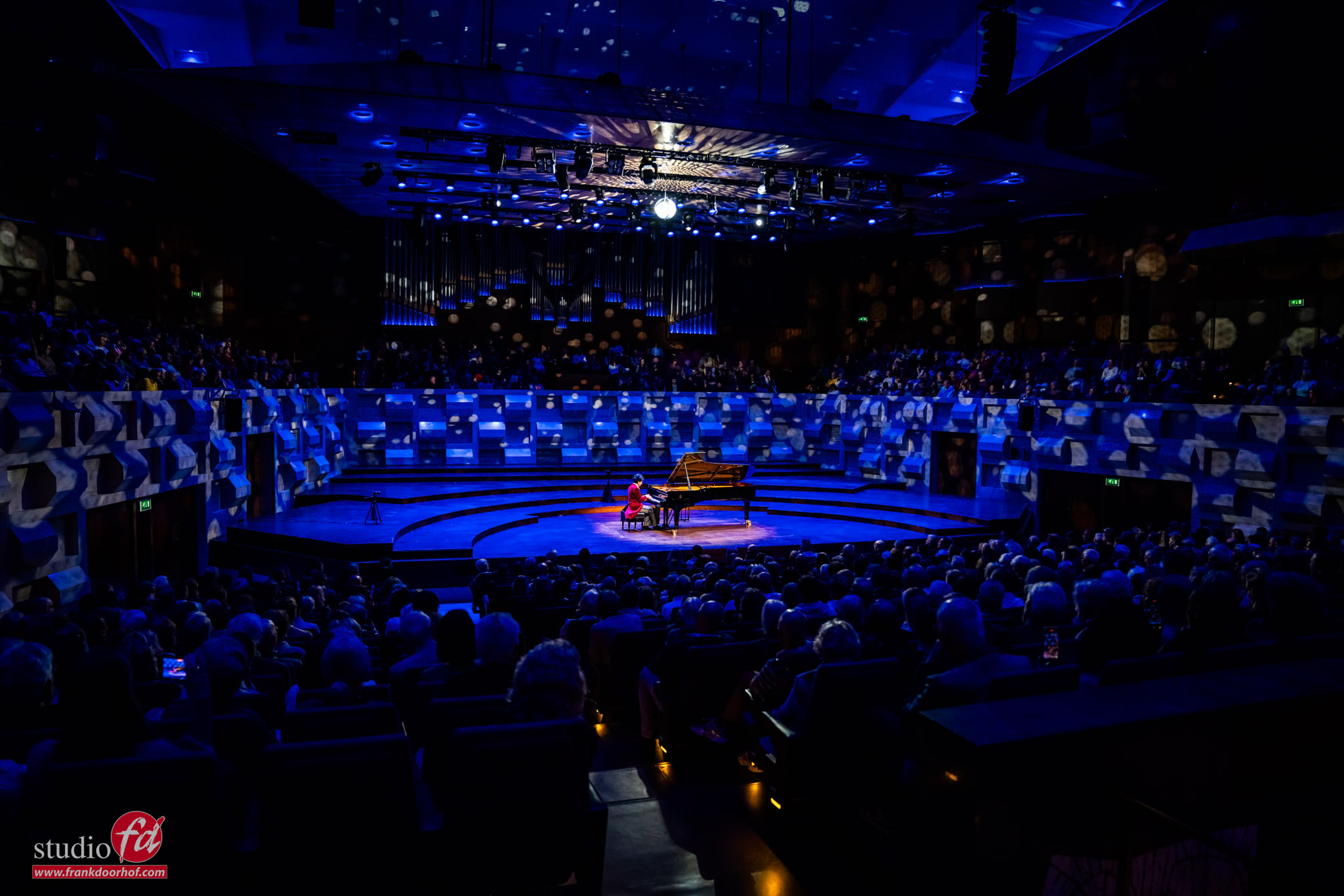
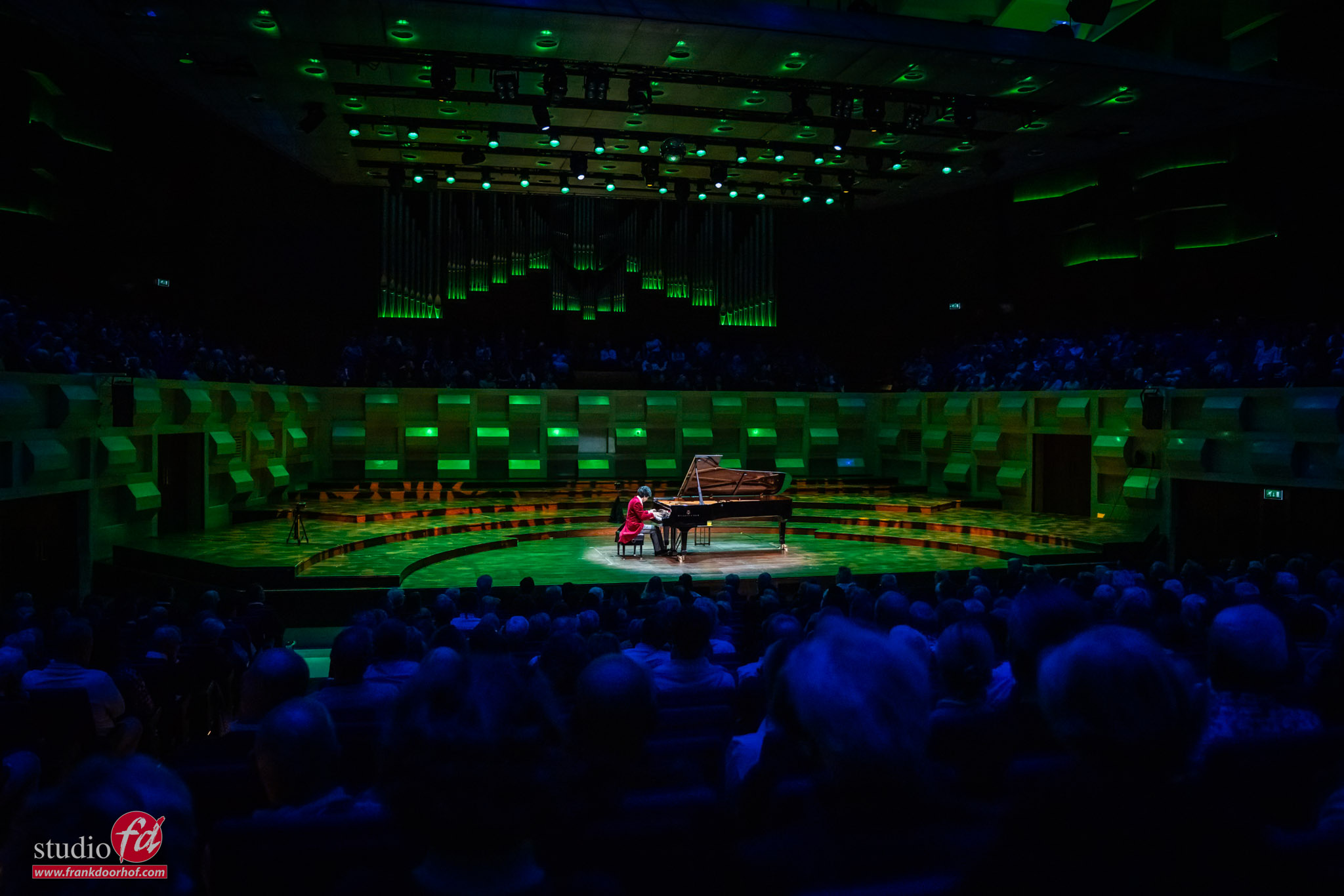
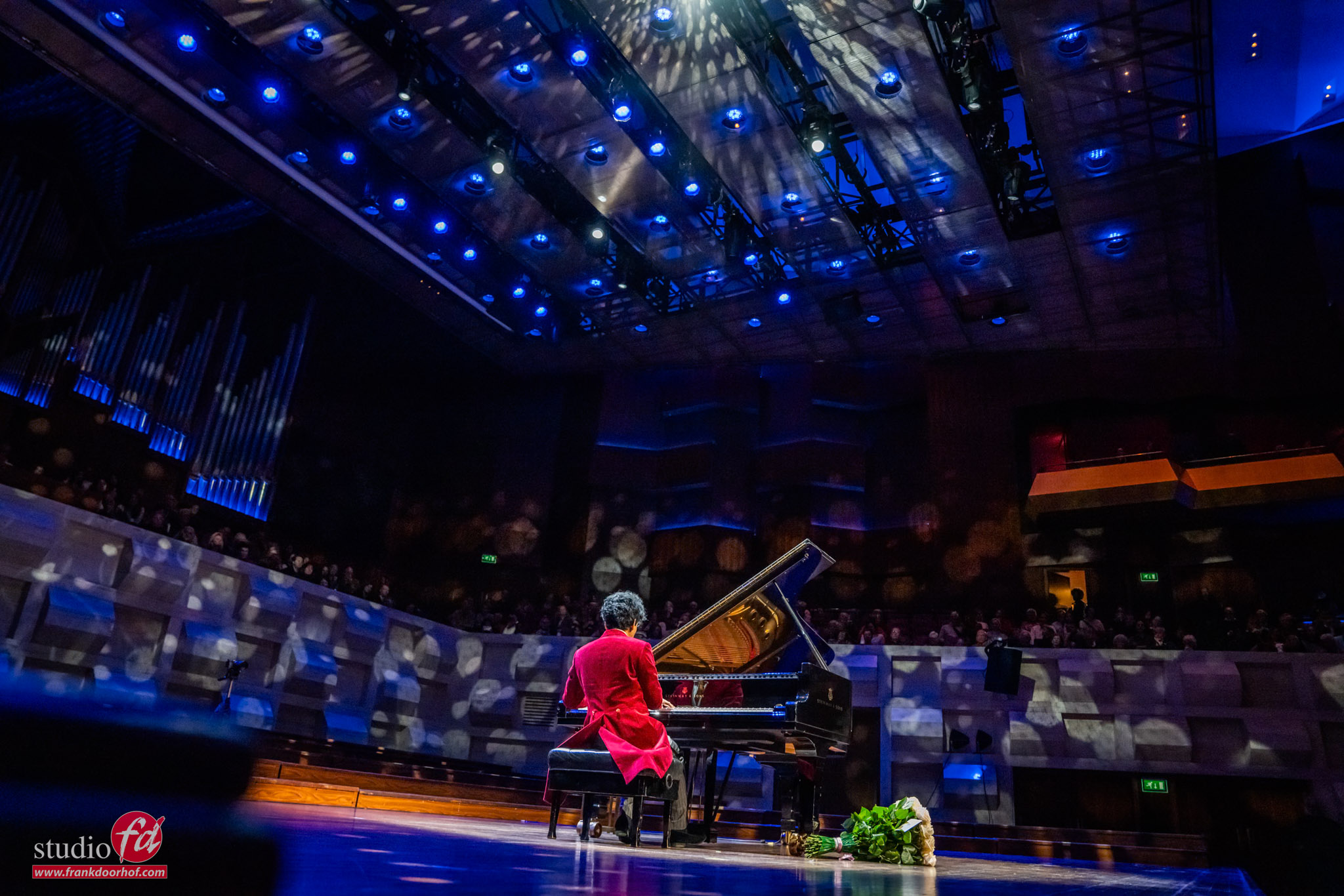
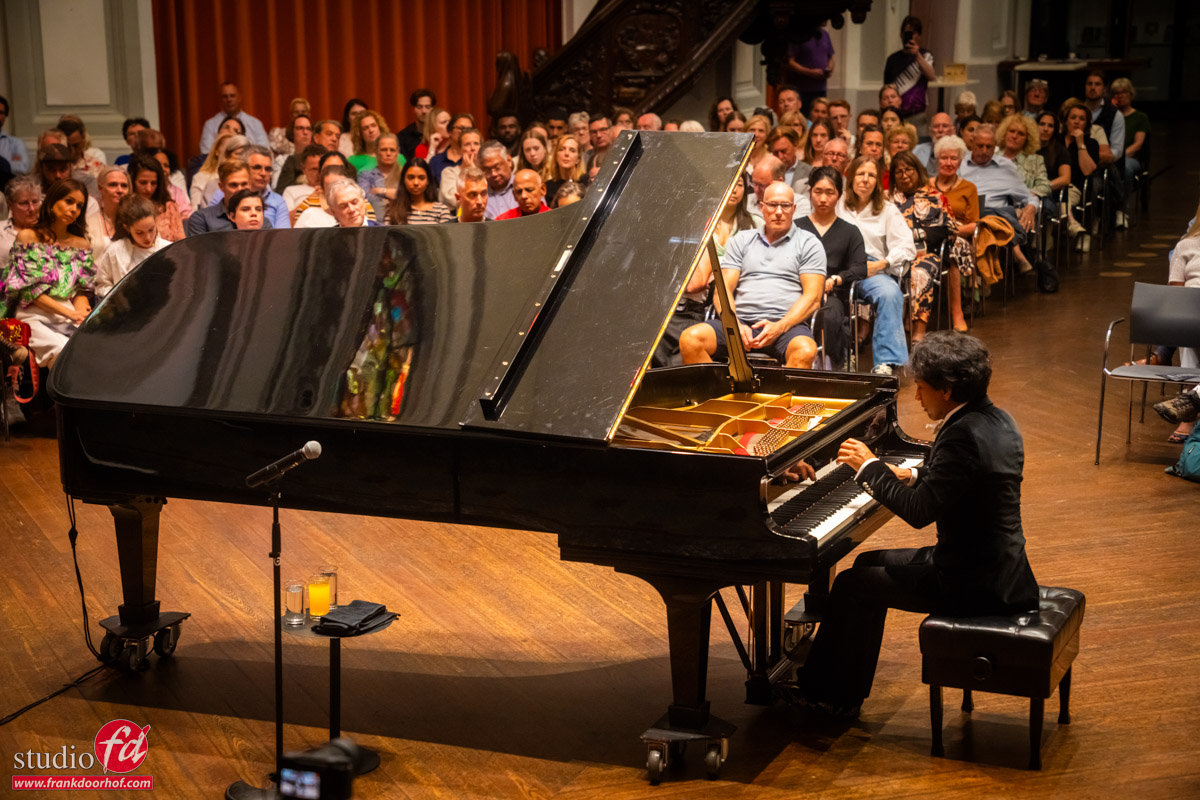
This is also the first time you get to see the lights as they are intended to be seen.
On the stage, it’s great to be close to the artist (and the sound is amazing), but from the balcony, the wide-angle shots can be awesome.
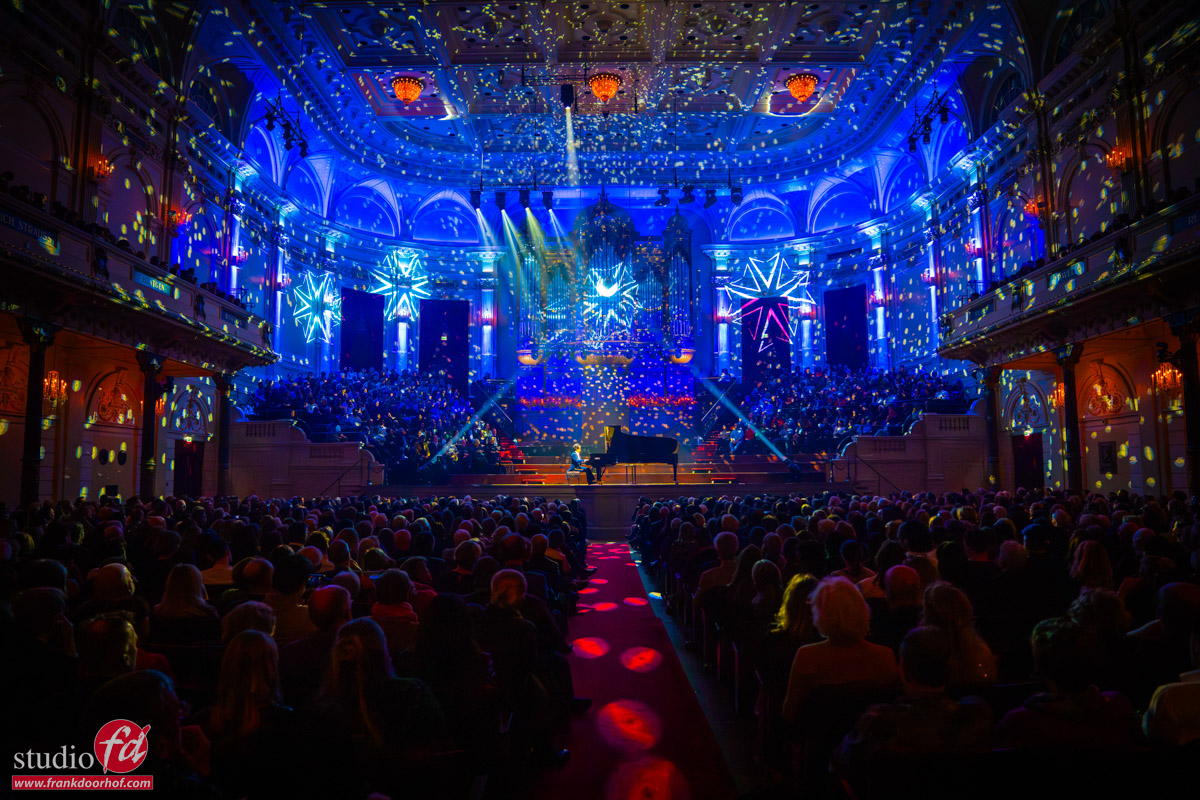
Moving to the back of the venue

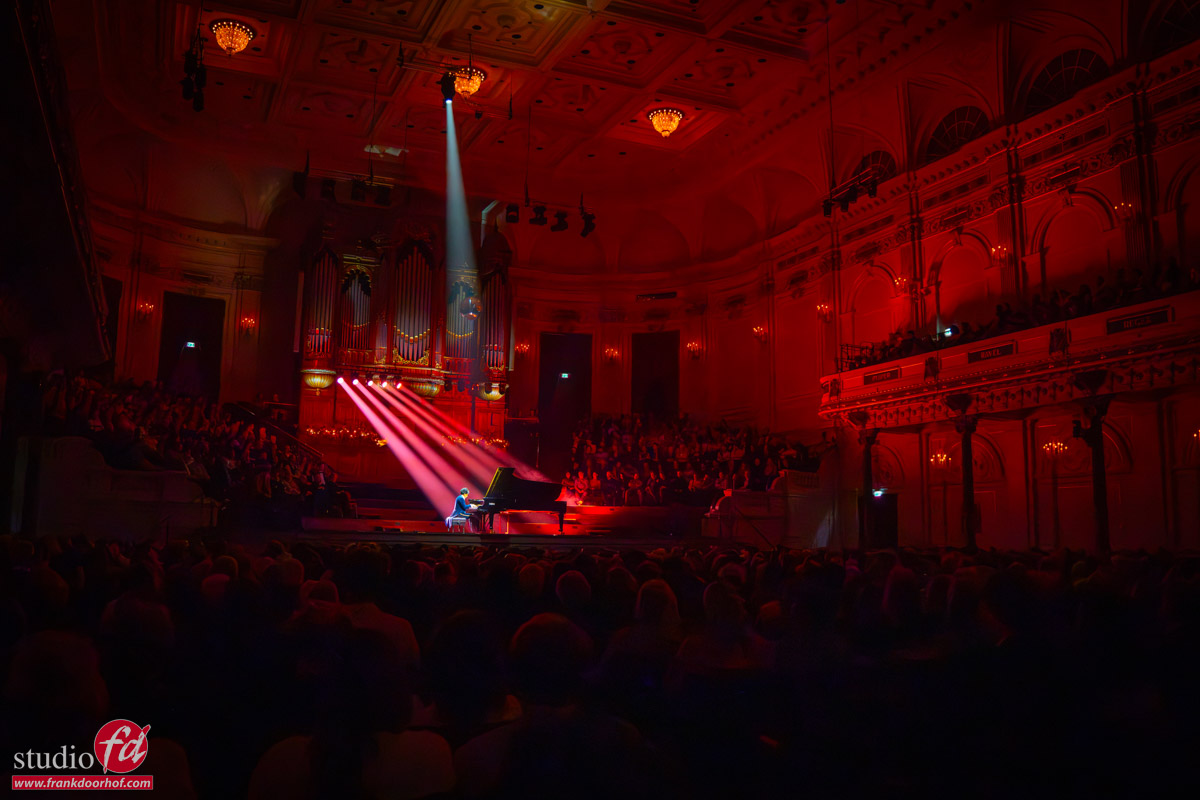
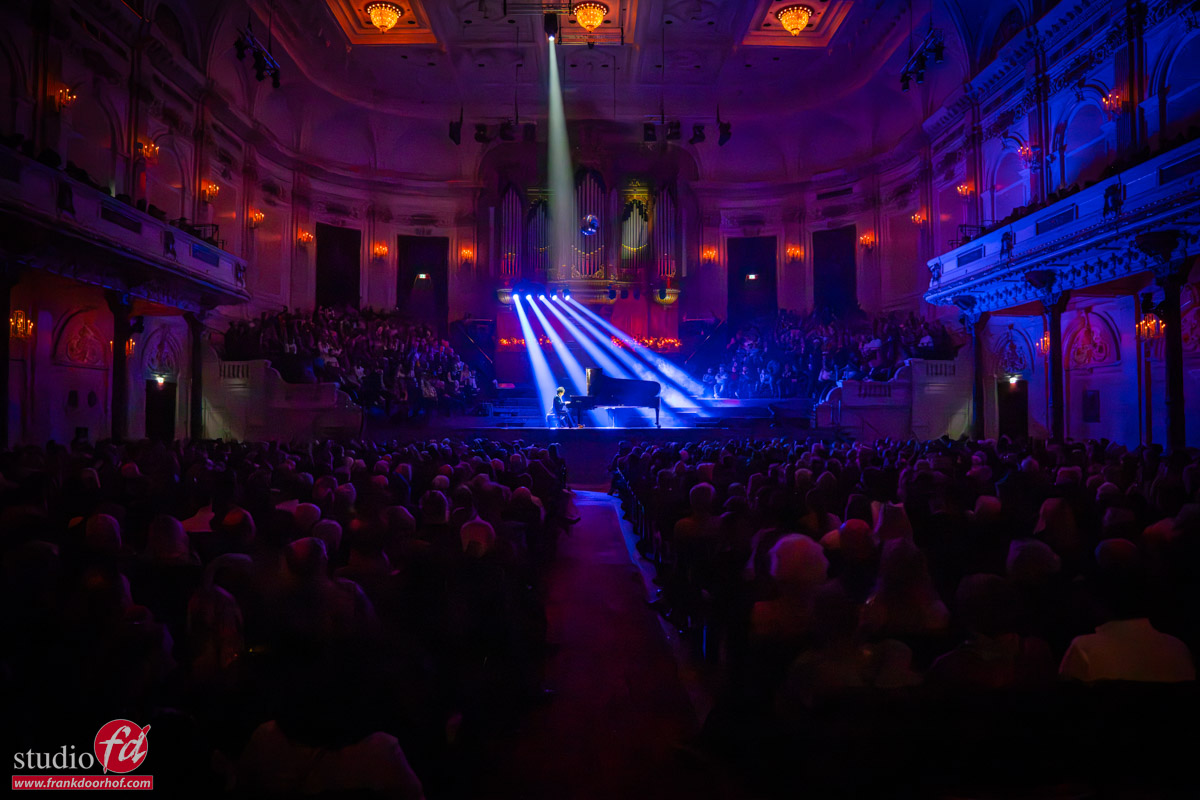
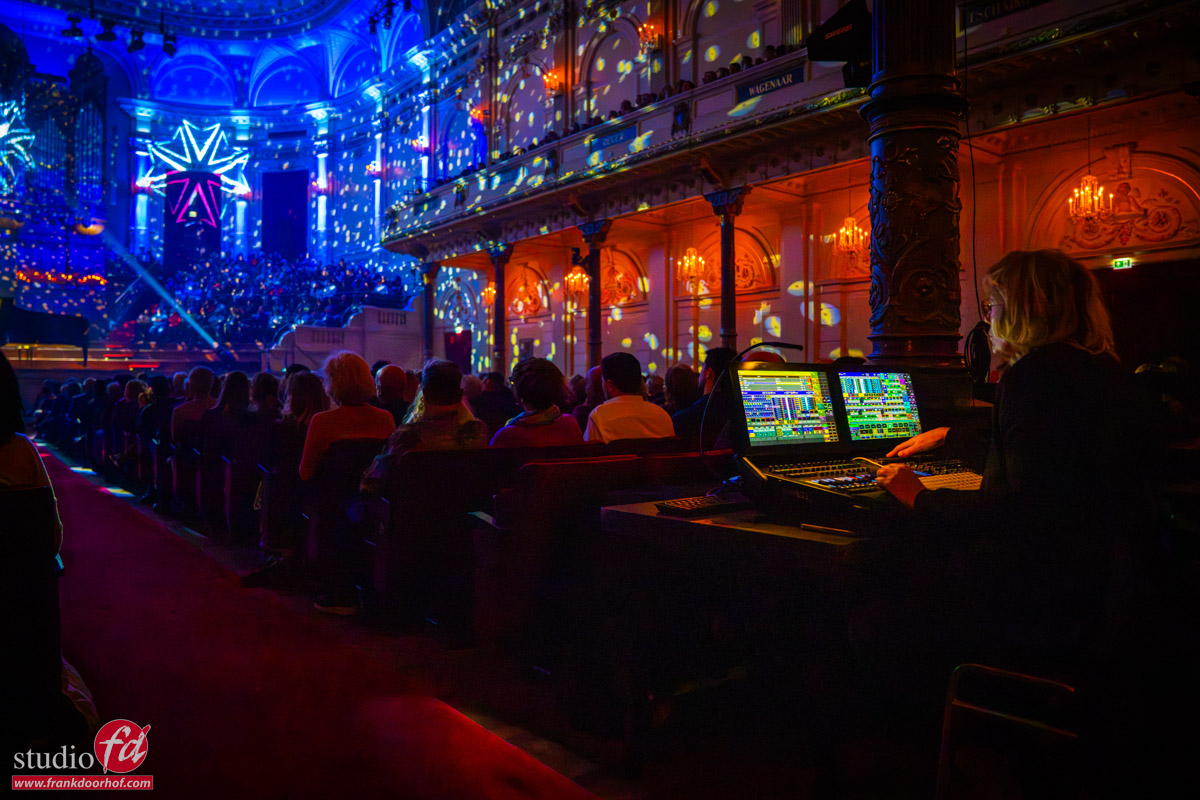
Maybe it sounds a bit boring to shoot so far away, but for the story it’s I think a vital part.
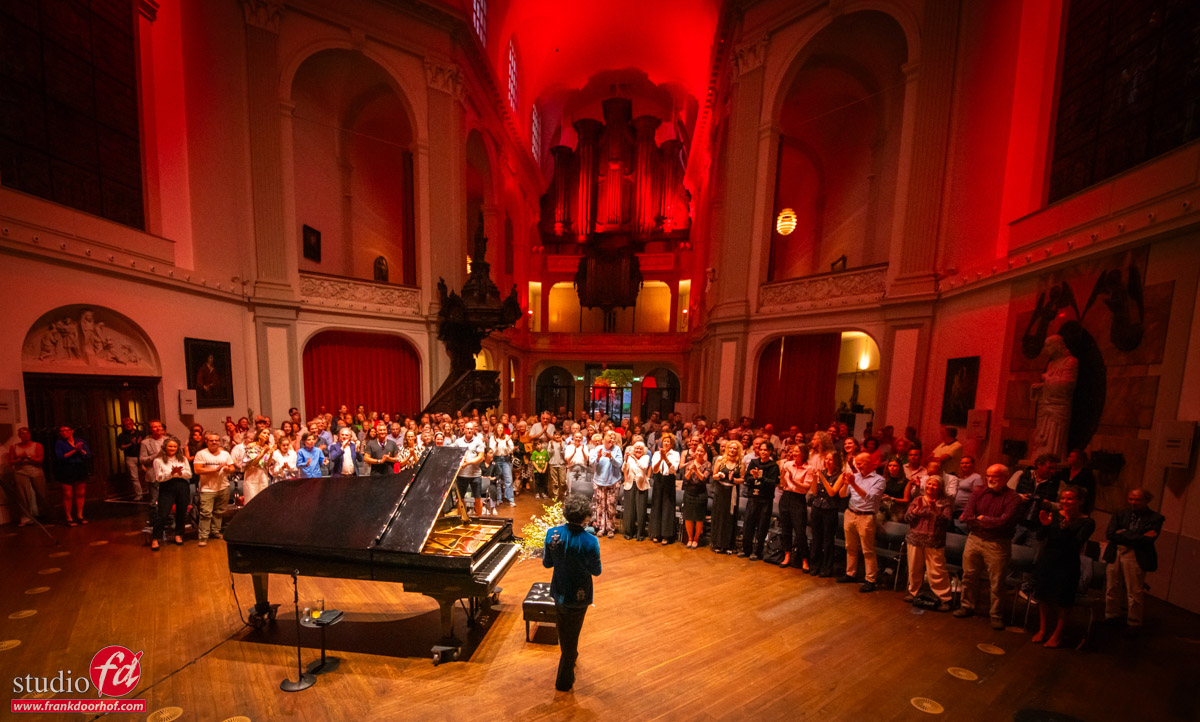
You get to see the sold-out venue and the full spectacle of the light show (they did an awesome job).

And of course, don’t forget the behind-the-scenes shot.
Concert Photography Wibi Soerjadi 2025 Concert Photography Wibi Soerjadi 2025 Concert Photography Wibi Soerjadi 2025

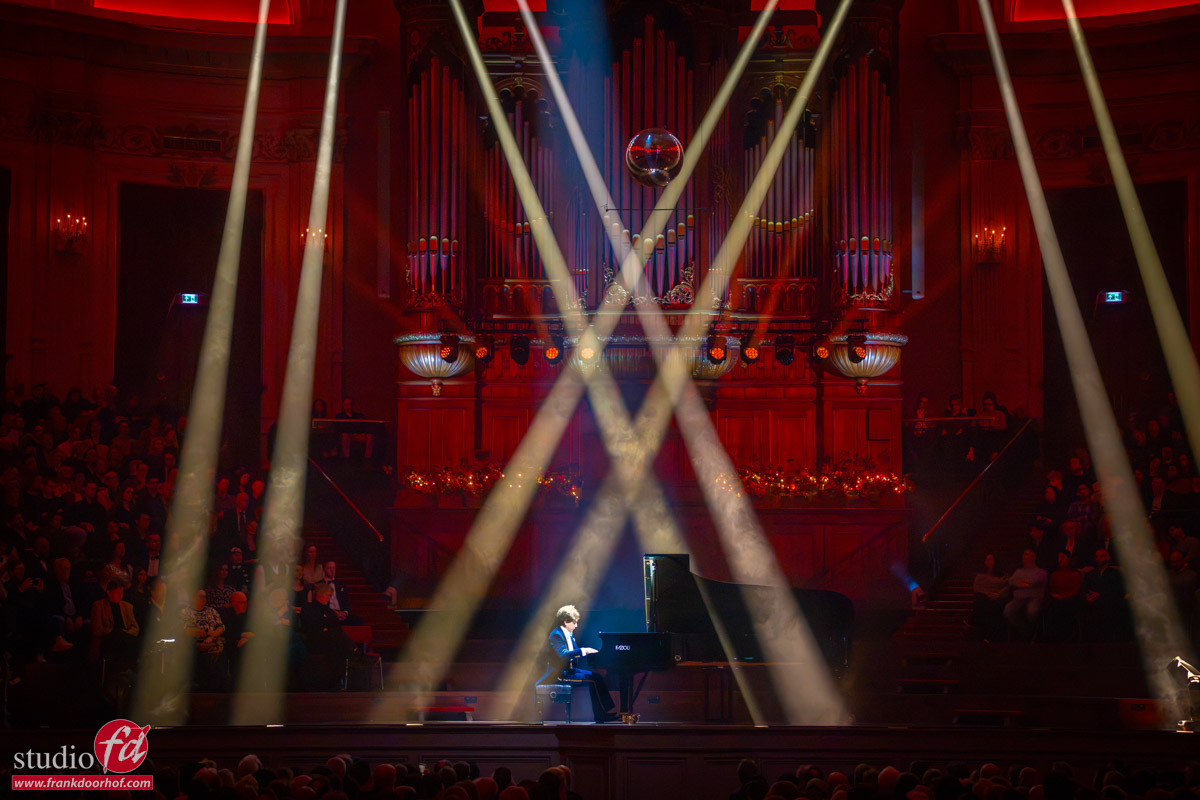
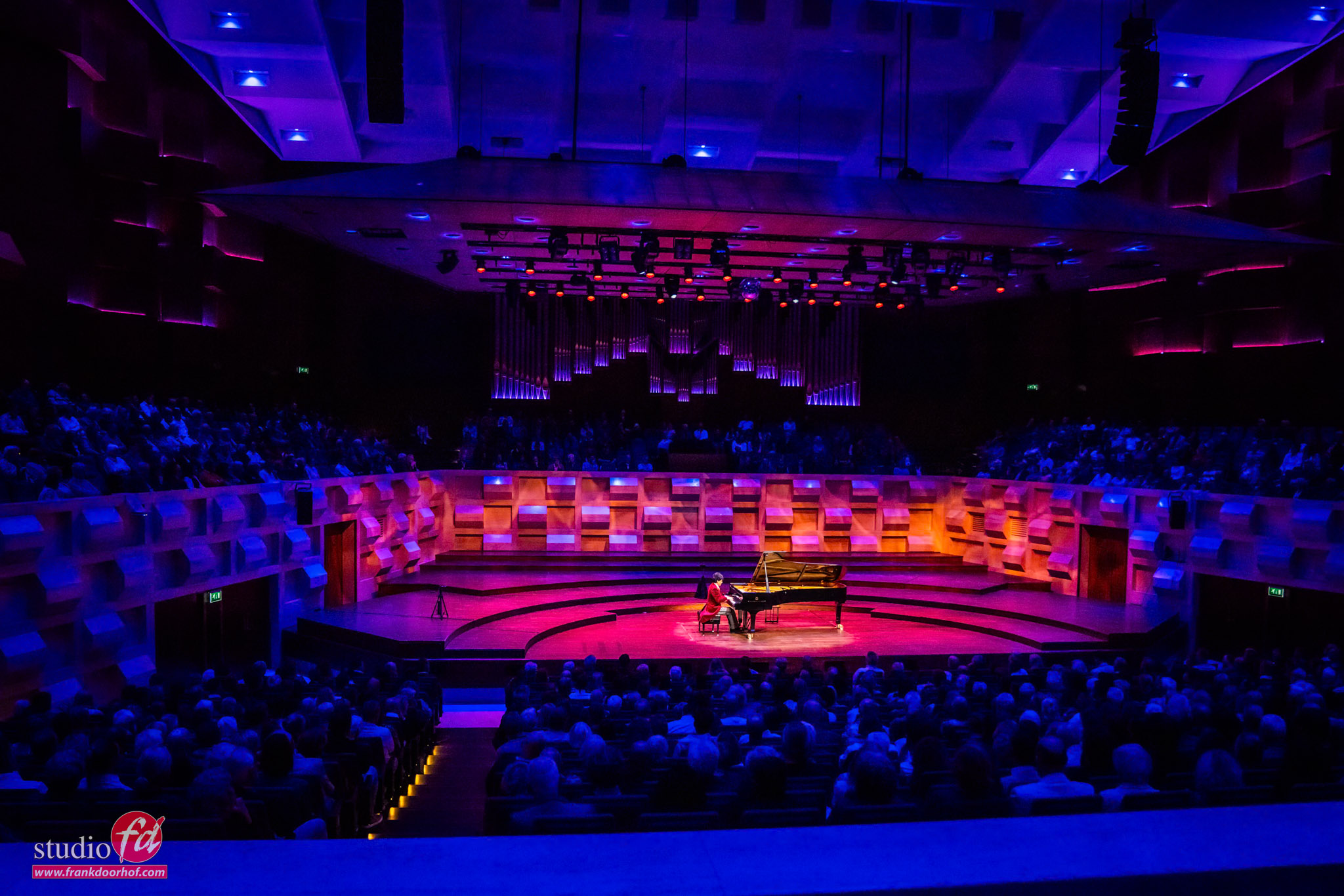
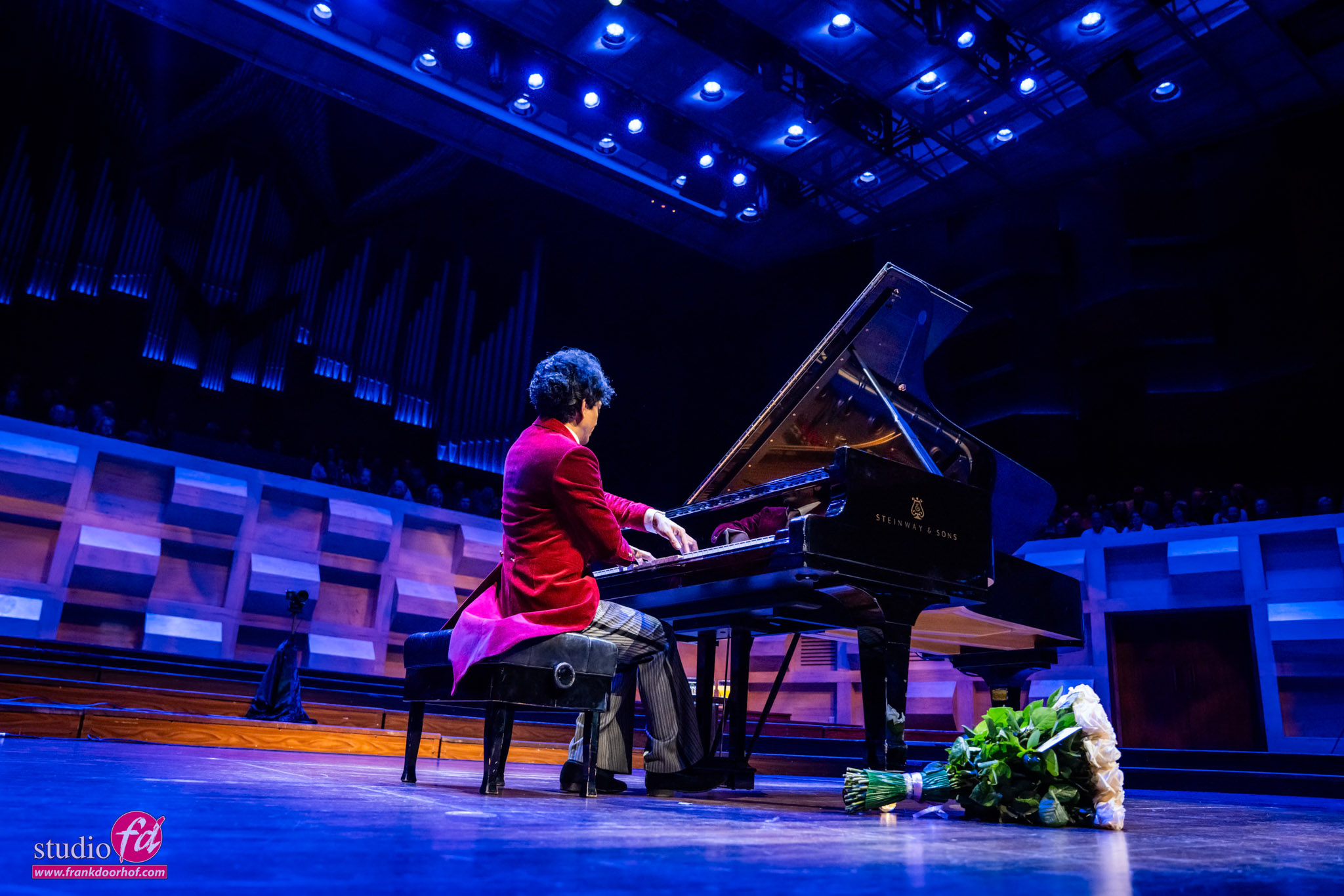
Right in front of the stage

For me, this is the most terrifying part.
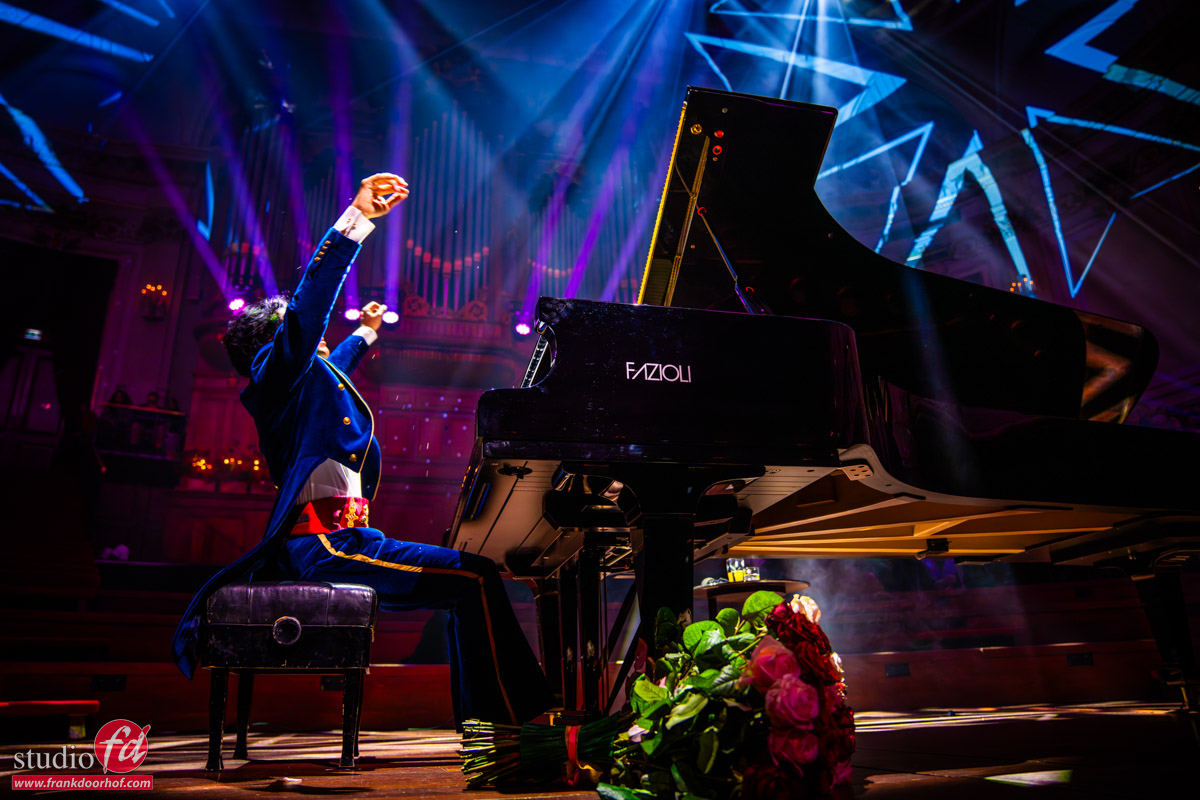
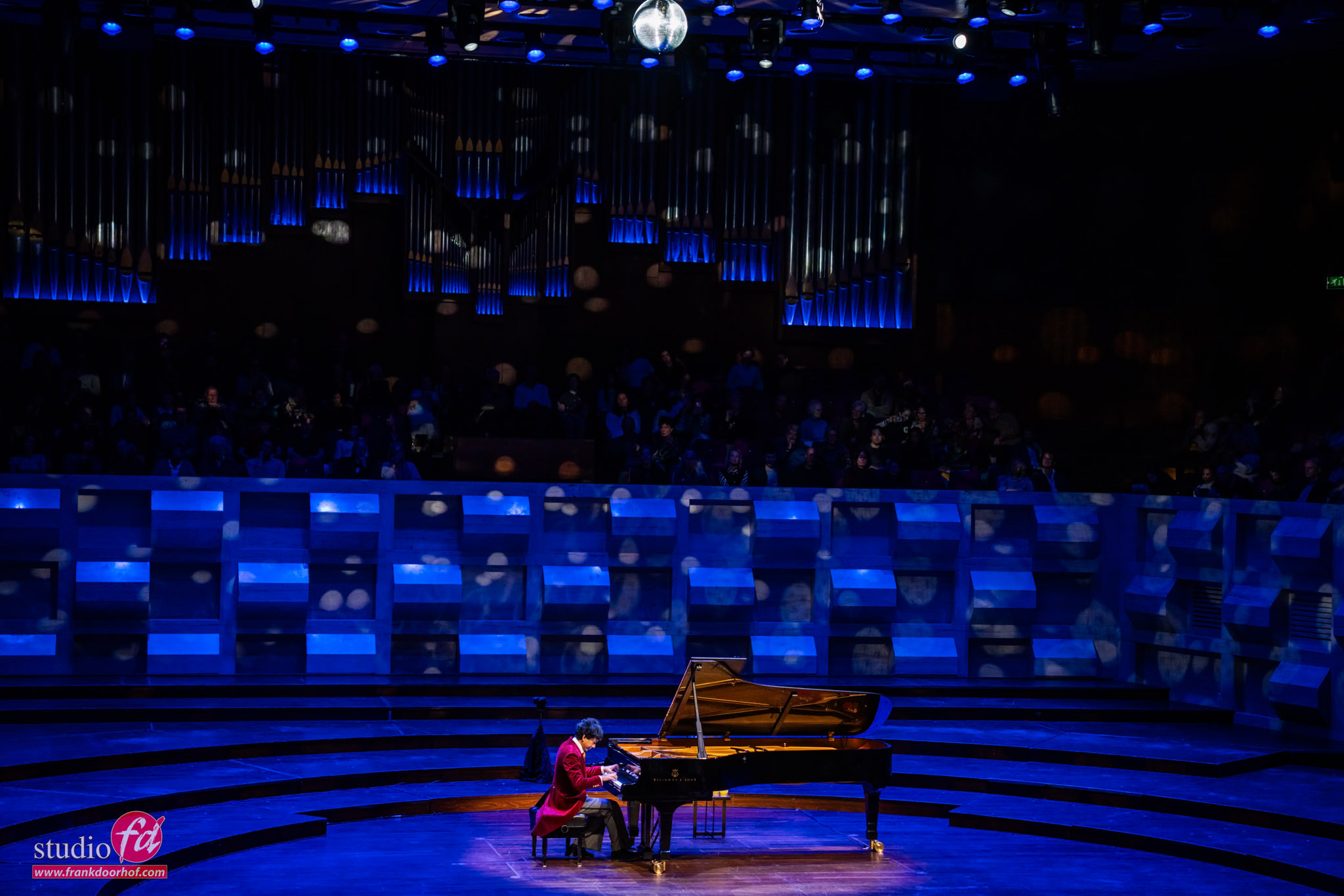
It’s the moment I’m really in front of the stage, and one of the things I love about the Concertgebouw is the way the stage is constructed with the huge organ in the back. This is always one of my favorite spots to shoot from.
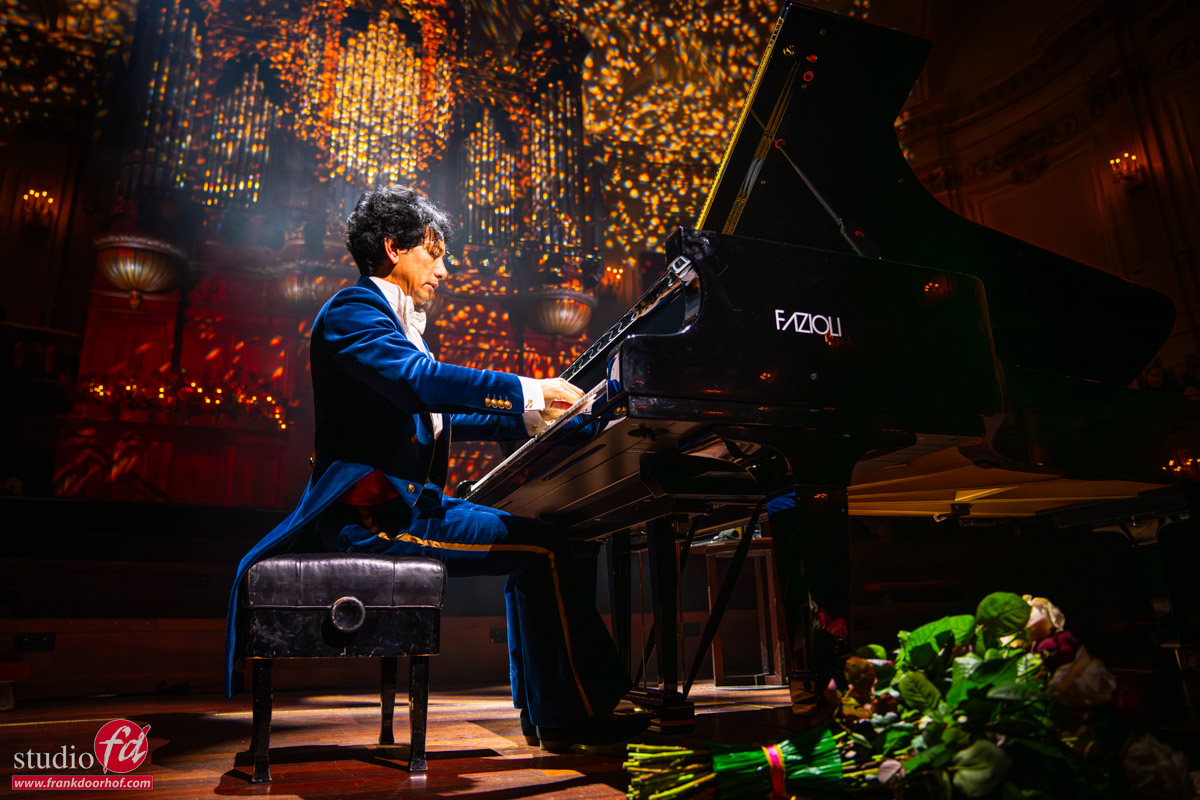
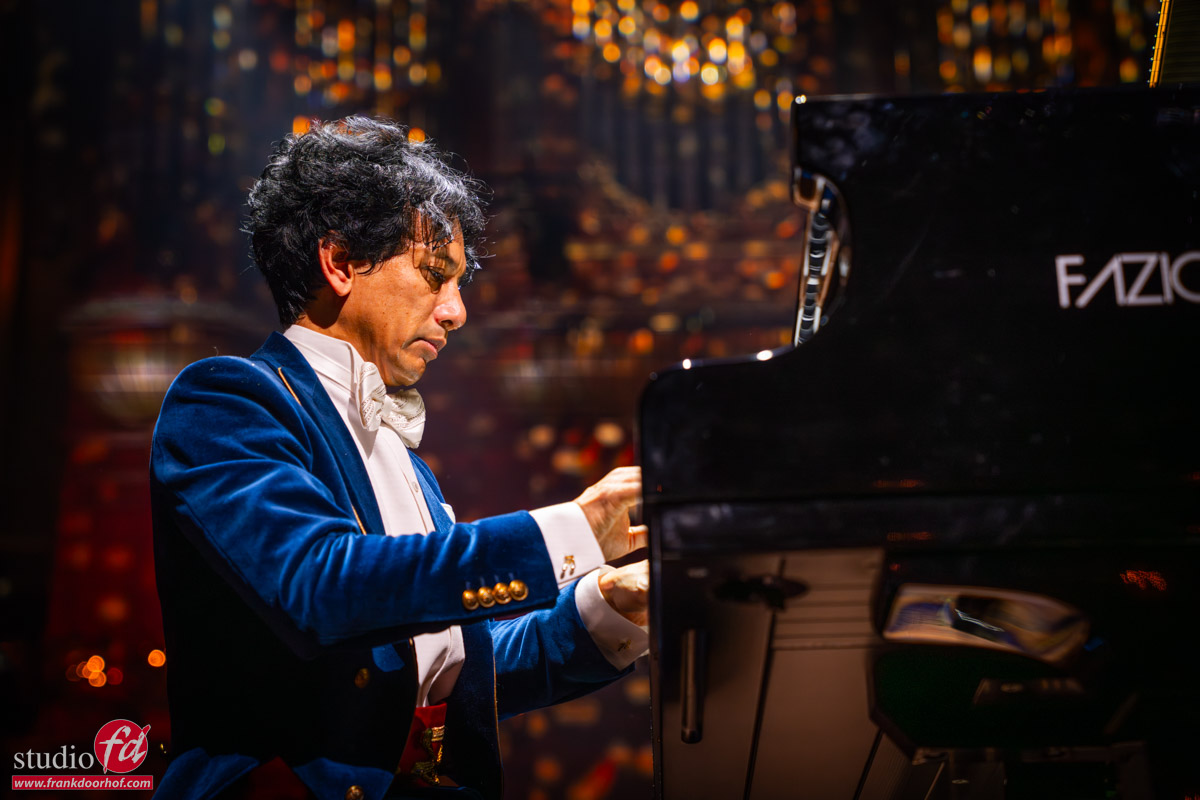
Concert Photography Wibi Soerjadi 2025 Concert Photography Wibi Soerjadi 2025

Conclusion: Concert Photography Wibi Soerjadi 2025

It’s a huge achievement to sell out a concert like this 31 years in a row.
I’m very honored to have been a part of this tradition for over a decade, and I’ve witnessed the concerts going from “great performances” (Wibi never disappoints) to an almost rock concert-like show. If you never visited a Wibi Soerjadi concert, I can highly recommend it, you will NOT be disappointed, and maybe we can meet 😀

I would like to thank the awesome people at the Concertgebouw Amsterdam, who always make me feel at home.
And of course, everyone who helped me by not pushing me over the balcony 😀

Hope you enjoyed the images and tidbits in between.

See this post about Wibi’s concert in “De Duif”, also in Amsterdam 

See the images of last years Christmas concert 
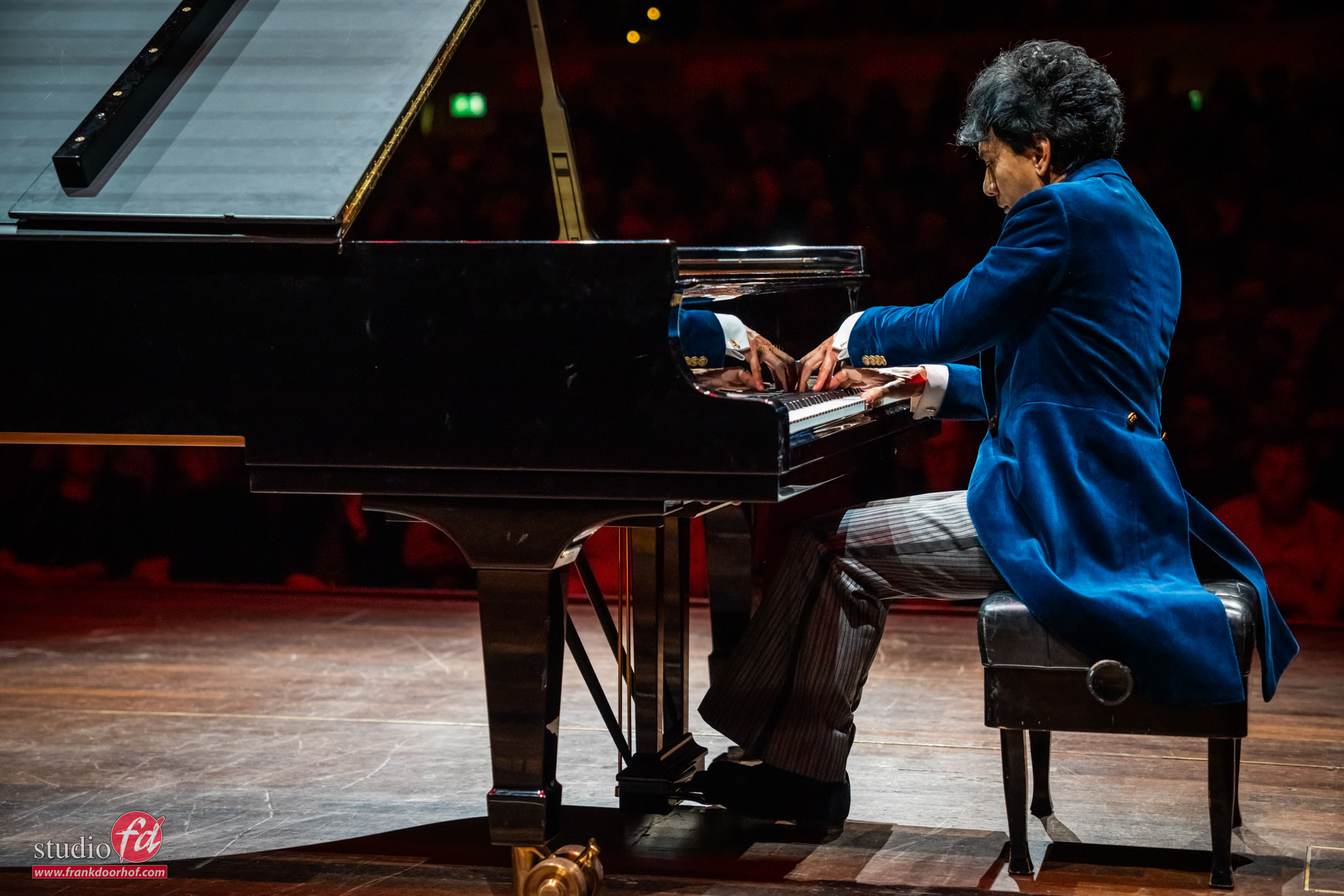


A very special concert registration

Shooting concerts is always a challenge

For both the photographer and the gear.
With most concerts you get an assigned area and only a (very) limited time.
With classical concerts this often means you’re only allowed at the final part or just the first few minutes.

For the gear it’s an even bigger challenge.
No strobes of course, and in my case also absolutely no focus assists, and don’t even start about the lighting.
Sometimes it’s great, for example with pop or rock concerts, but in the case of classical music it can be a real challenge due to the more subdued lighting but also because with a piano recital the performer is in essence in the same location.

Wibi Soerjadi : De Doelen

I’ve known Wibi for many years and over the years a close friendship has developed which gives me some great opportunities.
First of all I’m allowed to do “everything” I want. I place this between quotes because although I’m allowed, it’s not something you should also do.
There are people in the room that paid for a relaxed evening enjoying music, and they don’t want a photographer running around standing in front of them and shooting the whole concert.
Over the years we have developed a routine with Wibi.

Before the soundcheck I know what will happen during the concert which makes it easier for me to move around during the breaks, meaning I don’t annoy the visitors.
For the first serie I will start on the stage.
For me that’s in all honesty terrifying, believe it or not but being in the spotlights myself is much less scary than sitting 1-2 mtrs away from a performer.
When we started doing this it did happen a few times I was almost dragged from the stage, only to be allowed back in again after calling the manager 😀 But nowadays most venues know the link and let me roam around freely.

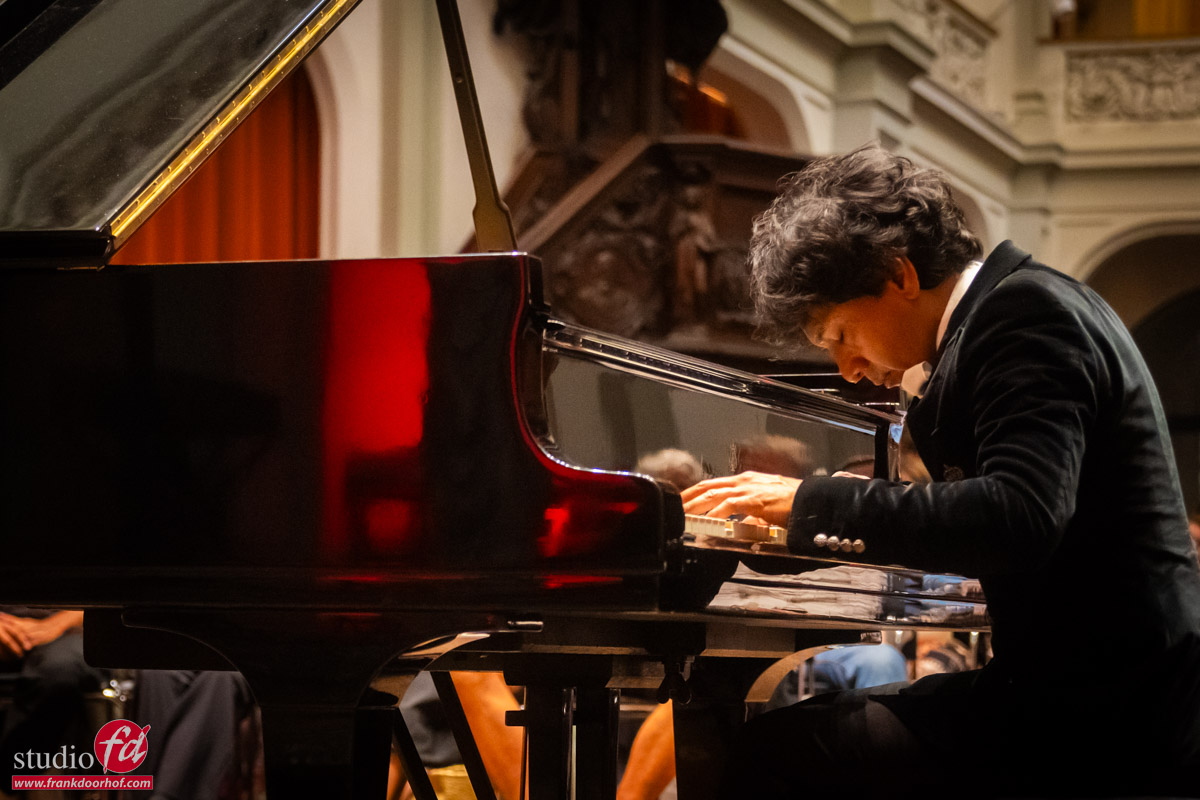
I start on the stage when Wibi is still “fresh”, personally I LOVE the images where sweat is flying around. In all honesty I think most people don’t have a clue how hard Wibi works behind the piano. When you are so close and you hear the breathing, the fingers, the piano sounds (he plays intense) and the vibrations of the music through the stage it’s a whole different ballgame than being in the room or hearing it on a recording. For me it’s just amazing what he does, and all without using any sheet music.

After the break I will mostly move all the way to the back of the venue and shoot some oversight shots.
Often the lighting on the stage is ok/great/bad for closeups but in most cases you miss the lighting effects you can see in the room itself, so they need to be in there of course.
Depending on the lighting plan I will slowly move forward, using each break in which Wibi explains what he is playing to move to a different location.
In the end , the idea is to shoot the final images right in front of the stage and shoot the encore.

Did I ever miss a shot, or almost broke my neck running around a venue…. 😀
Let’s take a look at my favorite images from this concert.

All shot with the Sony A7RV with the 24-70 f2.8 GM.
Oh and the reason I’m not using any focus assistants?
Imagine being 1-2 mtrs away from the performer who is concentrating to perform a very difficult piece and out of nowhere there is a light beam on your face and you hear a beep plus SLAM from the shutter.
I guess you won’t be there long, to be fair I did forget once to turn of my “beam of light” and in the dark…. it’s bright 😀

Part 1

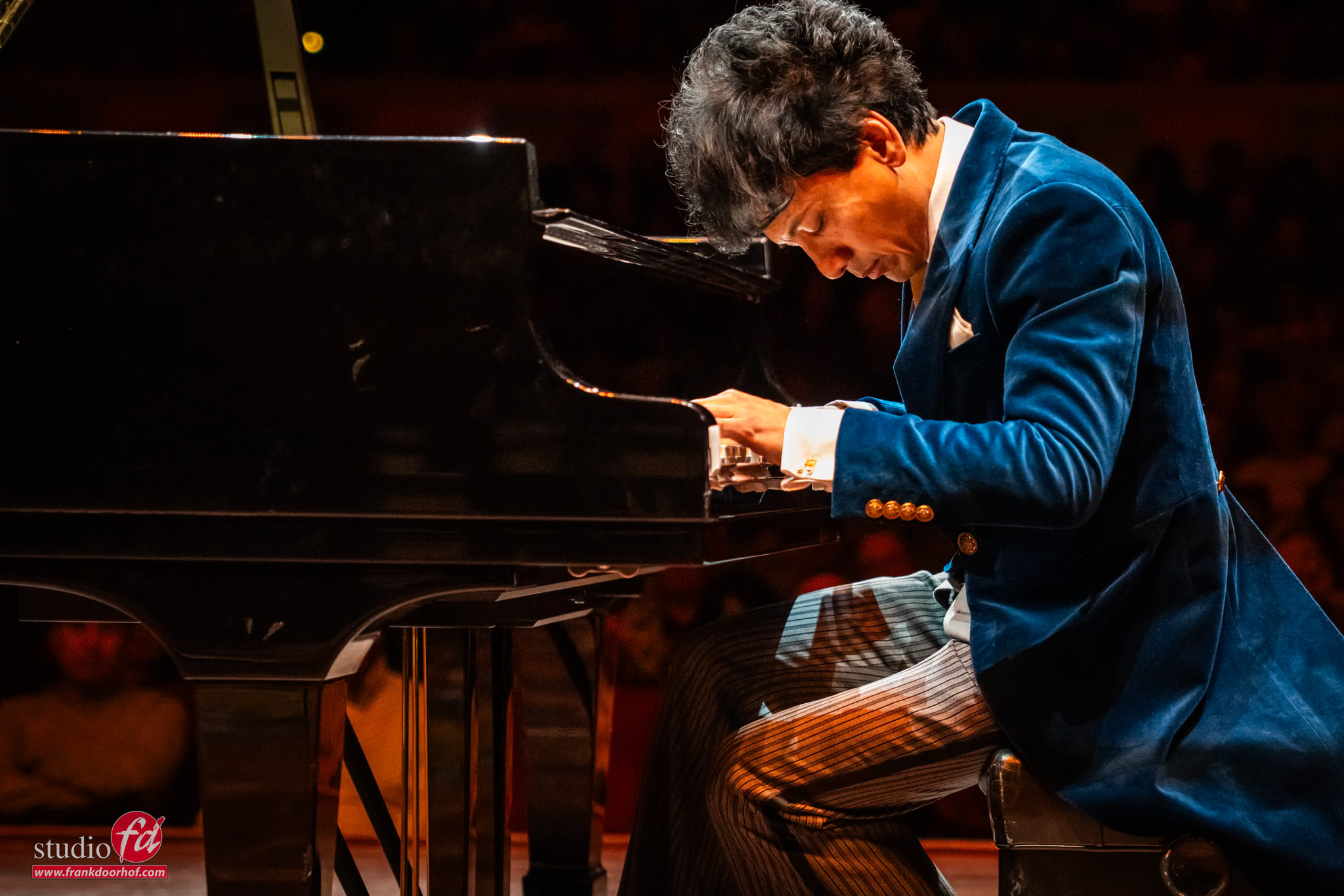
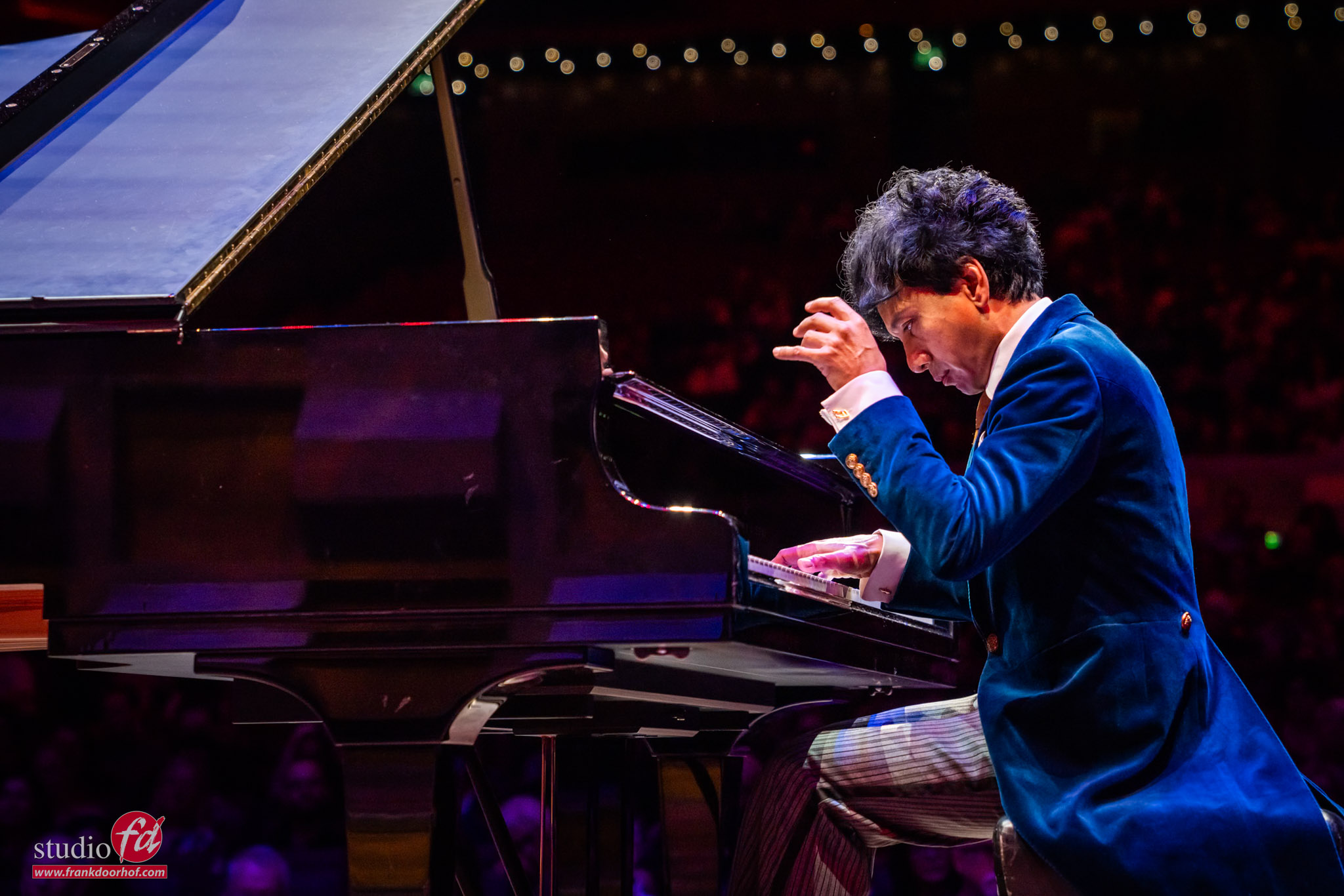
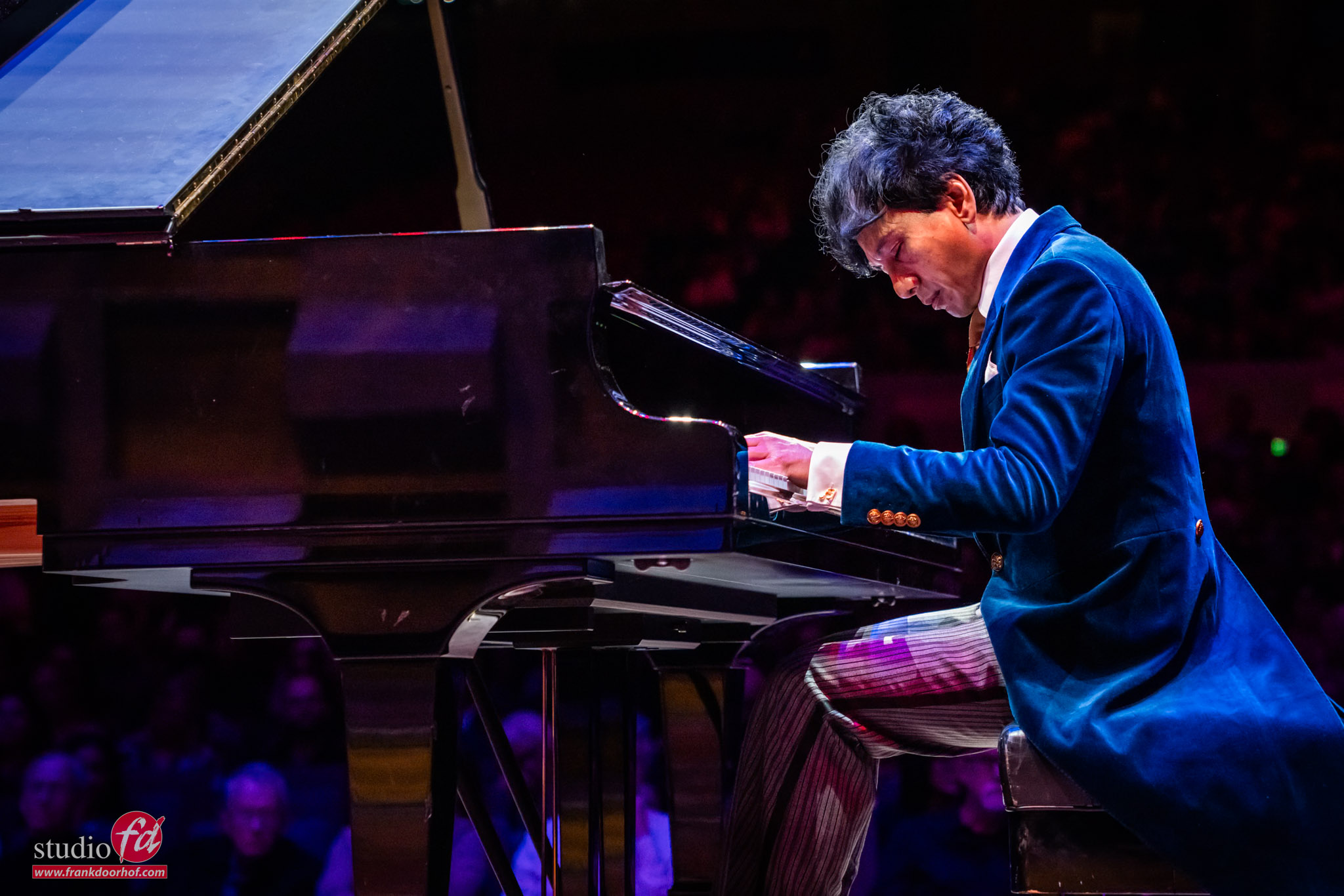
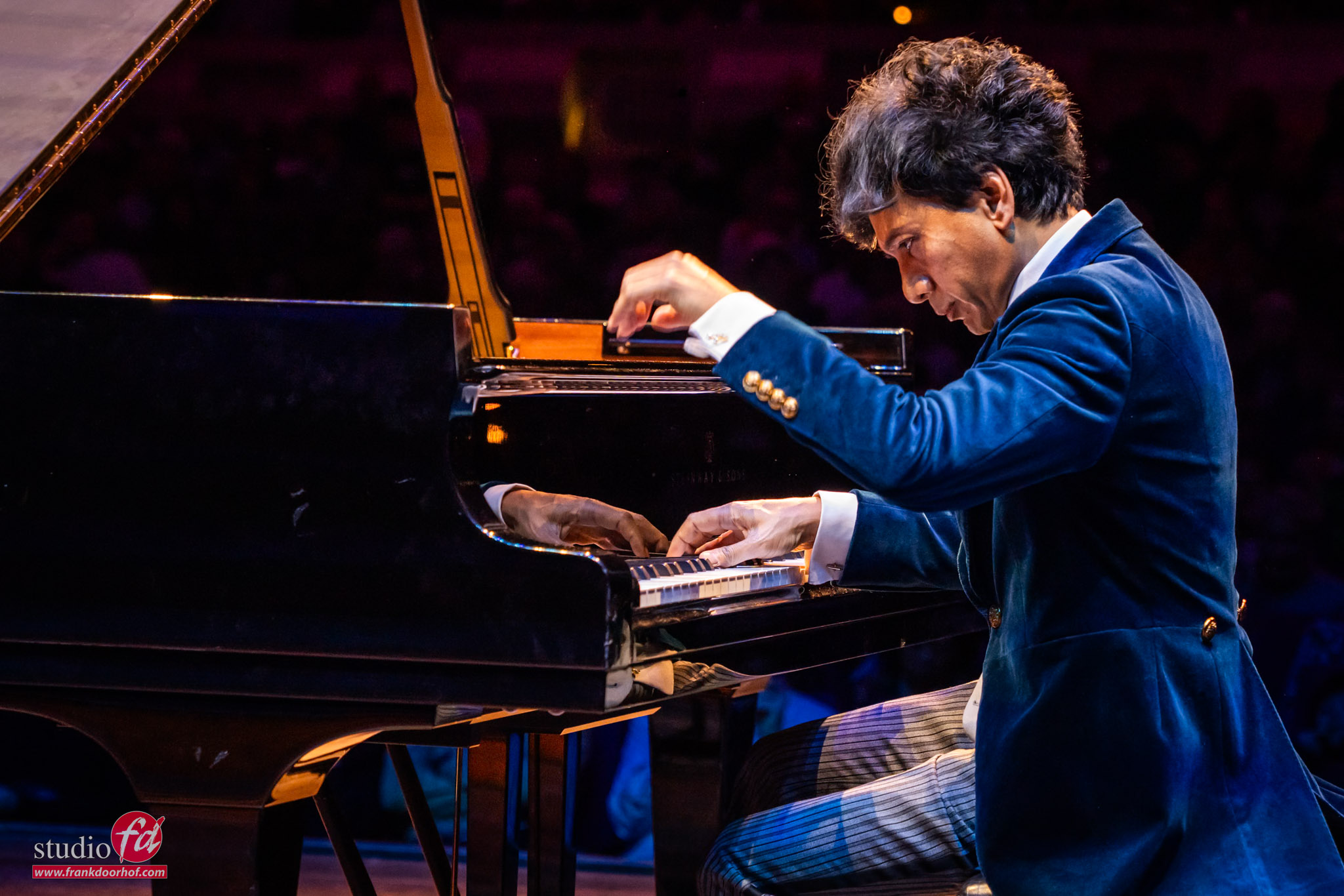
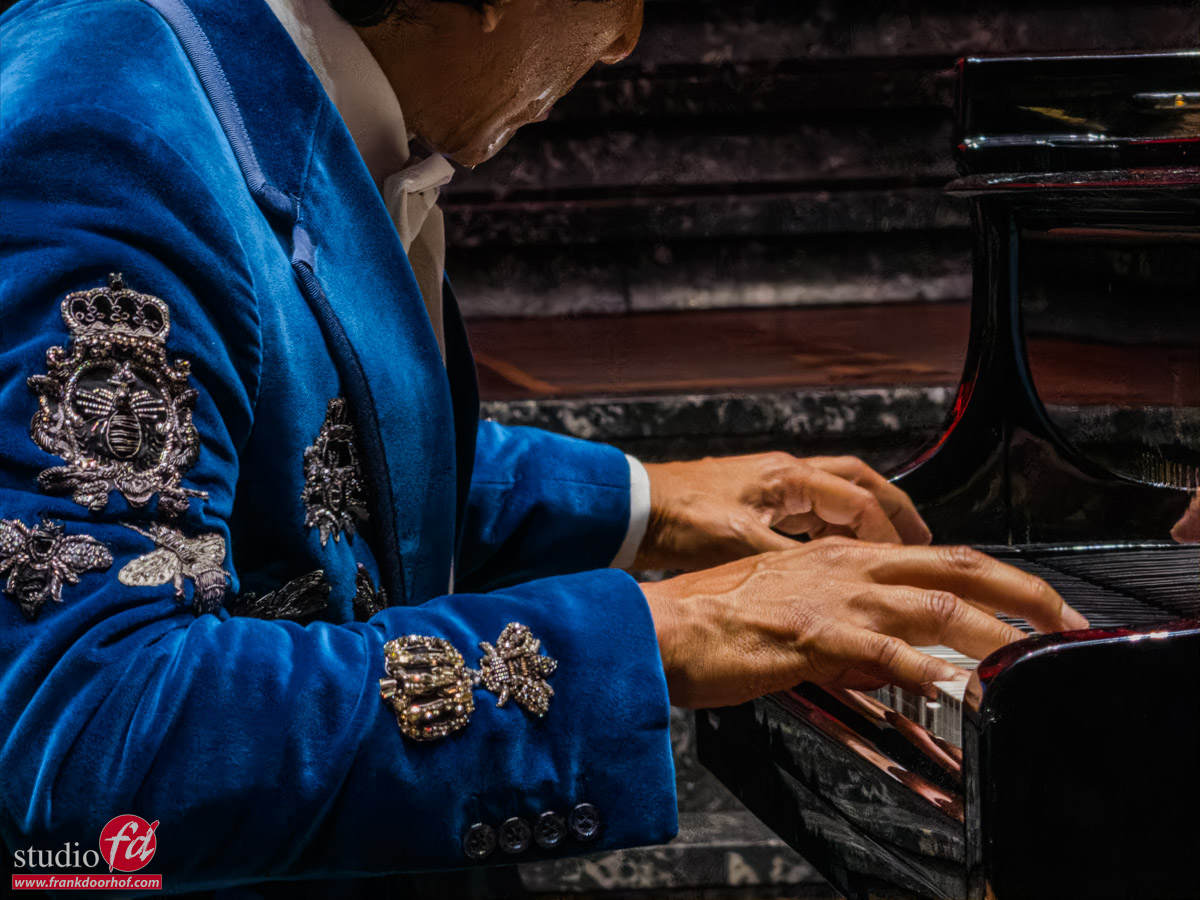
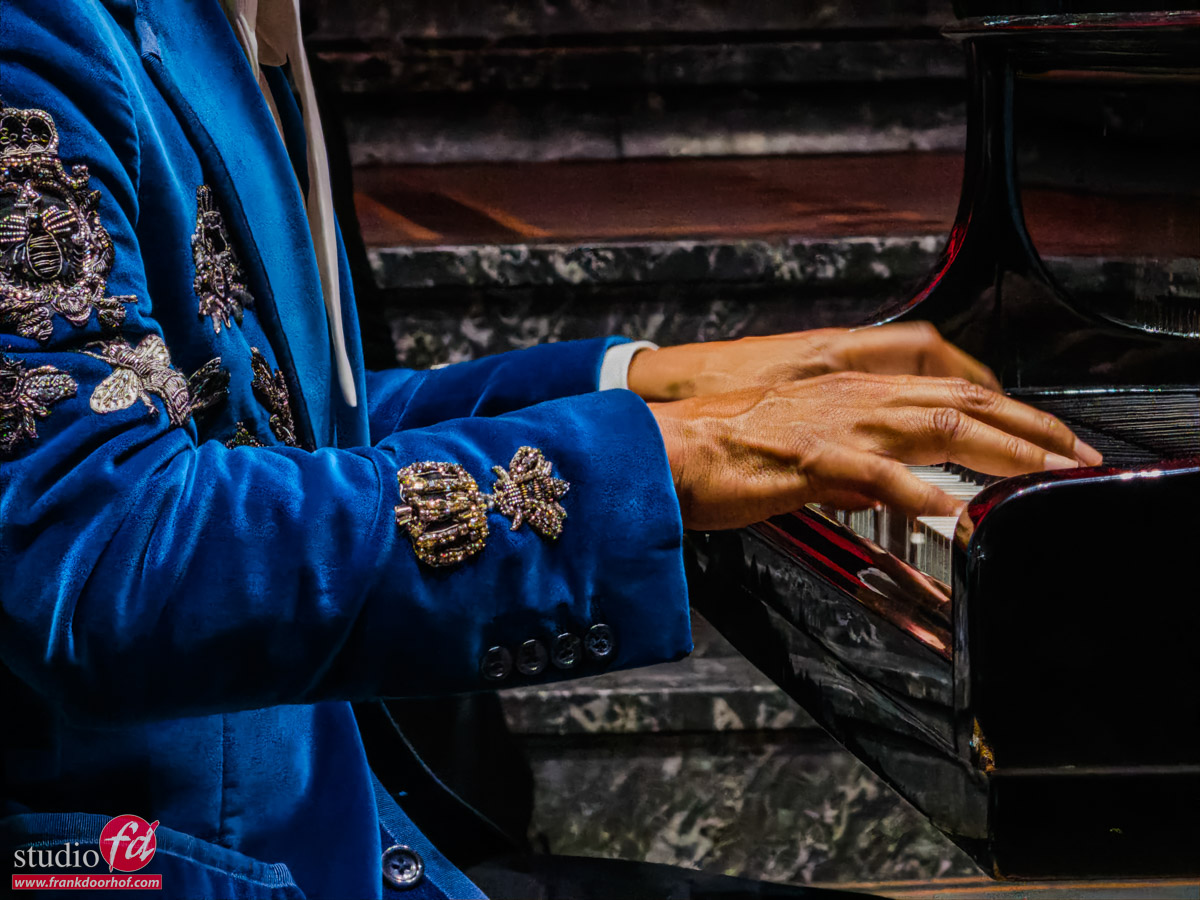
With the closeups I try to get different poses of the hands and of course different angles, love using wide angles in most venues.

Part 2

After sitting on the stage for an hour it was great to stretch my legs and move around.
As mentioned I started all the way on top and move slowly down.

Part 3

And finally the images right in front of the stage.

I hope you enjoyed this blogpost.
I would love to thank from my side team Wibi for always being awesome to work with.
And of course check out www.soerjadi.com for more info (and photos) about Wibi.

The behind the scenes story

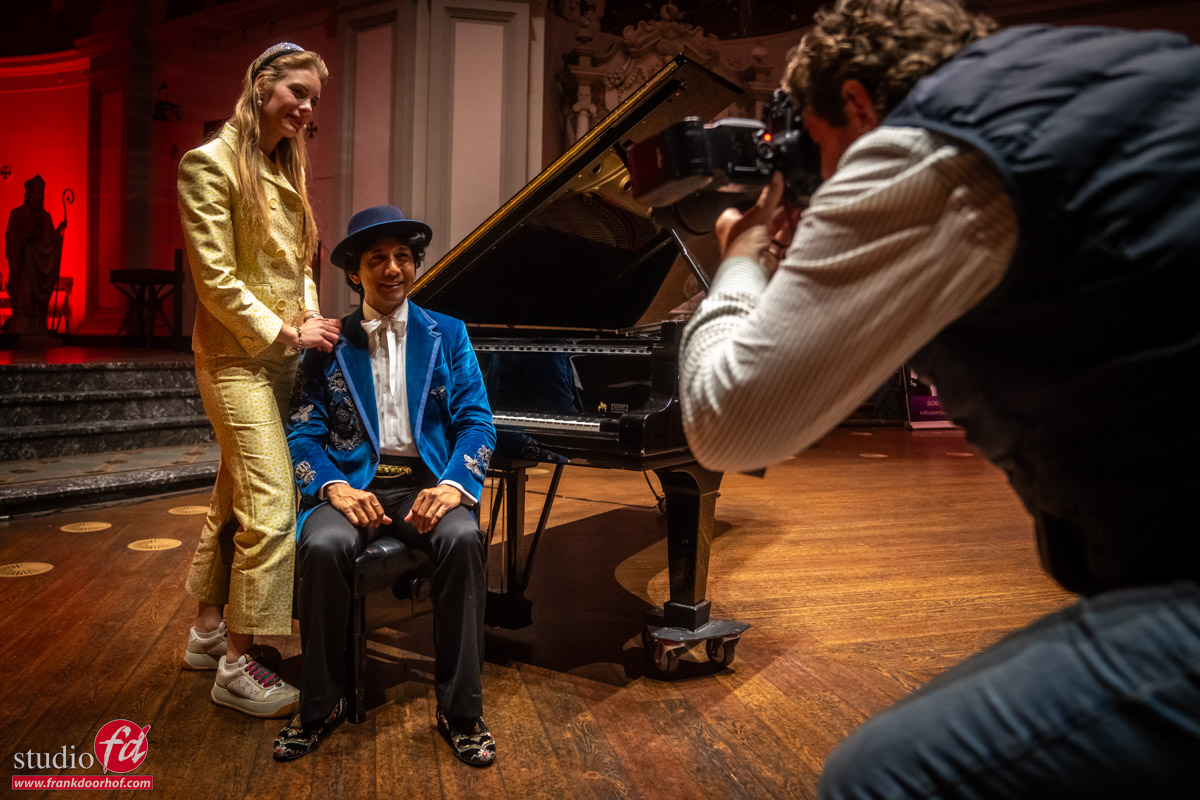
Concert photography, don’t forget the behind-the-scenes

Often forgotten, but often most appreciated

In the previous blog post, I already talked about the techniques, gear, and shared photos from the concert. But today I want to talk about something else. Behind-the-scenes shots.


Photography is storytelling

As photographers, we are, of course ,storytellers.
From the Stone Age up till now the main reason we shoot photos, paint, draw, create music, etc. is to tell stories, process our emotions etc.
Well, ok, I also don’t know where some photos fit, but overall I think it’s pretty accurate.

In essence, “we capture unique moments in time that never come back again.”

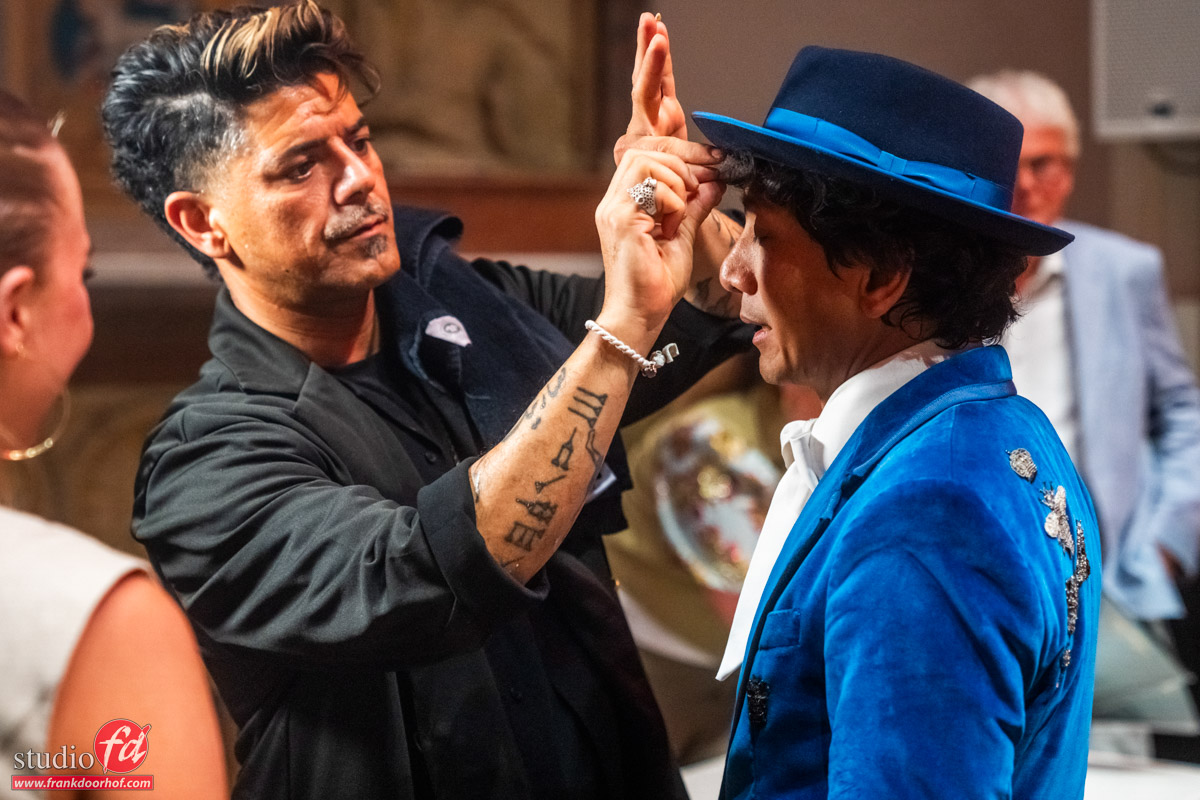
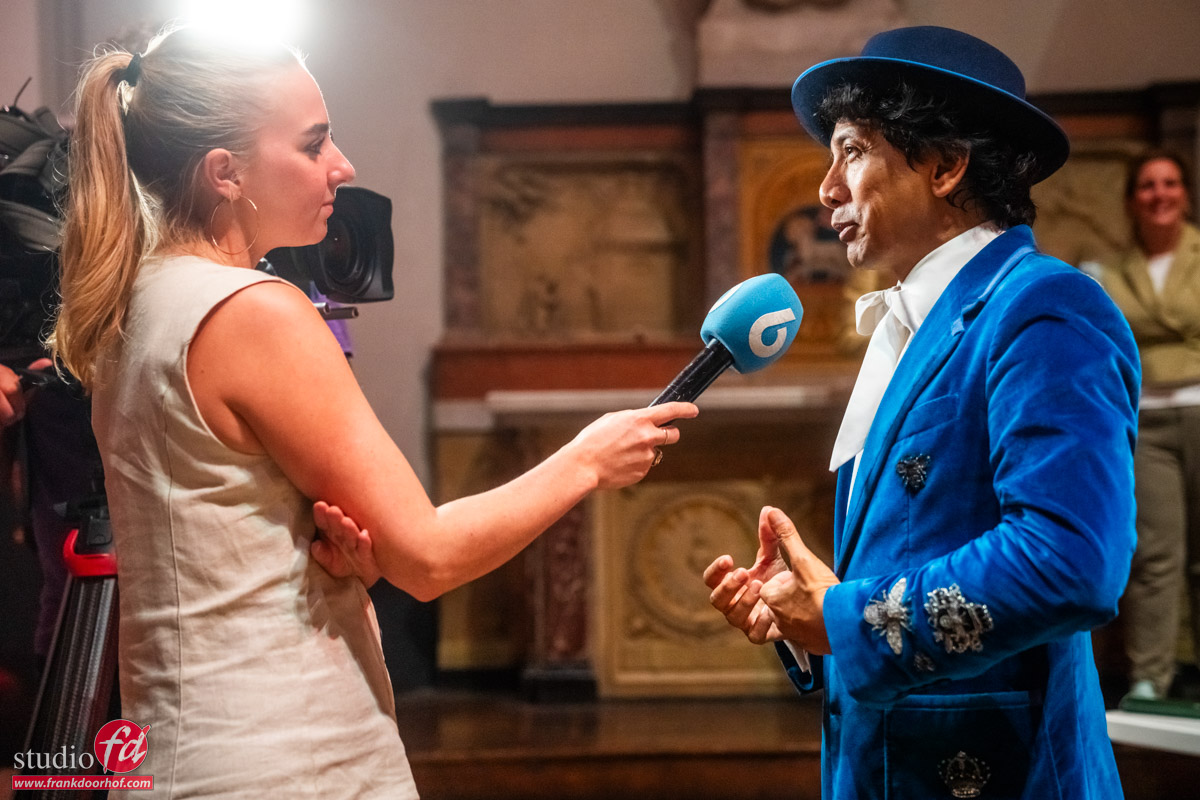
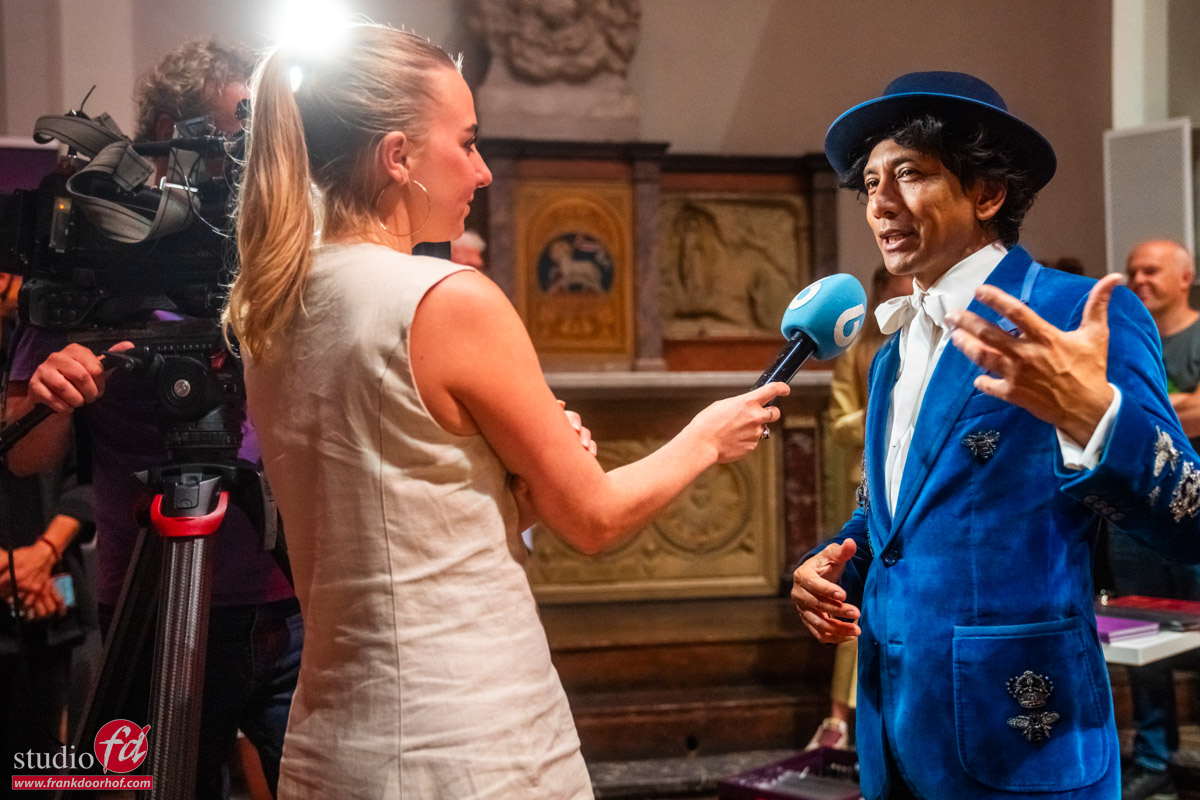
When I shoot a concert/event, I always love to shoot some extra behind-the-scenes images.
Also, during the recent concert in the Duif with Wibi Soerjadi I shot some behind-the-scenes images I wanted to share today.

behind the scenes concert photography behind the scenes concert photography
Why shoot behind-the-scenes shots?


Of course, I still try to do my best to get interesting shots, lighting, etc.
Behind-the-scenes doesn’t mean “just spray and pray”. You can get some really nice results by just taking some extra care of lighting, angles, etc.
During the TV interview, I used the light from the camera in combination with the K&F concept black diffusion filter for a very nice soft glow in the image. Using a lower angle, I got some nice contrast in Wibi’s face, and it made the storytelling part more interesting.

But also capture that quick moment where his stylist quickly adjusts some final details.
How many of those images do you think he gets?
And how handy would it be to have an artist’s stylist as your fan for the great images you always give him/her.

Behind-the-scenes, concert photography
As photographers, we often don’t have a lot of images where you can see us at work.
So when I saw that Edwin Smulders was taking some images of Wibi for the magazines he works for, I thought it would be fun to shoot some images of Edwin at work.

Behind-the-scenes images are great for you as a record of the events.
And behind-the-scenes shots are great for the artist. It’s a registration of details they don’t always get or think about.
Don’t forget, behind-the-scenes images are also great to build networks and friends. Often, the people behind the scenes work very hard and love the images. So, they are always much more open to let you do your work. Or even get you access you would normally never get, even if your event photos are top notch.

I can’t stress enough the importance of some behind-the-scenes images.
So the next time you shoot an event, or even a family, in your studio. Think about the behind-the-scenes or fun shots.
It happened more than once that my client prefers the fun shots I took during a shoot compared to the more posed (read slightly uncomfortable) shots.


Wibi Soerjadi at the Duif in Amsterdam

Shooting a concert can be a real challenge
As a photographer, I love challenges, but some will also add a lot of stress, especially when the bar is already set pretty high. This blog is about concert photography tips and tricks.
I’ve been photographing Wibi Soerjadi for many years, and over the years we’ve become close friends.
One of the advantages of knowing the artist very well is that I’m allowed to shoot the whole concert from any angle I wish.
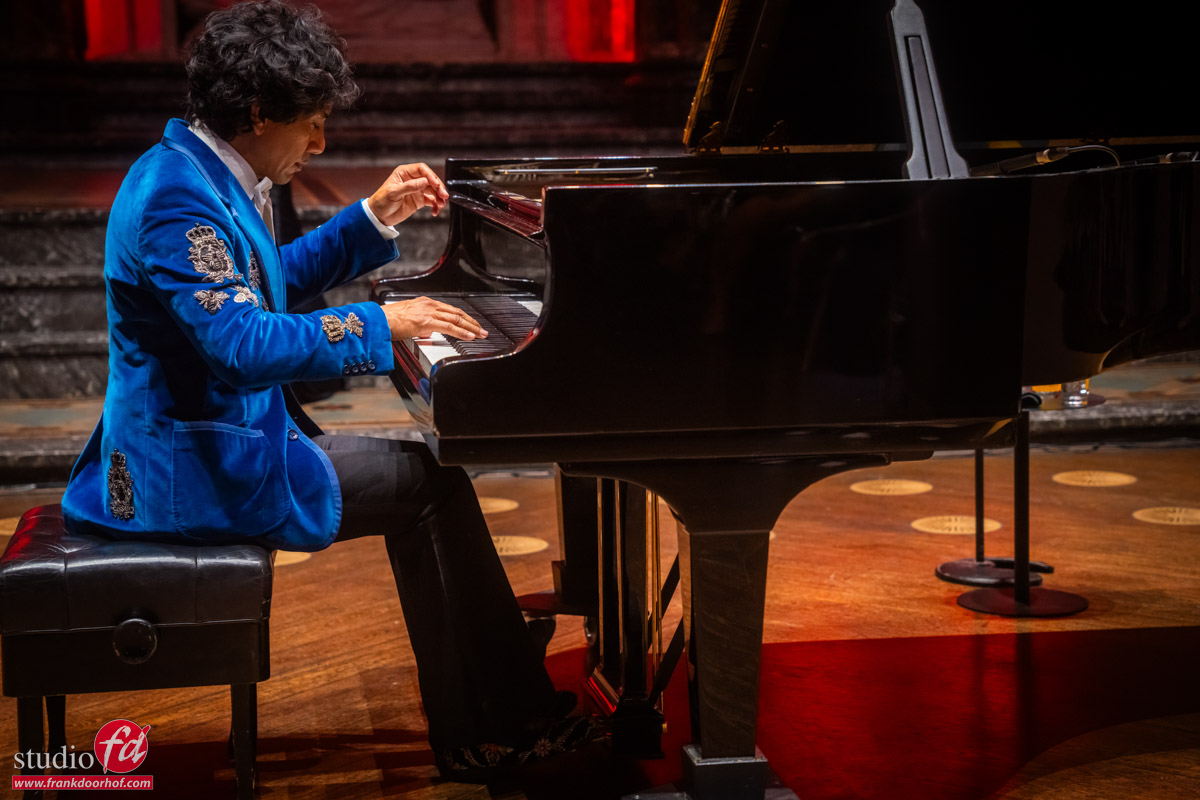
Well, ok, there are some limitations of course. I’m always aware of the audience and behave as a guest instead of part of the organisation.

But overall, I’m pretty free in what I want to do.

concert photography tips and tricks, Wibi Soerjadi in De Duif in Amsterdam
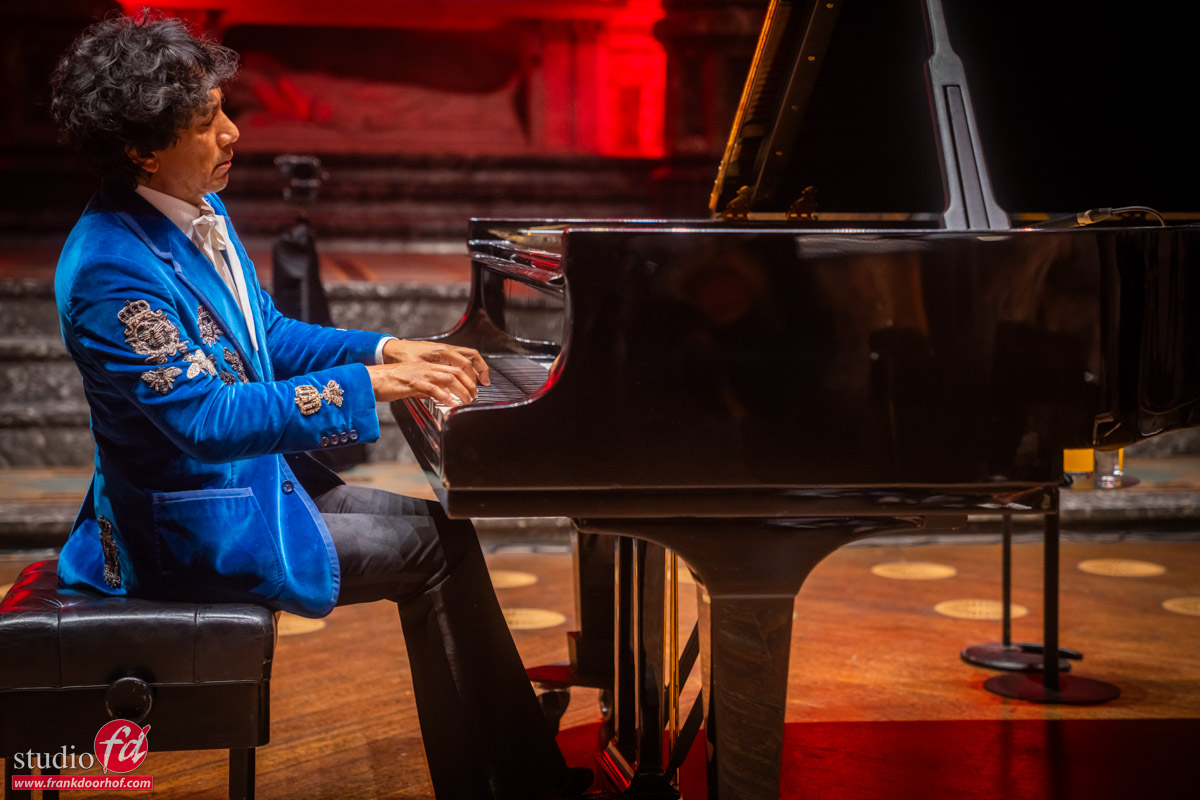
De Duif in Amsterdam is a former church. It’s located between houses.

The camera challenge during concert photography
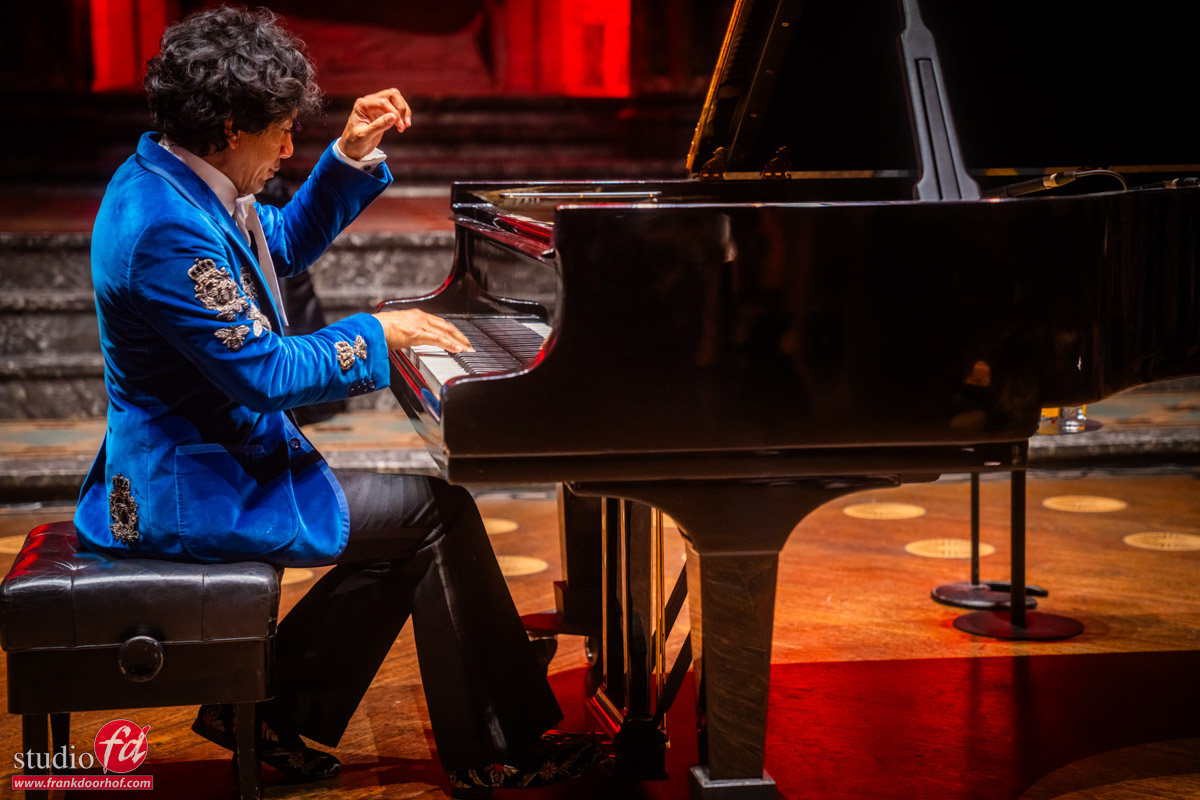
As mentioned, I’ve been shooting Wibi for many years, and it’s awesome to see how much better cameras have become.
Especially with live piano recitals or orchestra’s there are many obstacles I never realized when I started doing these kinds of concerts.
I’ve shot some rock performances, and although they are tricky, the lighting is often great for creative photography. You can often work with a shallow DOF, and as long as you have enough going on on stage, like smoke, colored lights, etc., it’s easy to get a lot of different moods and feels in your images.
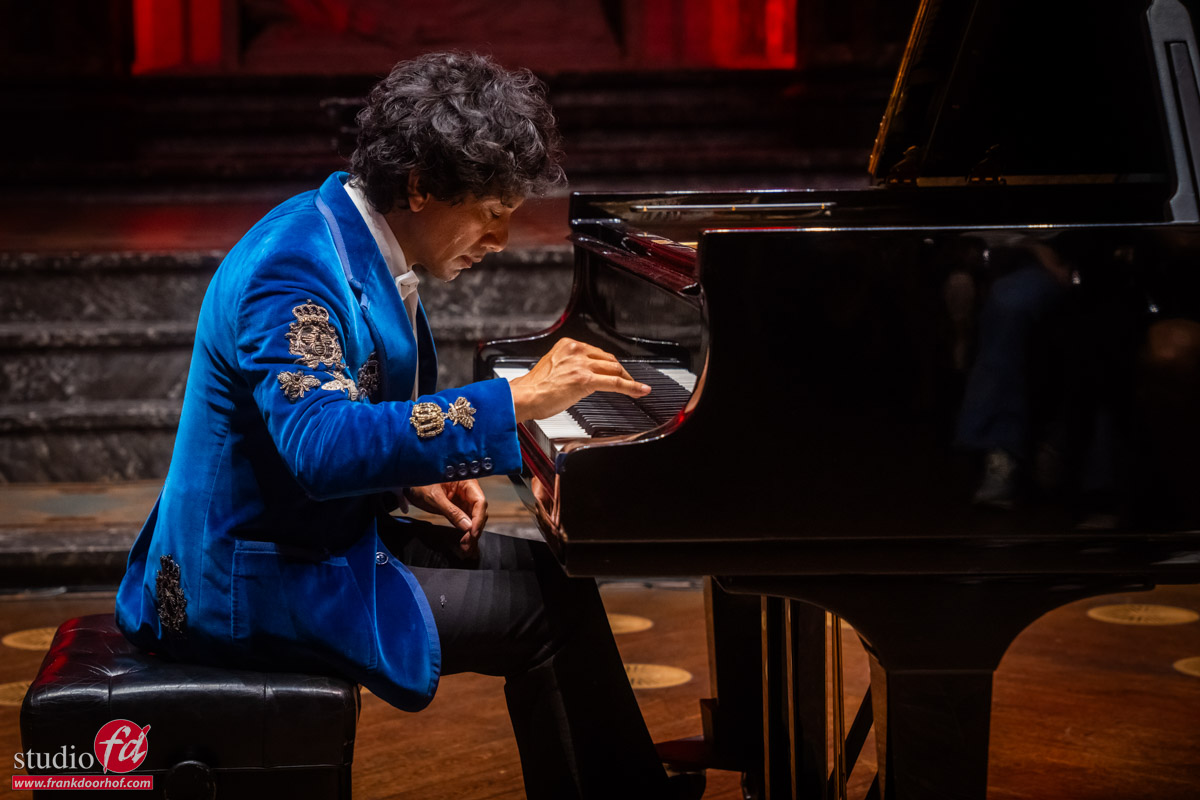
When I shoot Wibi, it’s “slightly different”.
Except for the awesome Christmas concerts in the Royal Concertgebouw in Amsterdam, the lighting is often non-existent, or very dim, and almost always constant. In other words, if the lighting guys don’t do their work correctly, I end up with blowout images or awful shadows. Luckily, I have had some control over the lighting for the last few years and am allowed to change spots and outputs. Which in all honesty, makes my life a lot easier. It doesn’t create magical studio lighting setups, but at least I can get rid of a too harsh accent light or a spot that’s too bright or reflecting in the piano. It helps a bit.

And sometimes there is no lighting at all, or just a small accent light to highlight the location, like in the situation you are going to see today. Let’s continue with some concert photography tips and tricks

So, what is the challenge for the camera?

Aperture and focus assist


When I shoot Wibi, for example, I have a few things I need.
I want the artist’s face sharp, but also at least one hand, and preferably both. Which also means you can see the venue and the audience, preferably slightly out of focus. This is also one of the “demands” or “things that make my clients happy,” no f1.8 shots, but showing the location in these kinds of shots is pretty essential.

So I’m mostly shooting at F2.8-F4.0, depending on lens and location.
Because I’m mostly shooting during the concert itself, I have disabled ALL focus assists, so no “searchlight” and no beeps, and of course, the silent mode is engaged.

Funny anecdote, when Sony introduced the silent mode, one of the first concerts I tried it out at was during a concert by Wibi. Because I’m really close to him, I get an awesome experience. But the disadvantage is that he actually hears everything I do. And although I’m always very careful not to disturb him, I thought it was pretty funny when I got a message during the break if I took any photos because he did not hear anything. For me, it was now proven, the silent mode is essential 😀

Now, don’t get me wrong, a fast lens still has huge benefits.
The faster the lens, the more accurate and faster your autofocus system will work, seeing the camera always focuses with a wide open aperture.
Because I’m moving around a lot and a piano recital is pretty “static,” I want to make sure I shoot from as many different angles and positions as possible. This limits my choice a bit in “fast glass,” so my choice is the Sony 24-70 f2.8 G-master. I’m also carrying a second body with a Sigma 12-24, which I use for some audience shots and more “funky” angles. For some images, I will switch lenses between the bodies (one is an A7RV and the other an A7RIII).

Shutter speed

Besides having to shoot with a reasonable depth of field, I also have to shoot a lot of the images on a rather high shutter speed.
Wibi moves around pretty fast, and the best shots for me are the ones where his hands are frozen in the air with maybe just a slight trail of movement but the face has to be razor-sharp. This mostly means that my standard shutter speed is 1/125, with some images to make sure I get them at 1/250-1/500.


ISO

And of course, the ISO
This is where I have seen a HUGE boost in performance over the last 3 years.
Especially the Sony A7RV has made a huge step forward in focus accuracy, but also in high ISO noise. It seems to be easier to remove than on the A7RIV.
Because I’m shooting on a smaller aperture and with a higher shutter speed you would normally prefer in these kinds of lighting situations, I have to accept that my ISO is mostly all over the place.  Some images are shot at ISO1600-3200, which is fine and almost needs no noise reduction except a slight adjustment in Lightroom. But often I’m hitting the ISO16000-32000 with peaks to ISO64000, and although for the internet those images can be used, they are not suitable for large posters, billboards, or pillars.

And this is where technology has made a HUGE step forward.
I’m using mostly a mix of Topaz PhotoAI and the new Lightroom online AI noise reduction.
Both solutions are 100% improvements over anything I used before. Especially in small details like hair and reflections, the new algorithms are great for keeping a natural look without that paintery look we all “hate”.

An added advantage of Topaz PhotoAI is that if the camera slightly misses focus, I’m now able to correct this. It’s no magic wand that will fix everything you mess up, but it can save some images that were very close but not perfect.


Todays concert

Today I want to share the results from a very special one-time concert.
The concert was in a beautiful location, “The Duif” in Amsterdam. As a photographer, this is already great, so I wanted to make sure I got the best out of the location.

The first part of the concert was a collection of classical pieces. The second part, however, would be the first and probably only time Wibi would perform an 11-part composition, “Flashback,” he wrote to deal with a personal loss. Because I knew this part would be nerve-wrecking and very emotional for Wibi, I decided to do something I normally never do (and it was the right choice). I wanted to make sure I got ALL my shots before the break so I could just sit on my chair and enjoy the composition, shoot some images in between from that location, and not disturb Wibi at all.

As mentioned before, you have to work with the lighting and location you are given.
In my case, “angle is essential” because otherwise I don’t see the piano, the artist, or the hands.
So, for the first series, I’m sitting about 1 meter away from Wibi slightly higher, with the option to go down on the stage in one move and shoot from a very low angle (love those shots).

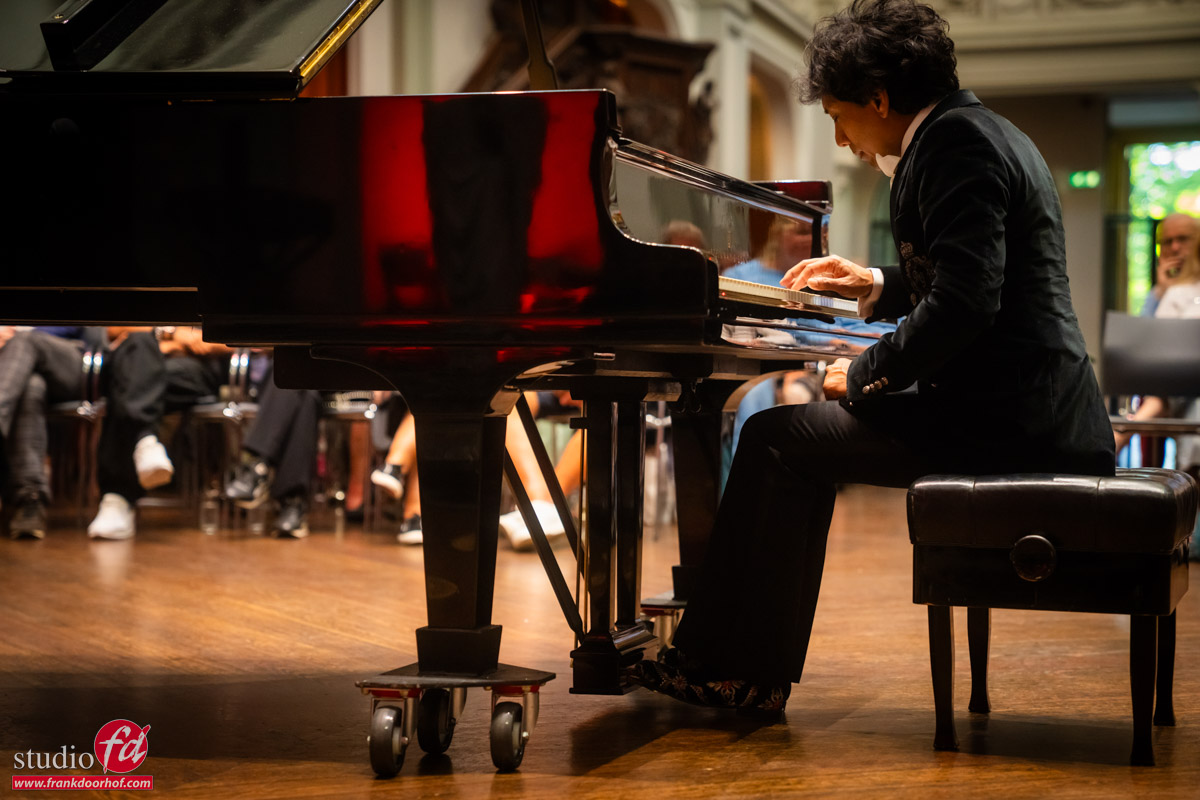
concert photography tips and tricks, a close up of Wibi behind the piano in De Duif in Amsterdam concert photography tips and tricks. you see the audience in the back of the Wibi Soerjadi concert in De Duif in Amsterdam

As you can see, nothing wrong with the shots.
They are proper “registrations,” but we want mor,e of course.
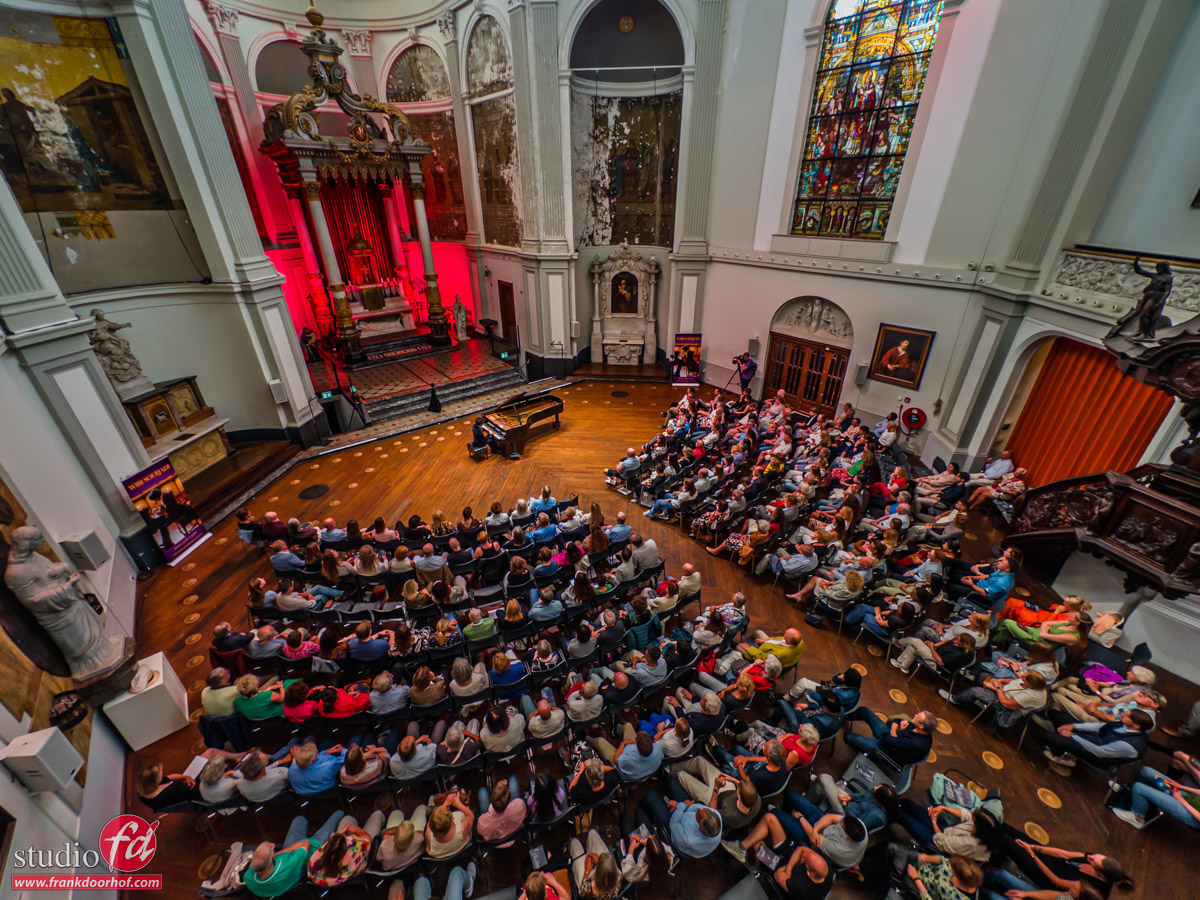
So, let’s run upstairs and shoot some images from the balcony.

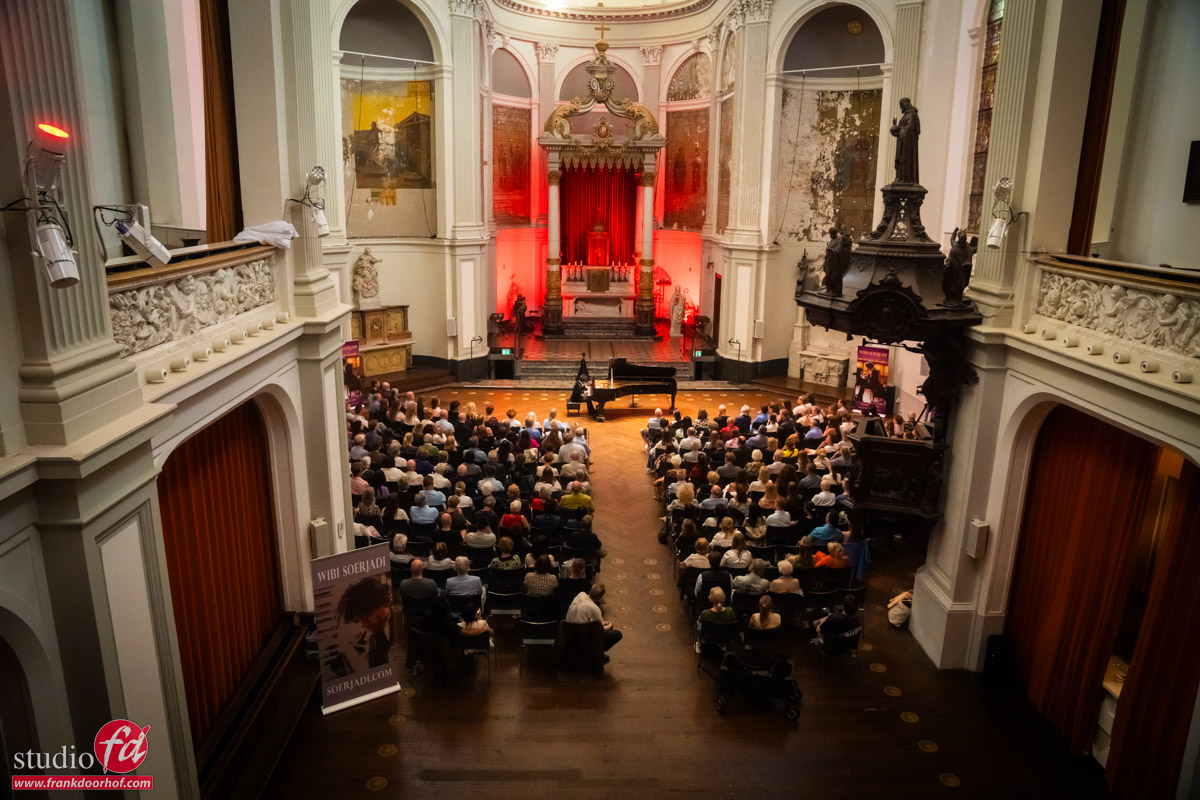
concert photography tips and tricks. shoot a concert from above, you see the audience, the former church and wibi playing the piano

This is the moment I had my lightbulb moment.
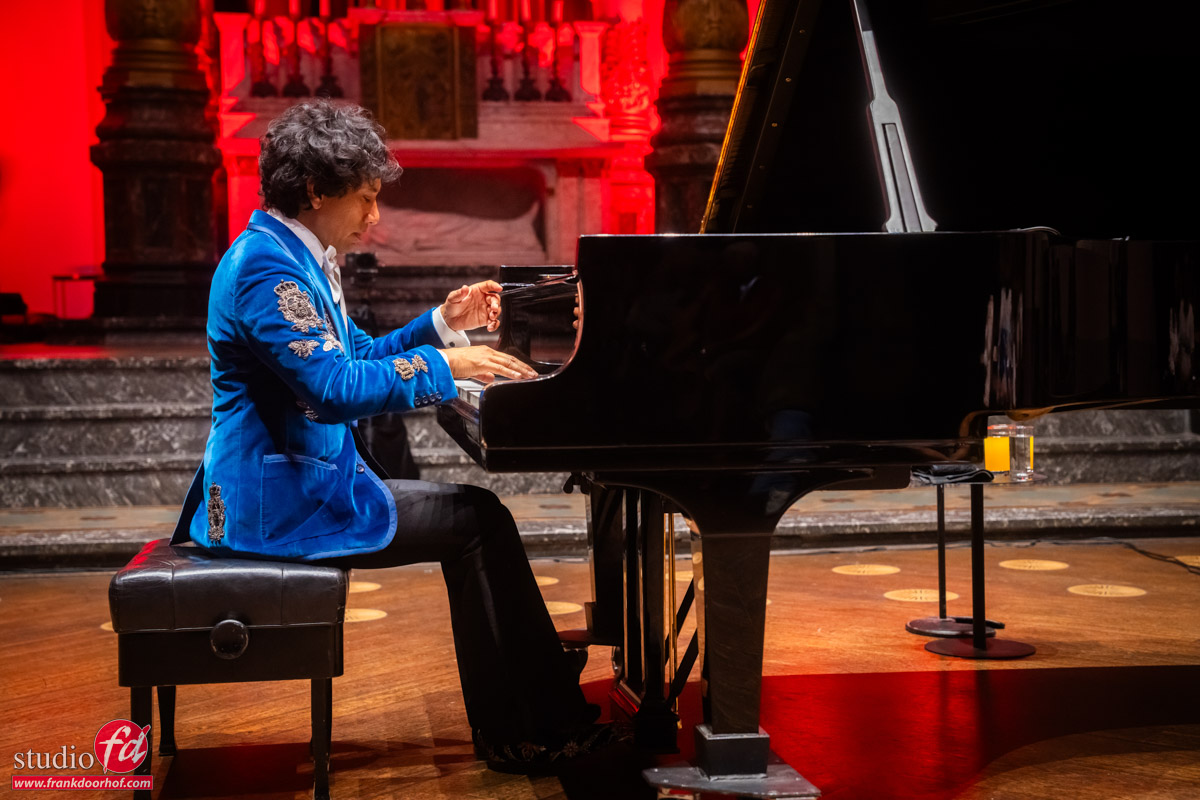
The light was going pretty fast, and the red spot behind Wibi started to show up a lot more than before the concert.
This could be fun.

After the break, I stayed in my seat for the second part of the concert.
One of the perks we have is that I can select my seating, so in all honesty, the following shots are from a position I chose to shoot from.

Don’t forget the close-ups

Here’s another tip about concert photography. First, I always try to get some nice close-ups.
During the first part of the concert, there is no sweat and the artist will look fresh and full of energy. These are the perfect moments for the power shots, the shots that will be used in publications, magazines, etc.
Personally, however, I love the close-ups in the second part of the concerts (I know Wibi prefers the “fresh” ones). For me, the emotion, the sweat, and the expression have so much more power. So I always shoot both 😀

concert photography tips and tricks

concert photography tips and tricks

Another one of my concert photography tips and tricks: take a close-up

concert photography tips and tricks

As you can see, it’s pretty “static”.
There are some different positions of the hands, expression etc. but overall it’s dare I say it… “pretty boring”.

So let’s spice it up.
One of the tricks is extreme close-ups.
In this case, I’m using the 10x zoom on my iPhone to try out the new Adobe camera.
And I’m pretty impressed.
The images look great, but in reality, the lighting was pretty tricky.


More concert photography tips and tricks

It is better for me, draws me more into the story, but it doesn’t show the location.
So, that’s why I love the flip-up screens.
I’m shooting a lot in live view mode both on location and in the studio.`

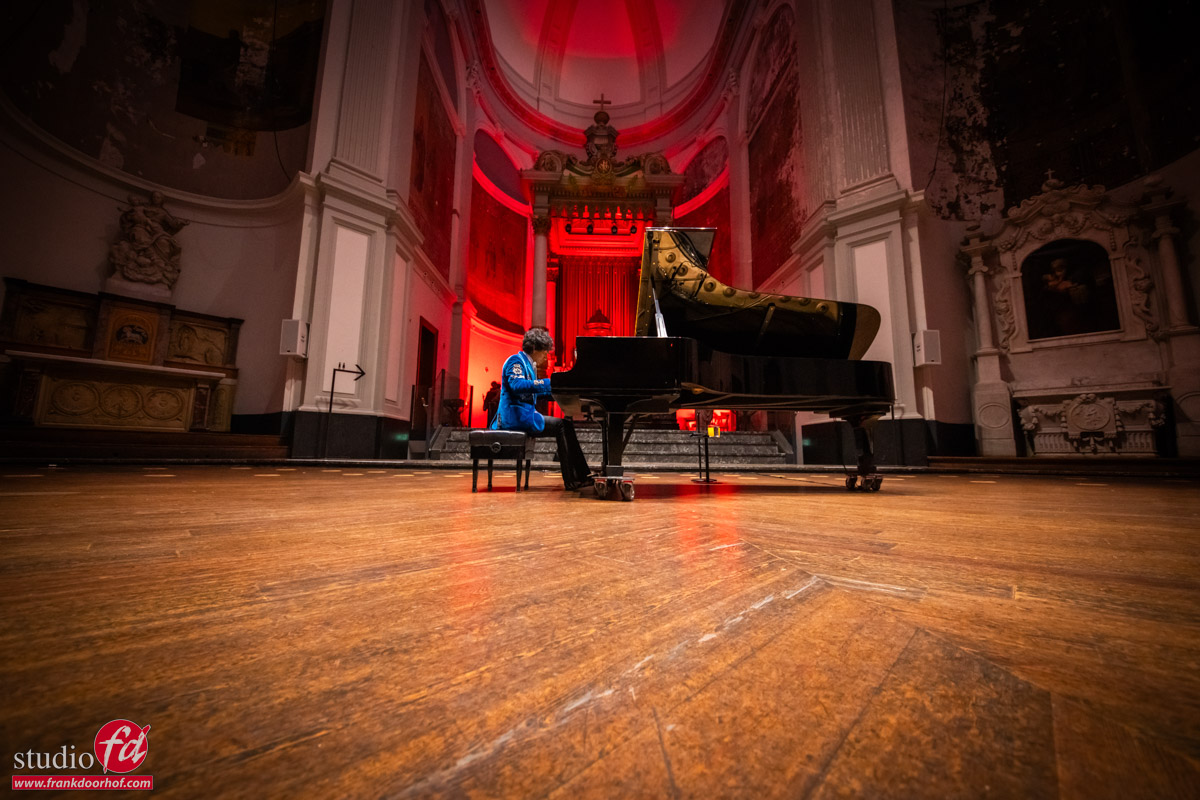
In the studio, it helps a lot that you are automatically shooting from a lower angle, but it also makes eye contact with your subject a lot easier and more “friendly”. On location or in situations like these, I love to use extreme angles. And when using a wide(r) angle, you can really play with the location and “distortion”.

Let me explain.
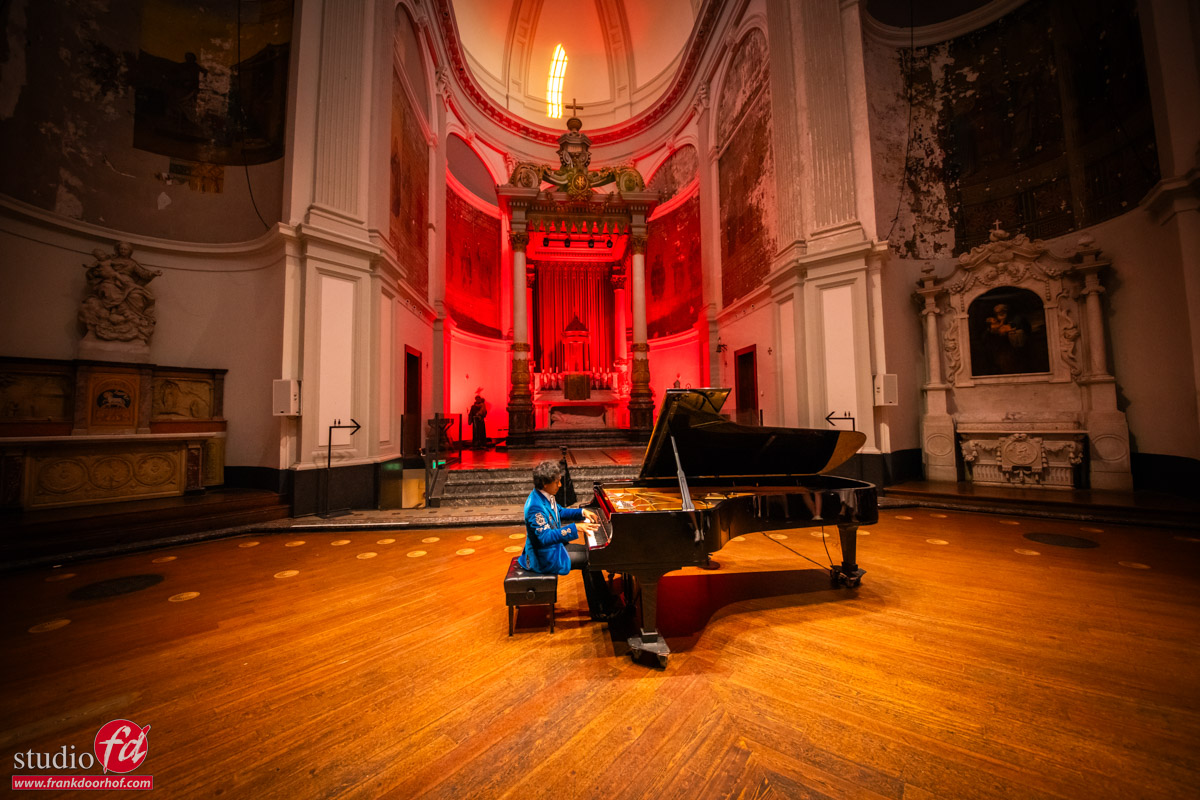
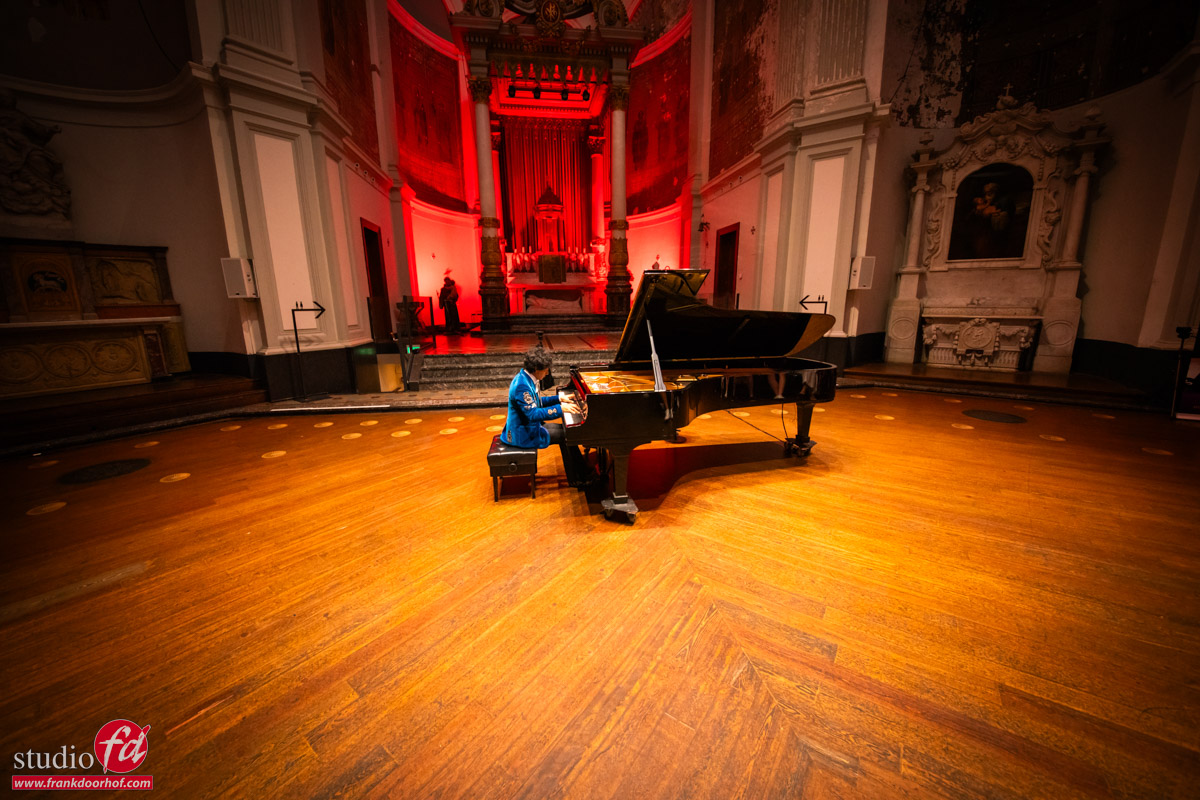
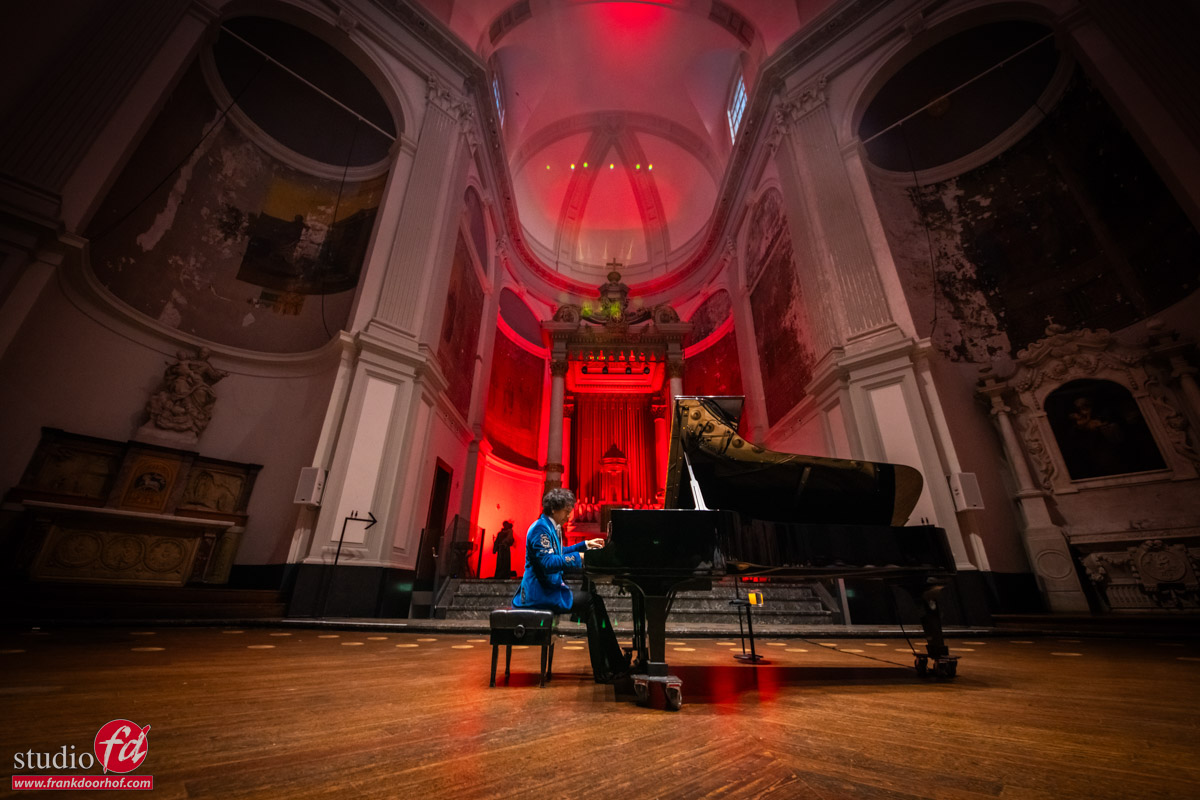
These three images are all shot from the same location, but due to the wide-angle effect, all the angles are very exaggerated, creating an awesome, almost surreal look.
The added advantage is that you can get the whole scene in the frame.

concert photography tips and tricks, shoot from a very low angle

So, depending on where you leave the space, you can play with the look of the scene.
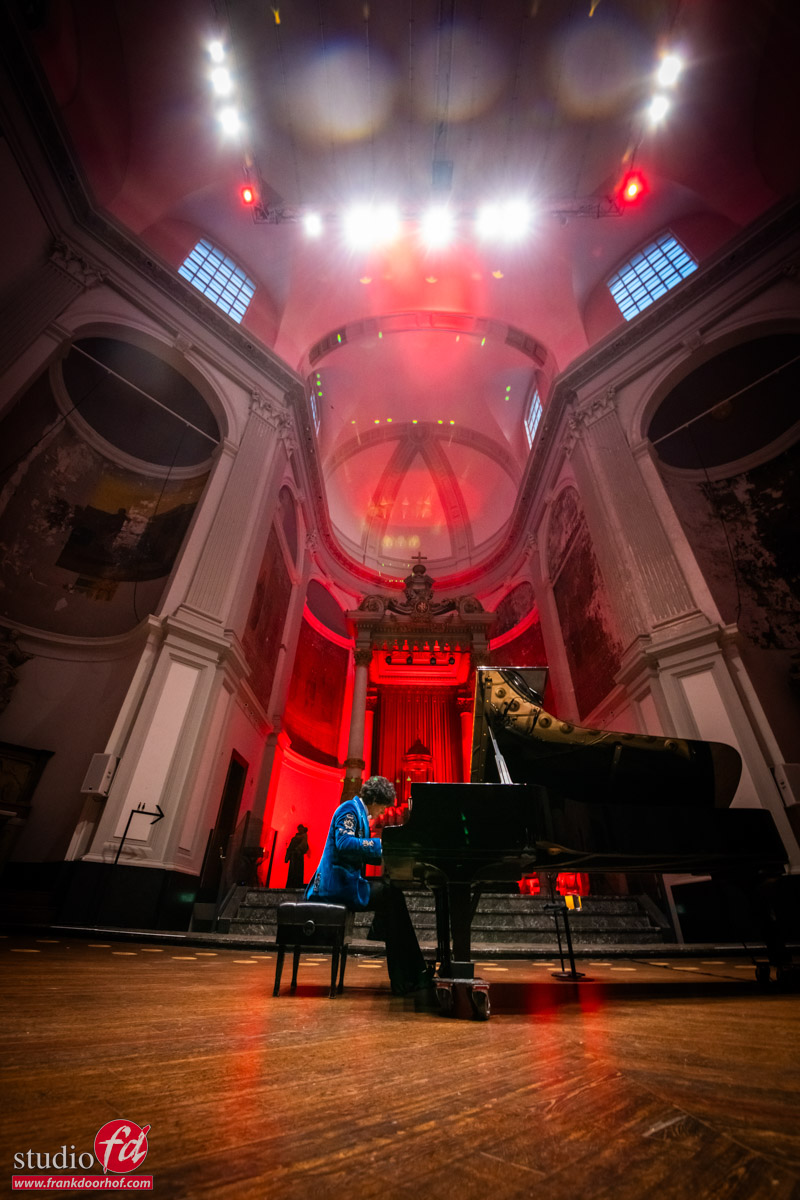
But how about going even more extreme?
I think the following images are some of my all-time favorite concert images.
And the trick was just having loads of luck with the lighting in the ceiling and finding it in the corners of the lens.

concert photography tips and tricks Wibi Soerjadi

Conclusion, concert photography tips and tricks

I hope you enjoyed the behind the scenes look during this special concert and how I got the shots.
All images are almost straight out of the camera.
I only do slight adjustments in Lightroom with these kinds of events. Although in some images I took out reflections in the piano from the audience, which in this case were very distracting.

All events are different, and all clients/artists will have different requests and demands.
The best advice I can give is “behave like a guest that can be kicked out at any moment”.
The audience paid for a relaxing evening, and having a photographer walking around, using flash, tripods, and coaching the artist is, of course, not done. I always try to move between pieces and always put the audience first. I guarantee you that if you follow that simple rule, people will let you do your work and probably even help out. I’ve been offered seating more than once when I was kneeling on the floor or when people were helping out with cameras. It’s all about your behavior, although some people will always find something to complain about.

As most conclusions go, we have to end it.
So for the last shot, I ran back up on the stage and used wide-angle shot to get in the audience and Wibi.
And see there… also the red in the back is now much more noticeable.

concert photography tips and tricks. applause at the end of the concert of Wibi Soerjadi in Amsterdam


Read another blog about concert photography (also with Wibi Soerjadi)


Want to join a concert of Wibi yourself? Check out the Wibi Soerjadi calender