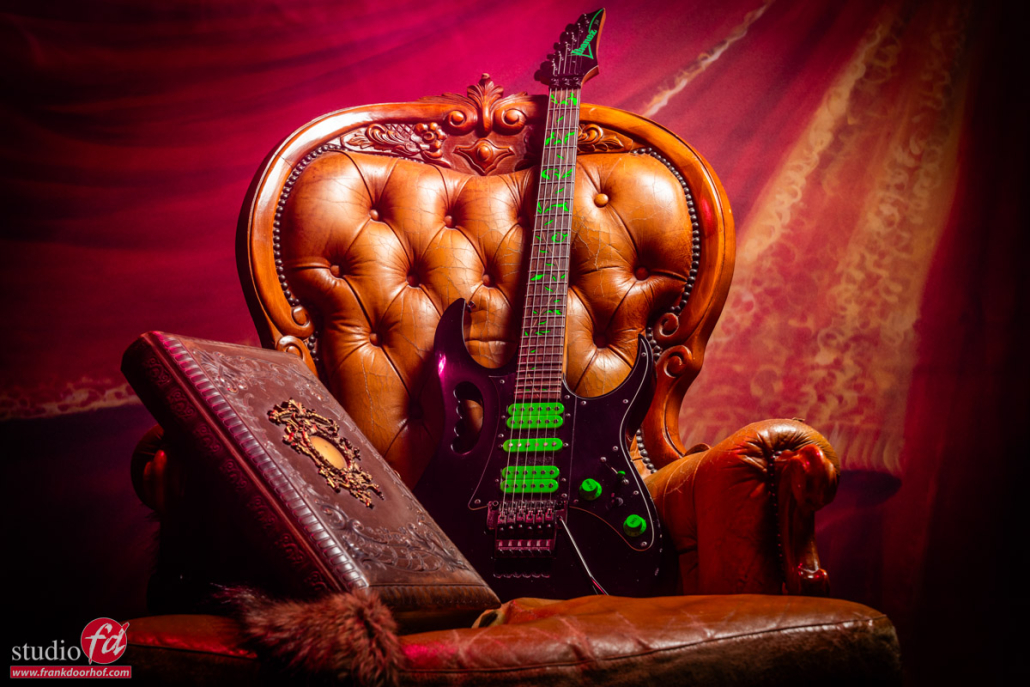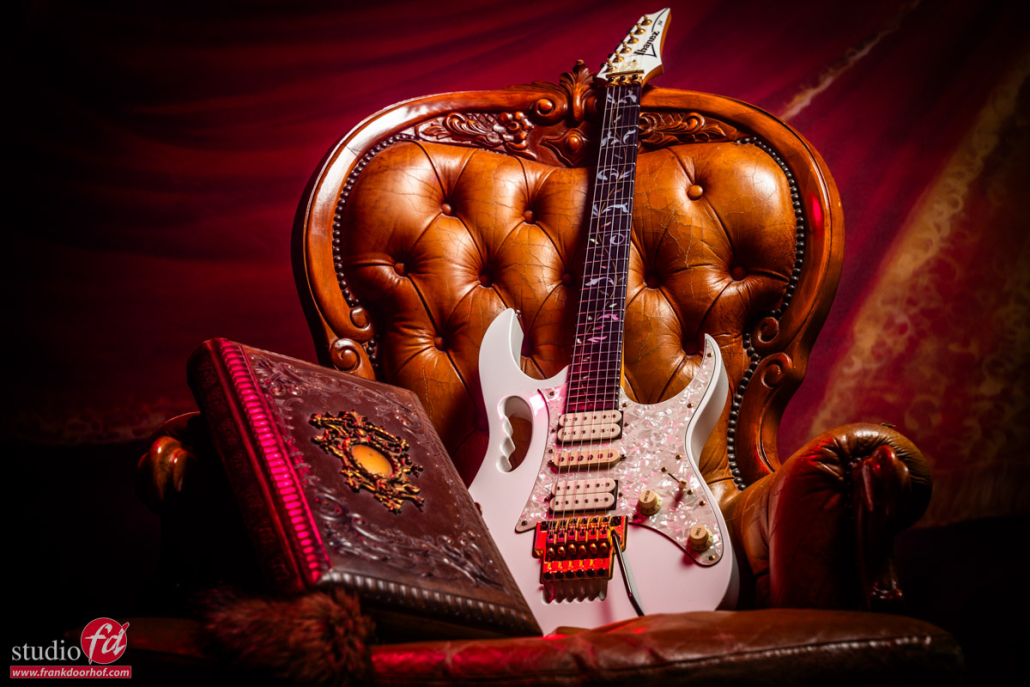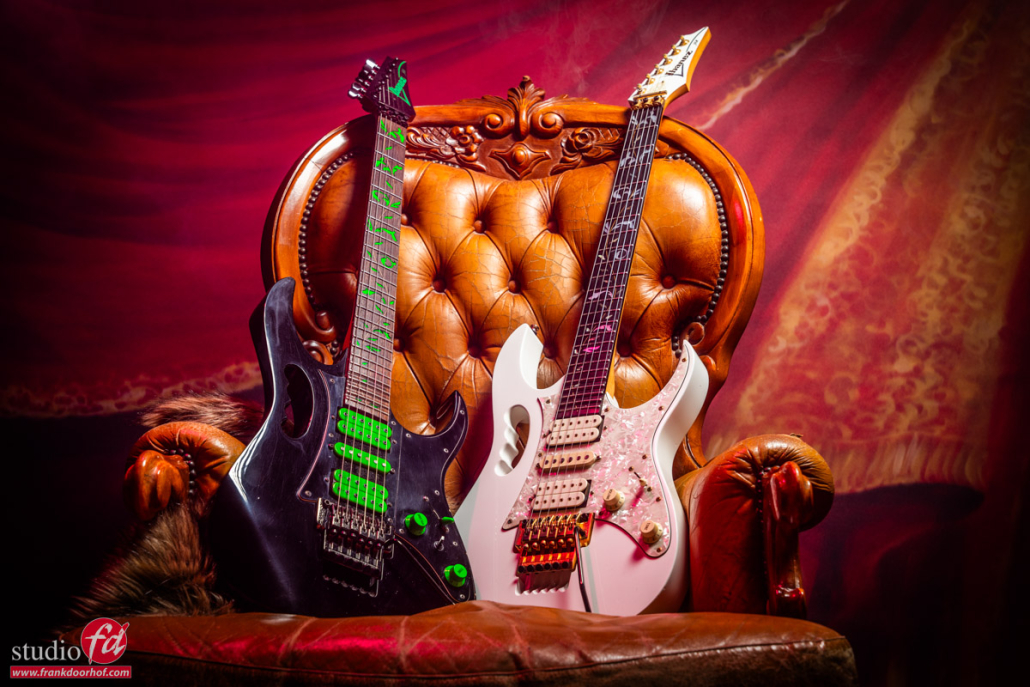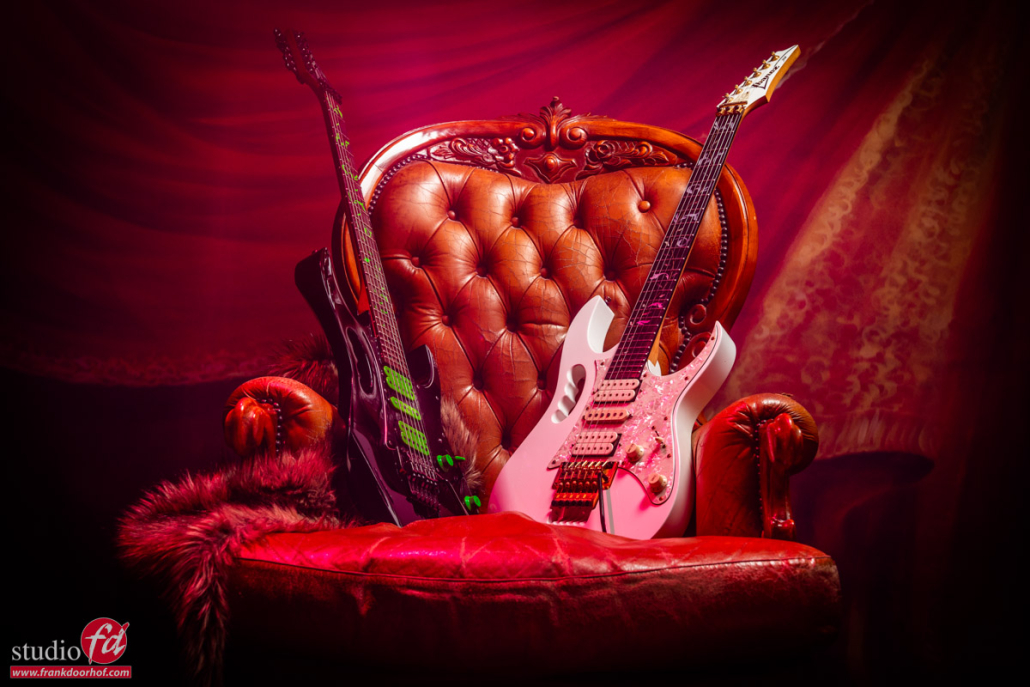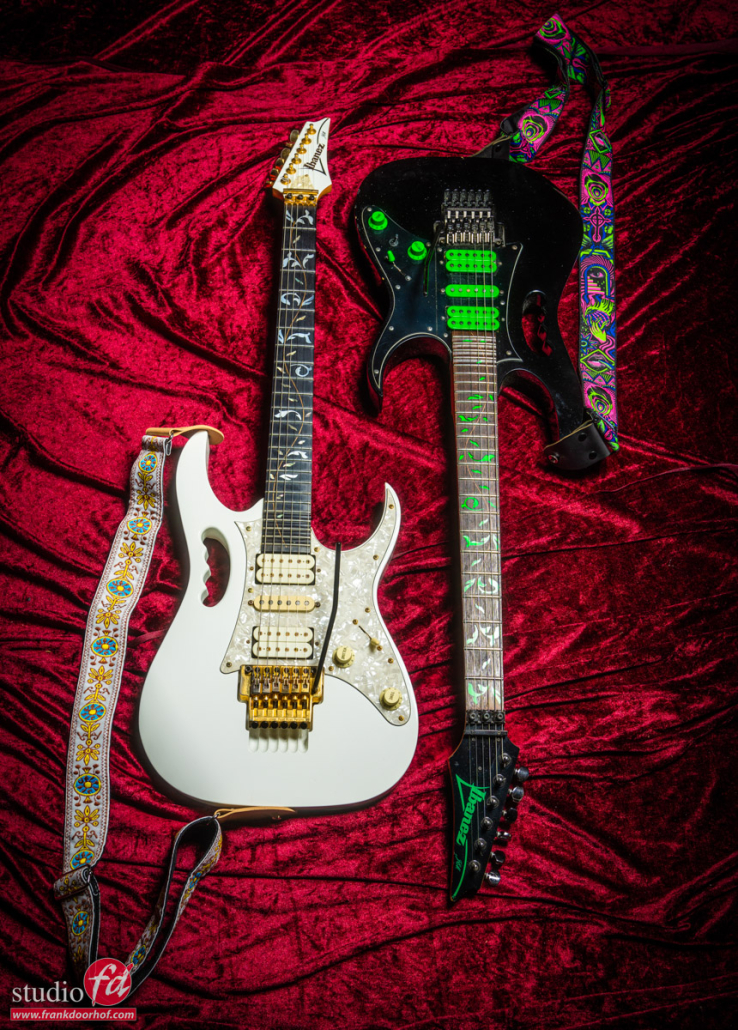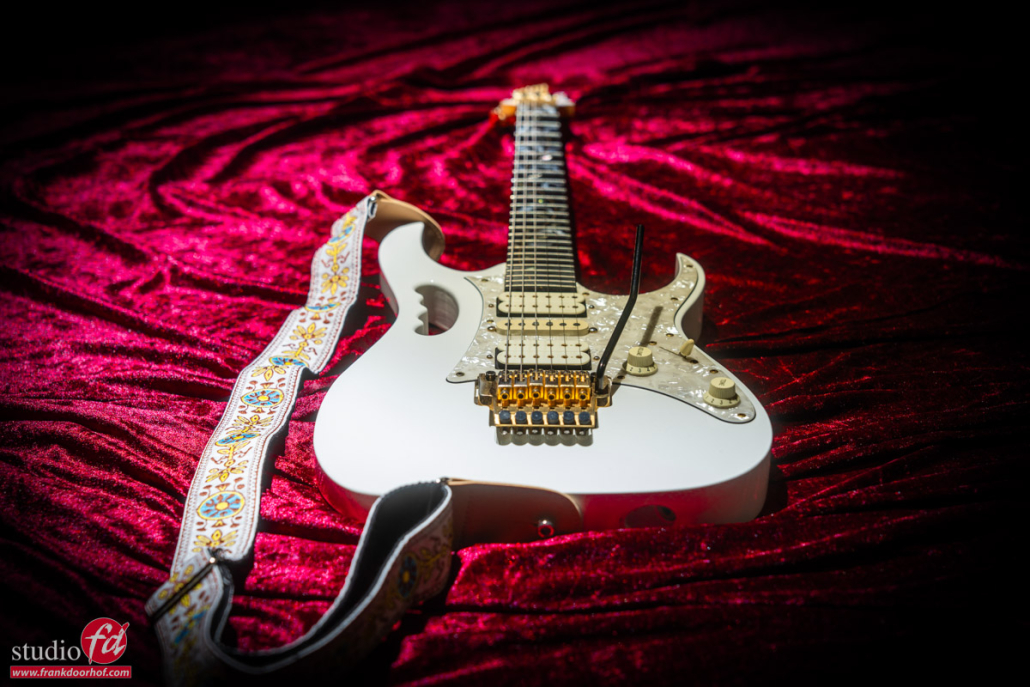
A vintage Charvel
This time, a very special model, a vintage Charvel
It’s no secret that, besides photography, recording music and playing/collecting guitars are a huge passion of mine.
So when we add a new guitar to the collection, I love to combine the two and take the guitar to the studio for some quick shots. Therefore, this blog is about my new vintage Charvel guitar.
Photographing Charvel
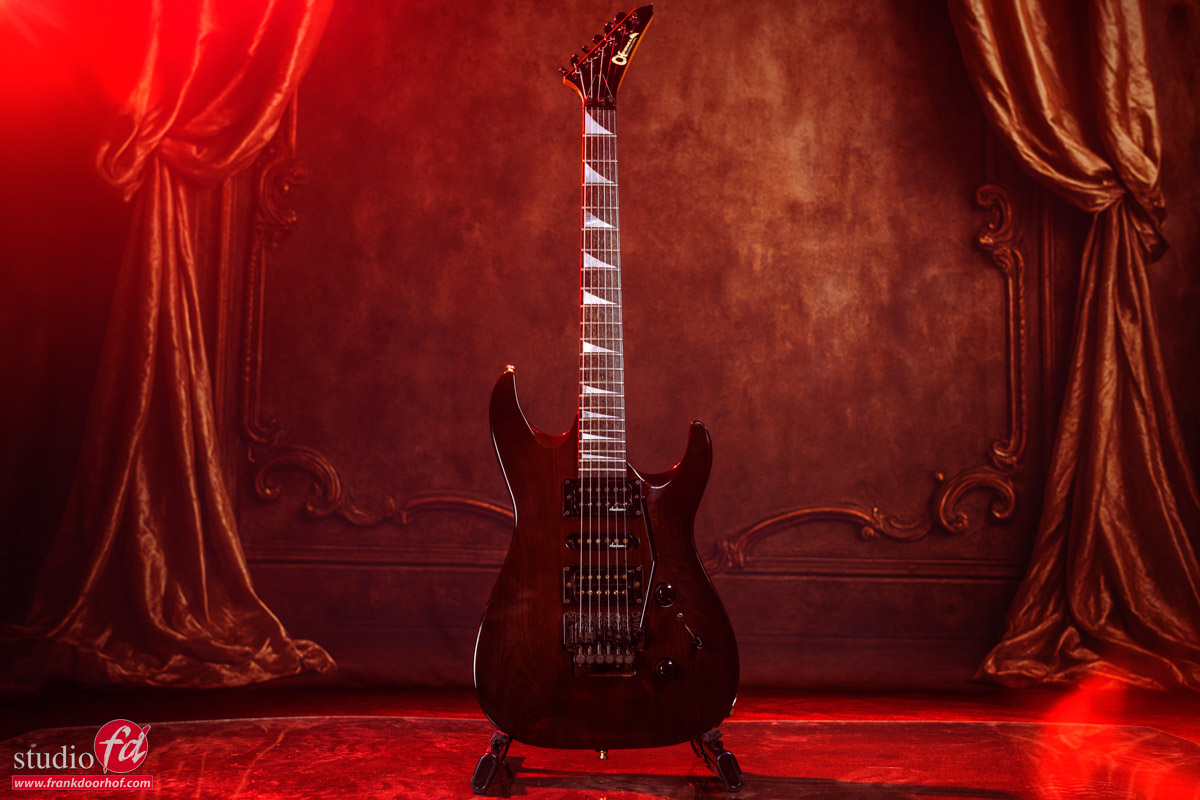
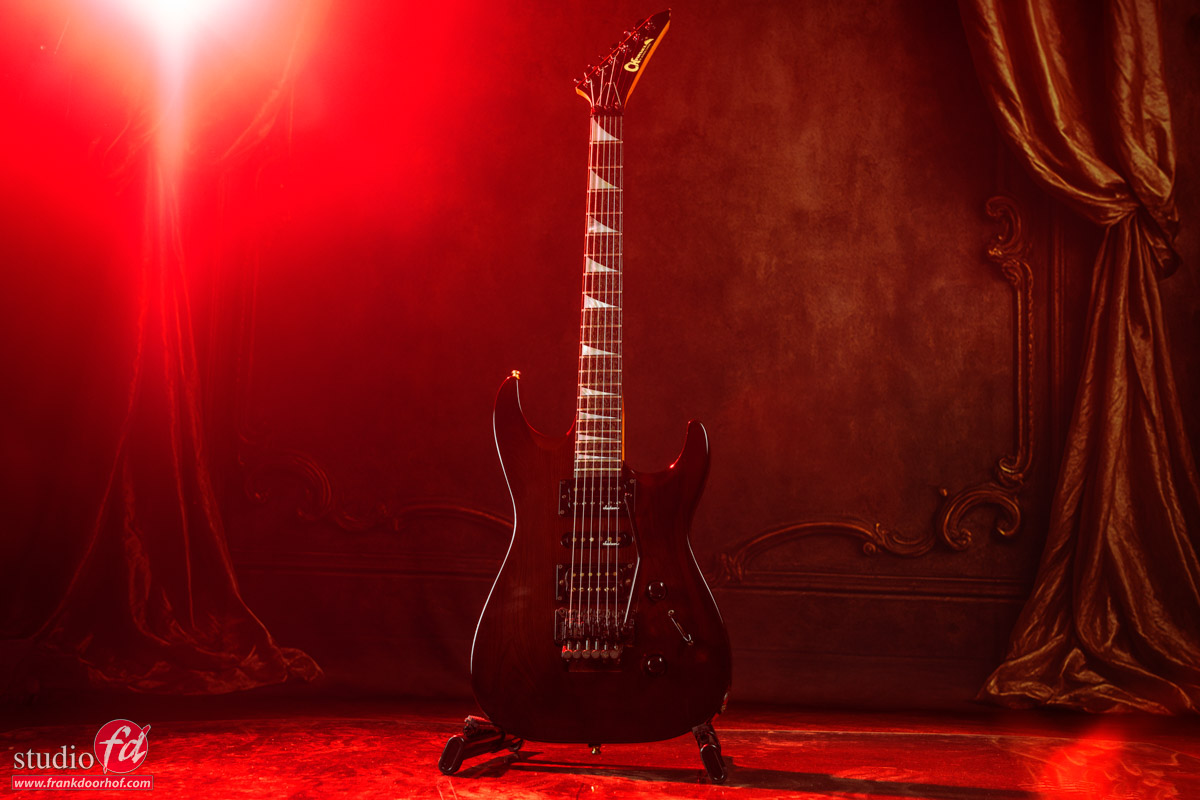
I bought this Charvel in Japan, and it is a rare 90’s curved body, which also brings some problems when lighting the guitar.
Most guitars are flat, and although some can be very shiny, most are pretty easy to photograph.
This one is very reflective and curved, so a nice challenge.
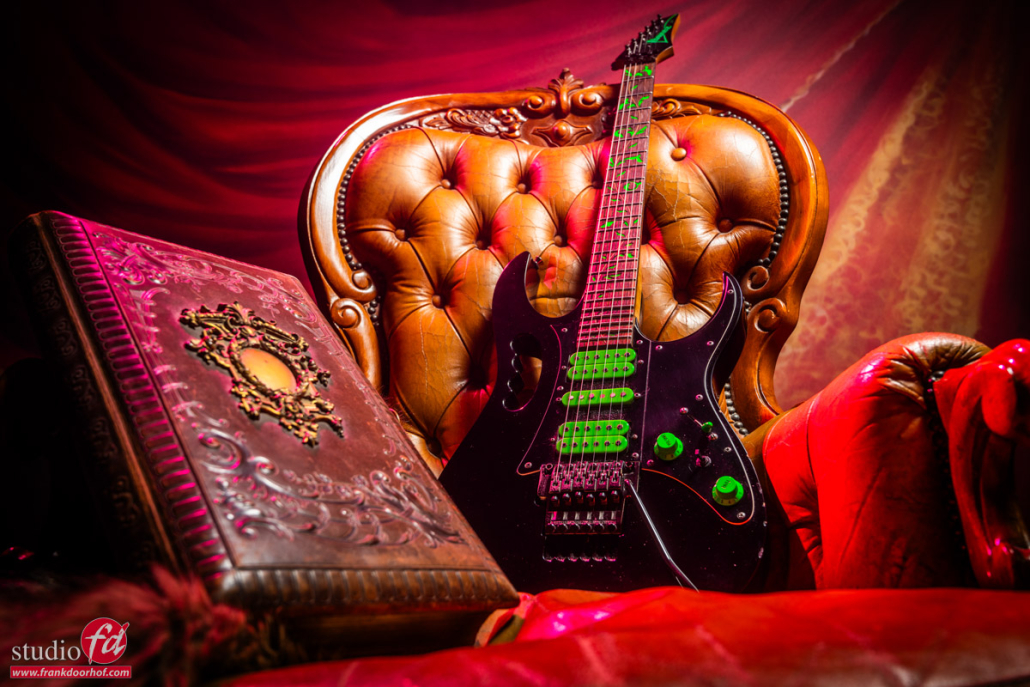
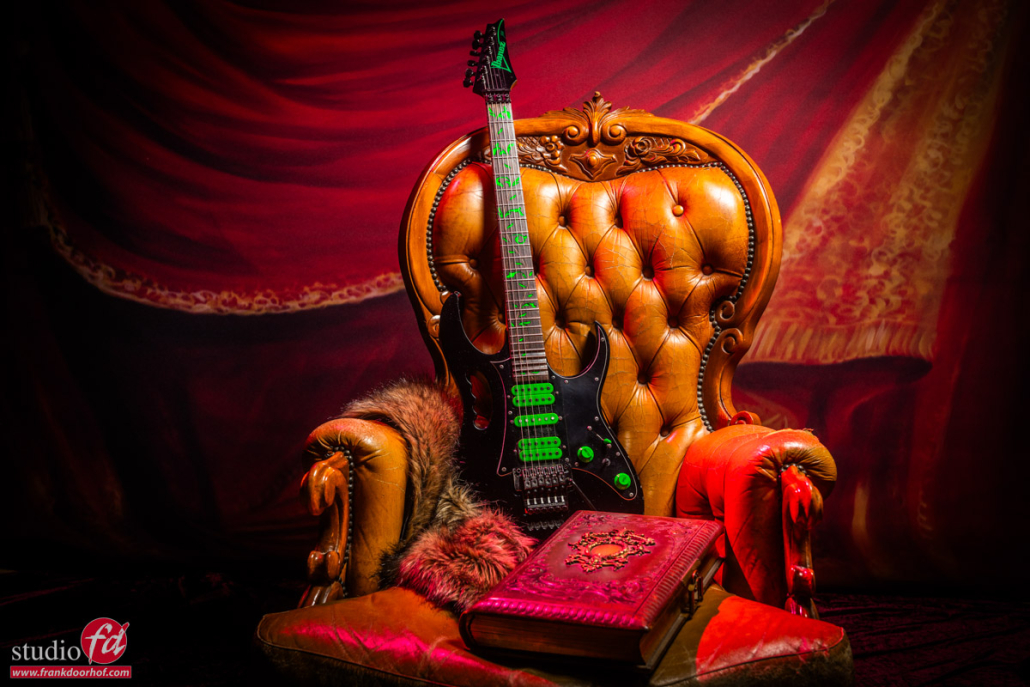
Lighting-wise, I love to get a slight edge reflection, but no reflection in the body or on the neck.
Placing the light is pretty tricky, but in the end, I got some shots I really liked.
Lighting setup
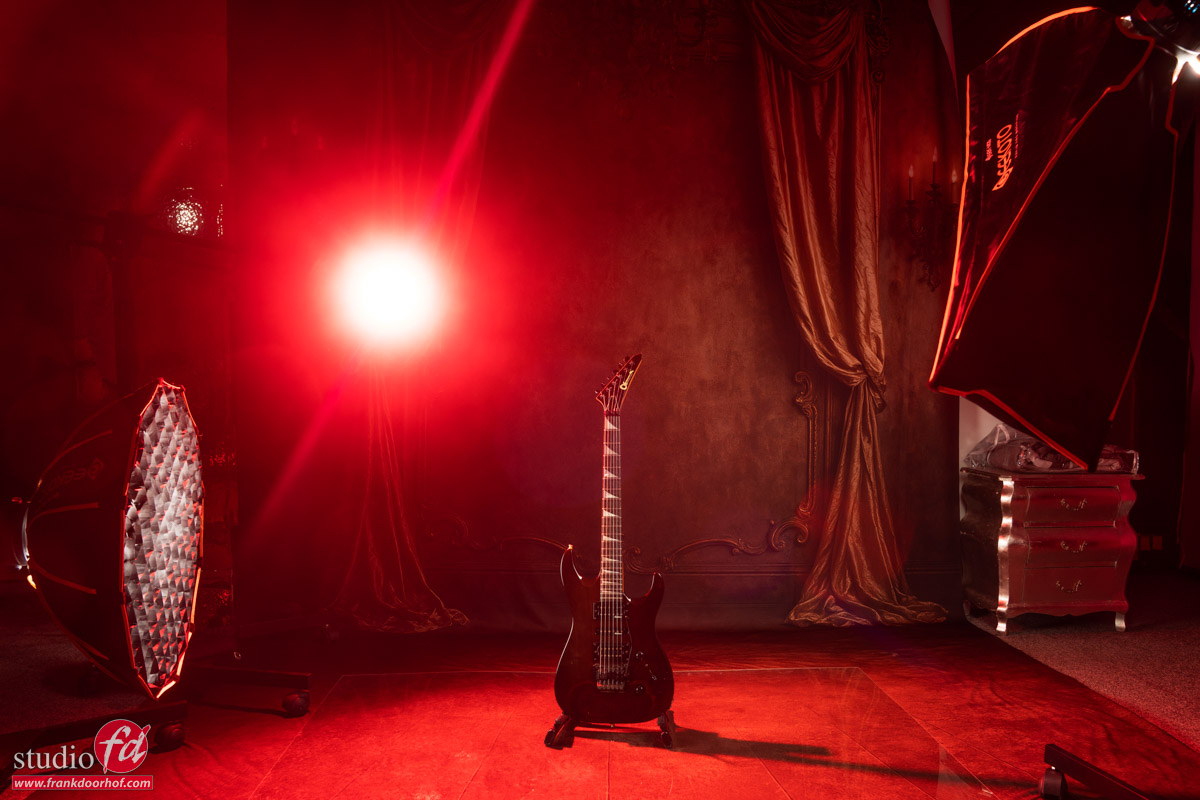
And one image with the lighting setup on how I shoot my vintage Charvel guitar.
I’m using one large softbox with grid on a Geekoto GT400 to fill in the shadows and light part of the body and neck.
One large striplight with a grid on a Geekoto GT400 as main light.
And for an accent, one Geekoto GT200 with a Rogue Magnetic system and the red gel.
Some more background information on my vintage Charvel guitar
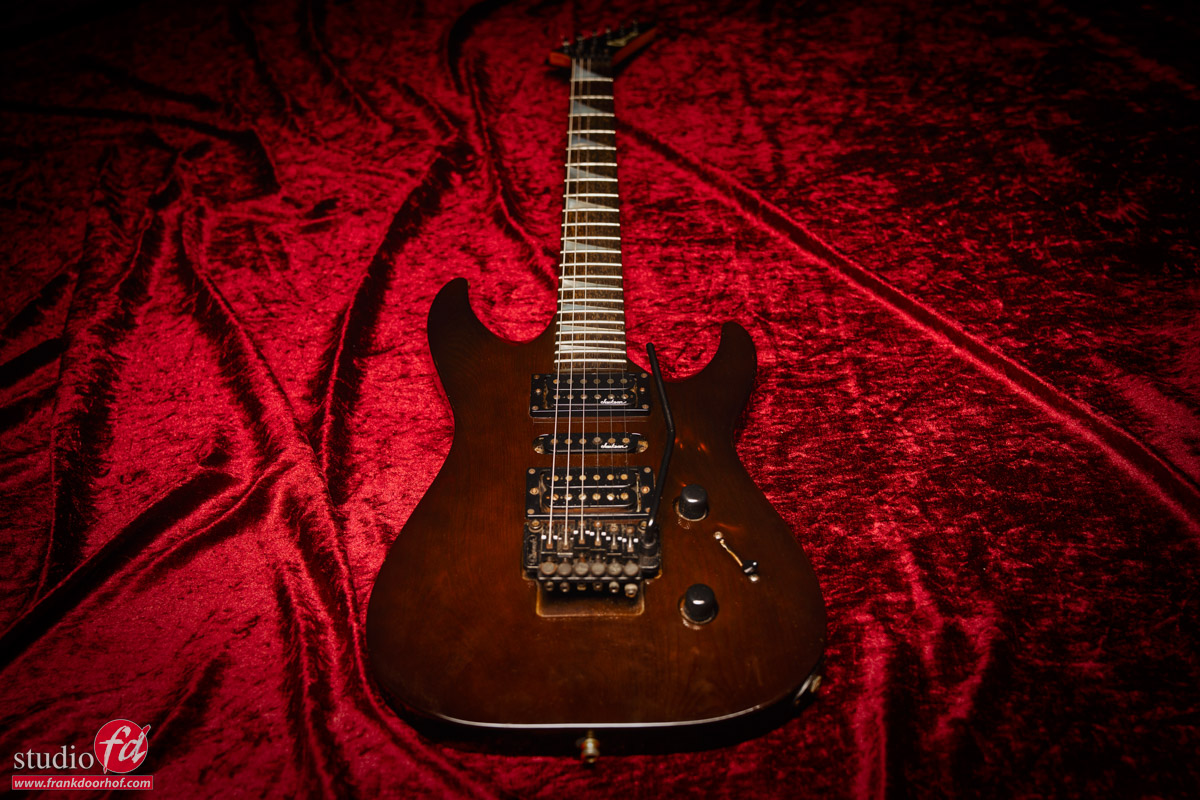
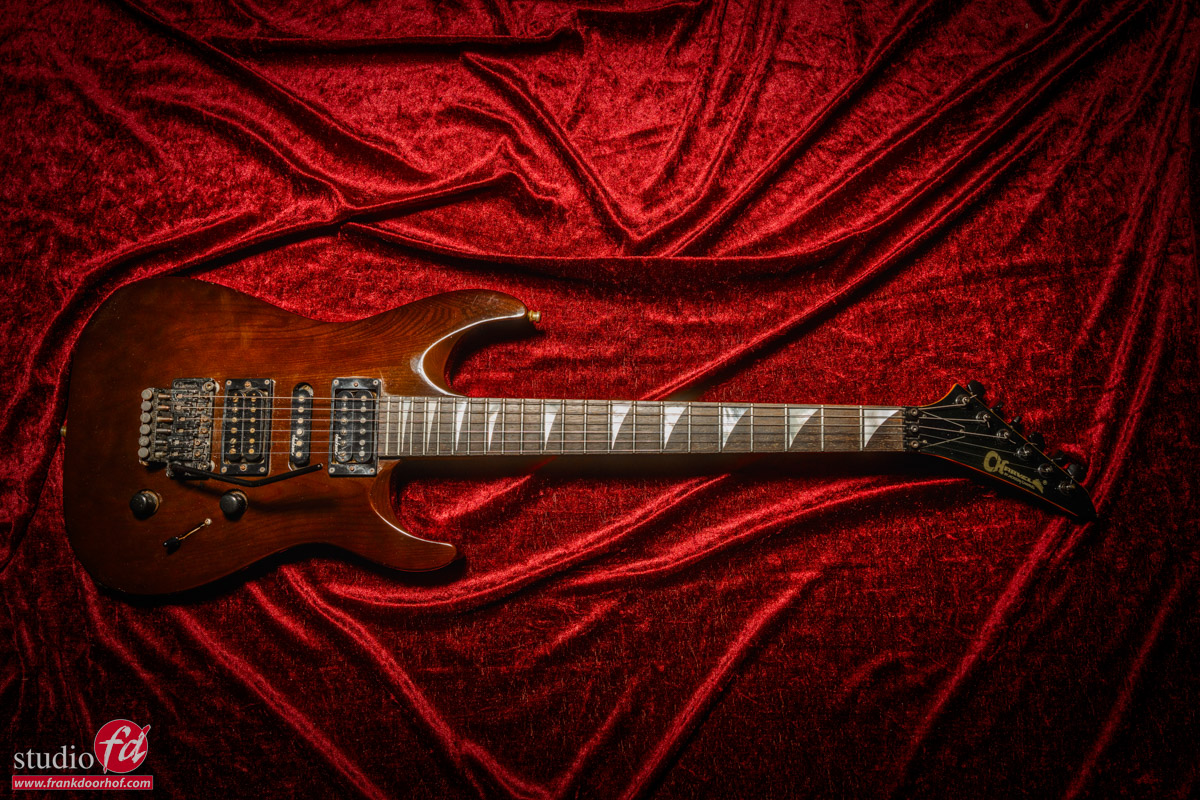
This is a ’93 Japan Charvel Dinky DKA-115. The body is made of SEN, also known as Japanese ash, producing a tight, crisp sound.
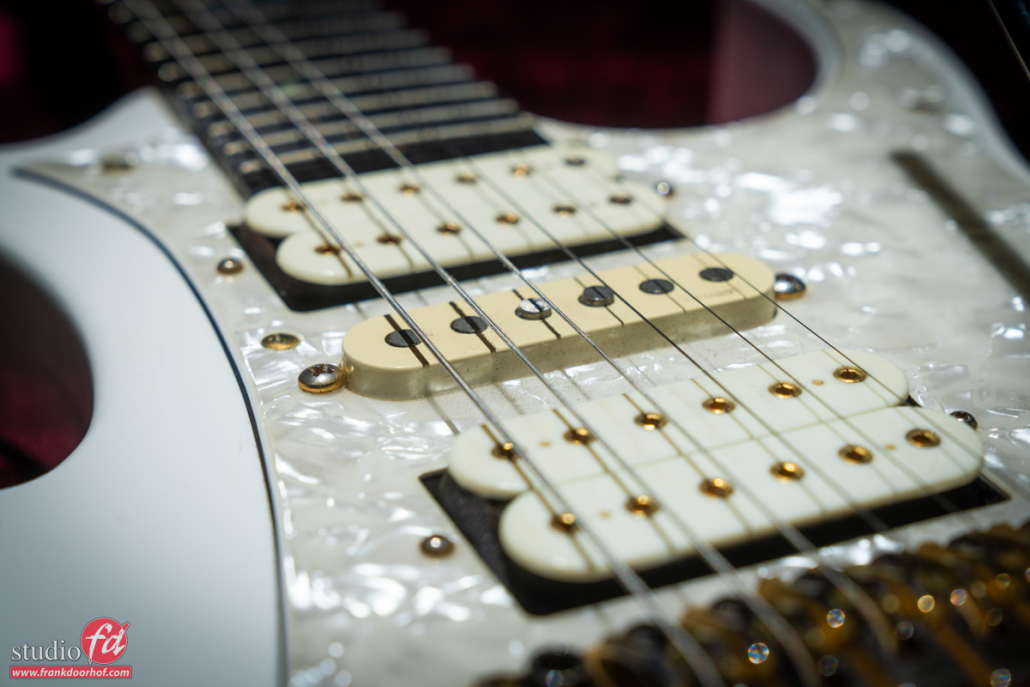
The pickups are an HSH configuration, with the bridge pickup replaced with a Seymour Duncan humbucker.
The Humbucker is a DCJ. At first, I was a bit disappointed they did not have the original pickup, till I found out the DCJ is actually something really special.
It’s a Duncan Classic but wound by J….
So who is this J?
Let’s get into some more nerdy stuff.
Some people are allowed to add a letter to the pickups they create.
As you can imagine, this is something special. So, it piqued my interest, especially after hearing the pickup.
It has an insane amount of detail, but still sounds very aggressive.
I found this on the Seymour Duncan forum
“MJ is maricella juarez … knows more about pickup making then all but about 3 people on the planet, as near as i can tell … she runs the custom shop at SD and has been with seymour for a LONG LONG time … she was very sweet and kind and welcoming at UGD, then strictly “no nonsense” once folks got into the custom shop to work with her making their custom creations … she is not much more than 5′ tall and everyone who has ever dug the tone of guitar hero owes her a debt of gratitude”
“DCJ means “Duncan Custom Juarez” so the now legendary M. Juarez, who actually wound up pick-ups for Slash, B Gibbons, etc… (Hear that P Frampton was her cake!),”
Not good
Most of the time, when buying guitars, I can’t say I’m unlucky.
However, with this one….
When it came in, part of the headstock was broken off; you can probably see it in the images.
This can be fixed by a good luthier (a craftsperson who builds or repairs string instruments), but it’s something that will always be visible in part.
I told you I loved the bridge pickup, but I didn’t talk about the others, and that has a reason… they did not work.
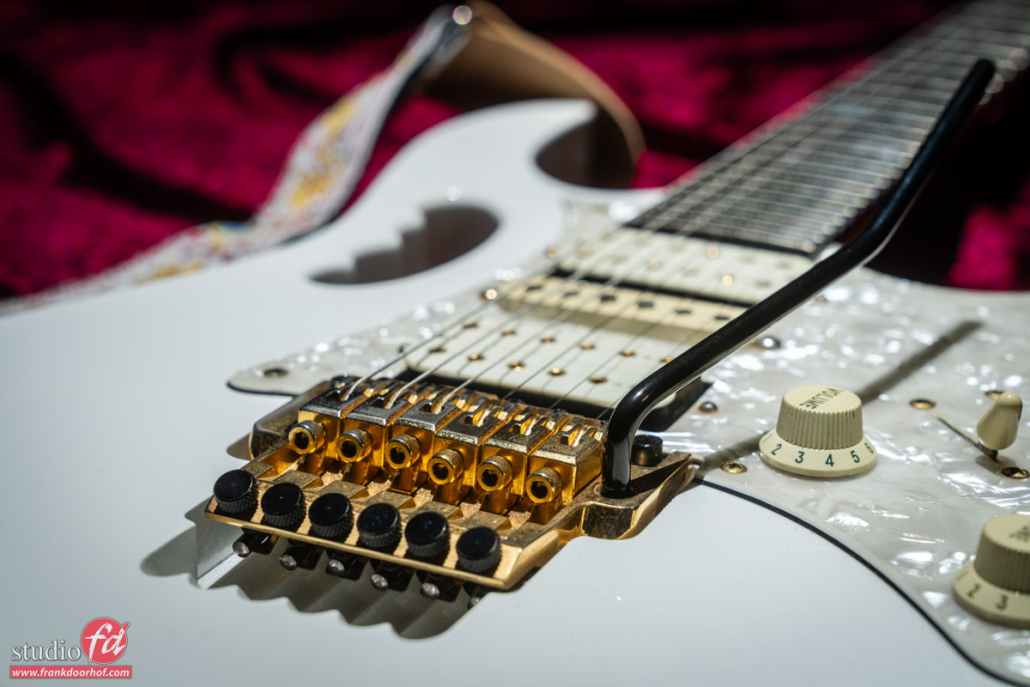
Also, when setting up the guitar, I noticed the bridge was not correct. Some strings were different in height, and not in a curved (normal) way.
I decided this was too much for me to fix, so the guitar is now with my Luthier friend Ray.
In the end, we have to replace a lot.
The guitar will get a brand-new bridge; the previous owner combined new parts on the vintage bridge. And the bridge has a lot of rust and different screws; just replacing the bridge was the best solution.
Luckily, the pickups are ok, but we will have to place a new switch and two new pods (went for the Mojo Tone versions).
In all honesty, I expect a seller to mention this, but luckily, we can fix it, and I hope to get it back in a few weeks.
I hope you enjoyed a little side step on the blog.
The next one will be about photography again.