Few gear has the appeal the 2101 has
Well at least for me that is.
I love complex gear especially when you don’t feel trapped in a certain workflow.
Don’t get me wrong, for some things it really works out, and in fact I find myself using the TC Electronic G-Major the most because it’s so easy to operate from the front panel.
But when you want something really out of this world, things you would not hold possible especially when you think about the era the 2101 comes from, the Digitech 2101 is the one to look out for.,
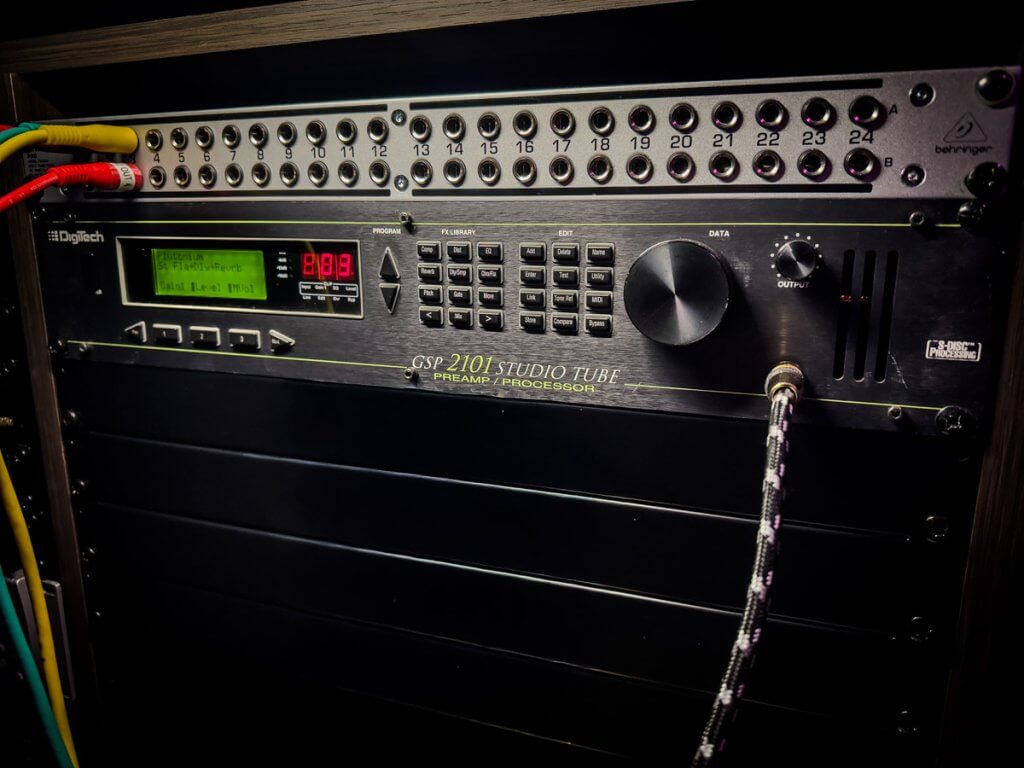
Some things are way ahead of their time…
In the mid-1990s, there was a huge world shattering event. Before this amps were used to shape your tone, of course you could add stomp pedals but a lot of the amps didn’t even have an effect loop so adding reverb or delays had to be done before the preamp which was not the best way as you probably know, alternatives were of course via the console, or build an FX loop in your amp. Most effects were also still based on analogue circuits and in most cases it was one box per effect.
But now digital effects were becoming more sophisticated, rack systems dominated professional stages, and manufacturers were racing to create the ultimate all-in-one guitar processor. I could not afford things like the Rocktron or Digitech but did save many months for the Roland VG88, which I still own and to be honest it still surprises me how insanely flexible that system is. There are still usable sounds in there that I cannot recreate with other solutions.
Among the most ambitious products of the period was the DigiTech GSP-2101 Artist Edition, a unit that combined genuine tube preamp circuitry with an extraordinarily flexible digital effects engine. Now I have to be honest with this. It’s cool there is a tube pre-amp, and it doesn’t sound bad, but you will need to dive in and turn down the gain A LOT if you want something that doesn’t buzz and sounds like a nest of angry bees.
But decades after its introduction, the 2101 Artist remains one of the most respected rack processors ever built.
The Evolution of the 2101
The original DigiTech GSP-2101 quickly established itself as a professional-grade guitar processor. Its combination of analog tube gain stages, digital signal processing, MIDI control, and programmable routing offered a level of flexibility rarely seen at the time. The Artist Edition expanded on that foundation by adding artist-created presets, enhanced software, and additional capabilities aimed at professional users. Many well-known guitarists contributed factory presets, giving players immediate access to sounds inspired by the era’s top performers.
The Artist software became so desirable that many owners of standard 2101 units upgraded their machines to gain the same functionality. According to long-time user documentation, a standard 2101 running Artist firmware was effectively equivalent to an Artist model apart from the front-panel branding.
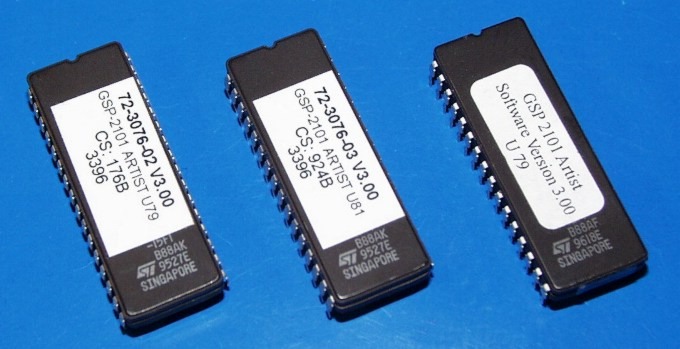
Don’t worry if you buy an older unit, I did and could order the update online.
The only “problem” is that I don’t have the extra memory which means that some presets, that were released separately do not run. I’ve played with a lot of presets and can’t say I’m running out to get the upgrade, probably also because I already have a lot of other gear doing cool stuff. Also the pricing of the standard units are very affordable, the update is app 30,00 but if you want the version with the extra disc/memory it’s a very high extra for not that much extra in real life.
Hybrid Design: Tubes Meet Digital Processing
What made the 2101 Artist special was its hybrid architecture. Unlike many digital processors of the era, the unit featured dual 12AX7 tube preamp stages controlled by digital circuitry. This allowed players to blend authentic tube saturation with an extensive suite of digital effects.
The processor offered multiple distortion types, including both tube and solid-state options, while the effects section included delays, choruses, reverbs, pitch shifting, compression, EQ, and the famous DigiTech Whammy-style processing. The signal path operated at 24-bit resolution with a 48-bit internal data path—impressive specifications for the mid-1990s.
And although the effects sound awesome I have to be honest, I don’t really like the pre-amp section.
Some sounds are ok, but it’s never a knockout like for example the Rocktron Voodu Valve.
This is also why its super frustrating that you cannot easily use an external pre-amp.
With most other gear you just connect your pre-amp to the return FX loop and done, but with the 2101 for some “insane” reasoning in all presets the FX loop is turned off and there is no global setting. Which means you have to go in the machine and change the setting for every single preset and save.
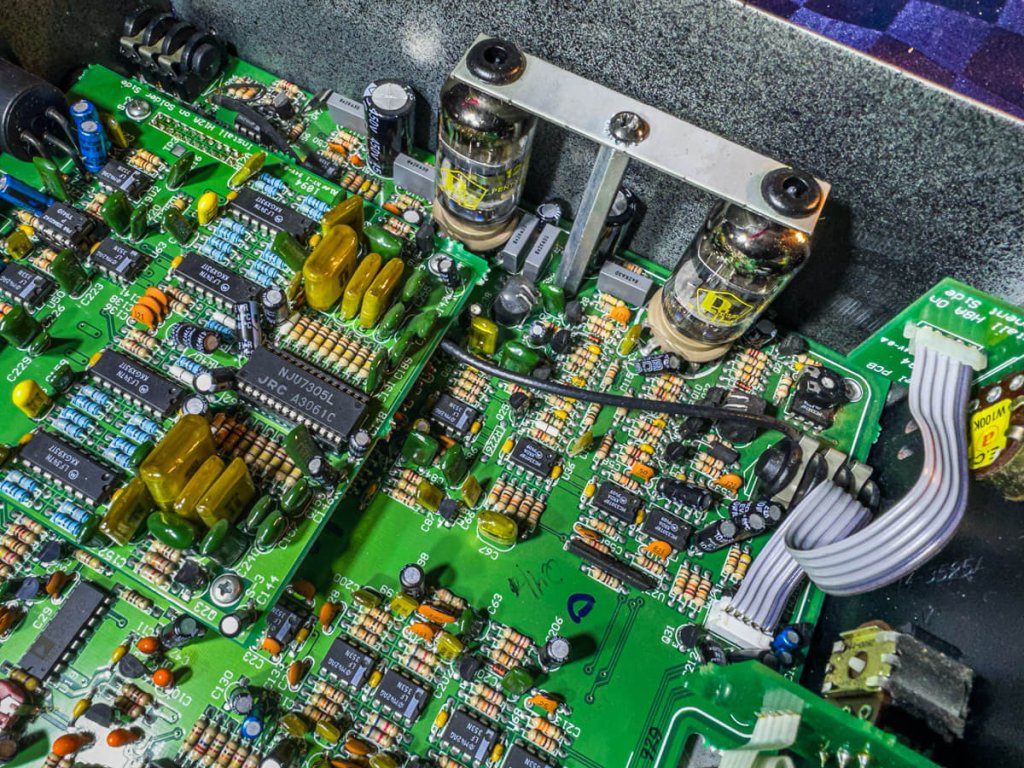
The tube is different than most
One of the coolest things that many GSP 2101 owners never fully realize is that the tube section is not just a tube bolted onto a digital processor for marketing purposes. Unlike a lot of later “tube” multi-effects units that run tubes at low voltage (“starved plate” designs), the GSP 2101 uses two real 12AX7 gain stages running as an actual analog preamp, and DigiTech made them digitally controllable. The unit lets you independently adjust Gain 1 and Gain 2, effectively changing how the two tube stages cascade into each other.
Why that’s unusual:
- Most rack processors of the era gave you a few fixed tube voicings.
- The 2101 lets you alter the interaction between the two tube stages themselves.
- You can create sounds that behave more like tweaking internal amp circuitry than changing presets.
As mentioned I’m not a big fan of the standard settings, often the gain is WAY over the top. However when you start to play around with the settings, the 2101 with proper IRs can be incredibly impressive and blow away people that think “old gear is junk” in fact it will sound better (FX wise) than most digital modelers, but it does need “some” work. Best is to route your tube pre-amp through the FX and into a tube power amp. That sound is wide, enormous and raw when it needs to, or propel you to space if you want that effect. It’s wonderful.
Unlimited Creativity Through Algorithms
Perhaps the most revolutionary aspect of the 2101 Artist was its algorithm system.
Most multi-effects processors of the period worked with a fixed signal chain. The 2101 Artist allowed effects to be placed almost anywhere within a custom routing structure. Effects could even be repeated within the same patch. Guitarists could build highly complex processing chains tailored to their exact requirements rather than relying on factory limitations, thanks to the mixer options it was even possible to build completely different signal routes ending up all in the machine. This is where the extra memory/disc can come in handy. I mostly use standard presets and build from there with balance and settings.
This level of customization was virtually unheard of at the time and helped establish the unit as a favorite among advanced users, studio engineers, and touring professionals.
The problem is also that programming the machine can be difficult.
Don’t even try it from the front panel, I’m using windows software which makes it possible to access the 2101 and edit the presets.
It’s something that I think is vital when you are going to use the 2101. There is no solid Mac software, so like with most midi controlled gear I’m running the software under Parallels in Mac.

Expandability and the PPC-210
Another reason for the 2101’s longevity was its expandability. DigiTech offered the PPC-210 expansion card, which added a second S-DISC processor. This upgrade increased processing power and enabled smoother program changes with effect spillover, a feature that many modern processors still emphasize today. As mentioned I have a version that is fully up to date but without the PPC-210. If you get the chance to get one don’t let it go because it’s missing the card. Unless you want to use it as your main device and work with live playing the extra PPC-210 can make a lot of sense.
Fully upgraded Artist units equipped with the PPC-210 have become especially desirable among collectors and enthusiasts because they represent the most powerful version of the platform which also makes this version in some cases 3x as expensive and the version without.
Professional Connectivity
The 2101 Artist was designed for both studio and live use. Balanced outputs, speaker compensation for direct recording, stereo operation, effects loops, and extensive MIDI implementation made it suitable for virtually any professional setup. Guitarists could connect directly to mixing consoles, power amplifiers, recording systems, or traditional amplifier rigs. At a time when most guitar processors were limited in their routing options, the 2101 Artist offered a level of integration that appealed to serious users.
Of course I also looked online when writing this article and a funny fact I saw mentioned several times is that there are a lot of people trying to create IRs from the 2101, simply because the modern gear doesn’t have the same options, combinations and sound. And due to the complexity of the tails (reverbs) and modulations it’s still not possible to recreate the magic of the 2101. And let me add my own opion…..
Some gear just does what it needs, and some just sound unique.
Without a doubt the 2101 is the last. You can download hundreds of presets online, in fact when I bought the artist upgrade I got a boatload of presets. I’ve tried them all and what is striking is the huge difference in effects. With most units you can get great effects or combinations but it’s still a certain way it sounds or feels. The complexity of the 2101 and the many routing options makes it one of those units that can almost everything.
I would like to say that this was the Axe FX from it’s time.
Still going strong
As mentioned before the 2101 is insanely flexible and with a revival of people wanting something unique the 2101 can deliver the goods. It’s often called one of the very first completely freely programmable one step solution. Just bring your guitar, plug in and start recording.
Even when I talk to players online who have moved to modern multi FX units frequently remember the 2101 Artist as one of the most innovative pieces of guitar technology ever released. The unit’s combination of tube tone, digital power, and unrestricted routing remains distinctive even by modern standards. I think this is also something I really miss in today’s modelers. I own the GE300 myself, which is one of the better budget modelers, and although it sounds great and with proper IRs will probably give the much more expensive solutions a run for their money it’s effects are still not on par with the 2101. Also when trying software like BiasX, Genome etc. the amp simulations and FX are great but the 2101 just sounds much wider, intens and in your face (if you want) or super spacey and distant when needed.
The cab simulations in all these older units are pretty bad and the 2101 Artist is no exception, but luckily you can disable the cab emulation and run it through a power amp (STEREO) or route it directly to the console and run for example Genome with a power amp emulation and proper IRs for the cabs/mics.
For my setup I’m using the 2101 via the IO plugin in Logic as an insert or bus FX.
This way I can use my full analogue workflow (cab + mic) or just route a pre-amp into the DAW and use IRs/Emulation.
The 2101 is a dream for the studio guitarist.
Collectibility and Legacy
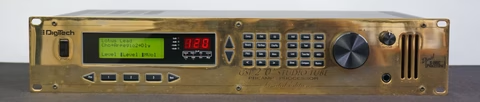
Today, working DigiTech 2101 Artist units are sought after by collectors, rack enthusiasts, and guitarists chasing classic 1990s tones. Special limited-edition versions with colored faceplates, Artist firmware, and PPC-210 upgrades command particular attention on the used market. The 2101 Artist occupies a unique place in guitar history. It arrived before amp modeling became mainstream, yet it offered a degree of customization and sophistication that anticipated many of the concepts found in today’s flagship processors. Add to this the (windows) software for creating workflows and controlling/editing the presets and you will quickly understand why the 2101 is still being sold pretty fast when they appear online.
Conclusion
The DigiTech 2101 Artist Edition was more than just another rack-mounted effects processor. It represented a bold vision of what guitar technology could become: tube-driven tone, studio-quality effects, programmable signal routing, and professional-level control in a single unit.
For many players, it remains one of the greatest rack processors ever built—a landmark product that helped define the golden age of guitar rack systems and continues to earn admiration decades after its release. For me it’s one of my favorite pieces of gear for when I really need something unique or just want to rock out with insane delays going everywhere in a bath of chorus and reverb…. sorry I’m off have to play 😀
But not before….
There are some issues you have to take into account when getting Digitech (and some other brands).
In some cases you will see “works great but has a scrambled display with first boot” in 99% of the cases this is a simple matter of changing the onboard battery, this is why it only scrambles at the first boot and works fine after.
Although you often read online that changing tubes is not necessary my experience is totally different.
Both my Rocktron and 2101 sounded horrendously, loads of noise and a very fizzy gain. Replaced the tubes with JJ tubes and they came alive again. With older Randall/Synergy models I have similar experiences although they still sounded great with the original tubes, but changing to the JJs seemed to lower the noise level slightly and gave a tighter bass. So always experiment is my advise, and you can always go back.
Versions of the 2101
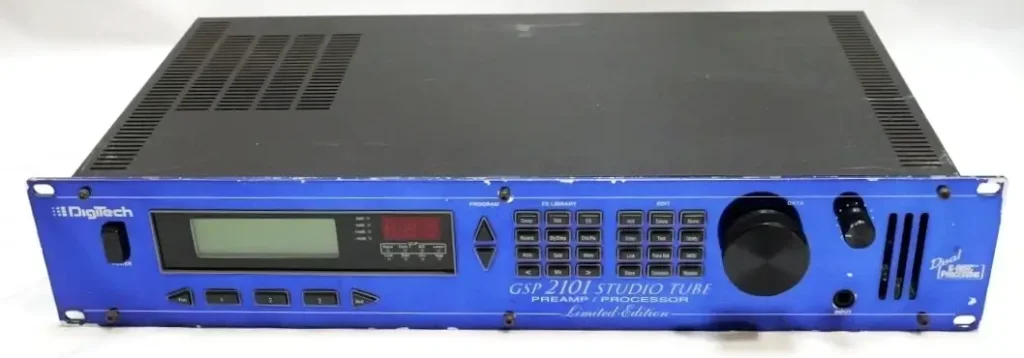
The DigiTech GSP-2101 line is usually broken down into four main versions:
- GSP-2101 Standard (1994) – the original model with a single S-Disc processor and early firmware.
- GSP-2101 LE (Limited Edition) – added a faster 20 MHz CPU, came with the PPC-210 second processor card, and was available in several special colors.
- GSP-2101 Artist – included the Artist firmware, artist presets, and support for the PPC-210 expansion.
- GSP-2101 Artist Pro – essentially an Artist model that came factory-equipped with the PPC-210 card and the full upgraded feature set.
A lot of units were later upgraded, so today the most sought-after setup is a 2101 running Artist v3.00 firmware with the PPC-210 card and 20 MHz CPU. A fully upgraded Standard model can be nearly identical in functionality to an Artist Pro.
If you’re looking at buying one, the firmware version and whether it has a PPC-210 card are usually more important than what name is printed on the front panel. A fully upgraded standard 2101 can be functionally very close to an Artist Pro. And do remember that the firmware update is pretty easy to do.
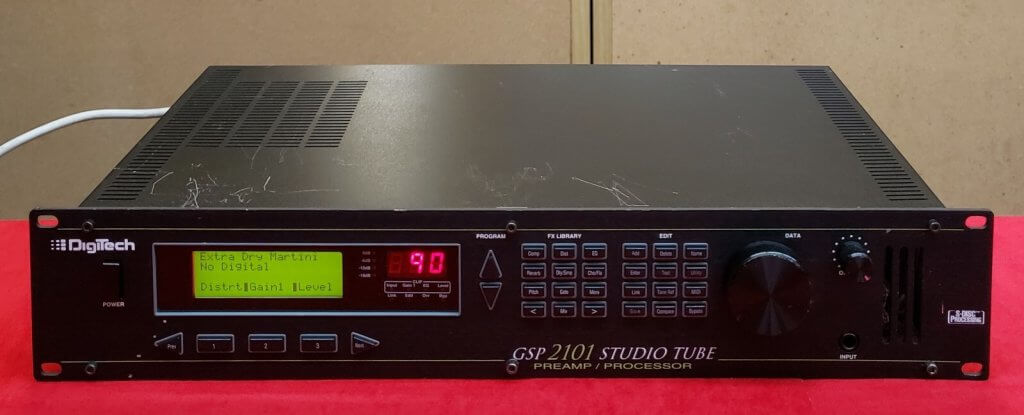
I could only find a few images of different versions, if you have a better one, feel free to reach out.
Famous artists who used the 2101
It’s always cool to know which of your “heroes” worked with a certain kind of gear.
For some artists it’s already clear because they made some special presets (love the Vai presets).
I asked Ai which famous artists used the 2101 and it came up with this list. But it will probably be a lot more.
Pat Metheny
Among the most prominent users of the DigiTech 2101 was jazz guitar legend Pat Metheny. Metheny publicly discussed his search for a programmable system that could reproduce his signature sound while offering greater flexibility for live performance. He ultimately settled on the DigiTech 2101, praising its ability to deliver the tone he wanted while providing extensive preset capabilities and effects control. For many fans, Metheny’s endorsement demonstrated that the 2101 was capable of far more than high-gain rock sounds.
The Edge (U2)
The Edge, guitarist for the legendary rock band U2, incorporated the DigiTech 2101 into his sophisticated touring rig during the late 1990s. Documentation from equipment inspections of his Bob Bradshaw-designed rack system shows a GSP-2101 among the processors used during the PopMart era. Given The Edge’s reliance on delays, modulation, and carefully programmed signal chains, the 2101’s routing flexibility made it a logical addition to his setup.
Alex Lifeson
Rush guitarist Alex Lifeson used the DigiTech 2101 while recording and touring during the band’s Test for Echo period. Lifeson described using the unit alongside Marshall amplifiers and external speaker simulation systems to create expansive guitar textures. His use of the 2101 highlighted its effectiveness not only as an effects processor but also as a serious recording tool.
Steve Vai
Virtuoso guitarist Steve Vai is frequently associated with the DigiTech 2101, particularly the upgraded Artist versions that became popular among shred players in the late 1990s. While Vai is best known for many different pieces of rack gear throughout his career, references from long-time users and collectors consistently cite him as one of the notable artists who employed the 2101 platform. The unit’s advanced harmonization, delay, and modulation capabilities complemented his technically demanding style.
Yngwie Malmsteen
Neoclassical guitar pioneer Yngwie Malmsteen has also been linked to the DigiTech 2101 in professional and enthusiast circles. Players seeking Malmsteen-inspired tones often explored the 2101 because of its tube preamp section and extensive tone-shaping options. Its ability to blend analog warmth with digital precision made it attractive to guitarists pursuing highly articulate lead sounds.
Billy Howerdel
As co-founder and guitarist of A Perfect Circle, Billy Howerdel is known for his layered, ethereal and emotional guitar style. Since the start of the band, he has had the DigiTech GSP 2101 in his rack, relying mainly on the specific textures and modulation effects for certain songs in their discography.
Although he has also integrated modern modelers (such as the Fractal Audio Axe-FX) into his live setup over the years, the classic 2101 remained a fixture to maintain its signature sound.
Allan Holdsworth
Jazz-fusion innovator famous for fluid legato playing, advanced harmony, and a saxophone-like approach to guitar. He was one of the highest-profile 2101 users and even had signature presets created for the unit.
Vinnie Moore
Neoclassical shred pioneer and later guitarist for UFO. Known for melodic instrumental rock and technically demanding solo work. He was a prominent rack-system user in the 1990s and appeared frequently in DigiTech circles.
A lesser-known fact is that the GSP 2101 became especially popular among fusion and progressive players, not just metal shredders. Many users were attracted by its programmable routing and unique tube/digital hybrid architecture rather than its high-gain sounds alone. That’s one reason you’ll find Holdsworth patches and fusion-oriented programming tips all over old 2101 user archives.
Other Professional Users
The DigiTech 2101 has been associated with several other notable musicians over the years. Evidence of use exists for artists such as Jack Owen, who employed the processor during the early 2000s, as well as reports of use by experimental and progressive players who appreciated its deep editing capabilities. The unit’s combination of tube gain stages, effects processing, and MIDI integration made it suitable for a wide range of genres—from jazz and progressive rock to extreme metal.
If you have any more information or things I could add, feel free to reach out.