Because amps needs to be loud
There is a peculiar moment every guitarist knows well.
The tubes in the amp are glowing.
You’re ready to record that masterpiece on full volume.
And reality arrives.
It’s midnight.
The neighbors are asleep.
The family is asleep.
And your walls are thinner than your dreams.
For years, this moment meant lost time or even worse the loss of that spark of inspiration.
Great guitar tones demanded volume, and volume demanded sacrifice.
But modern tools have quietly rewritten the rules.
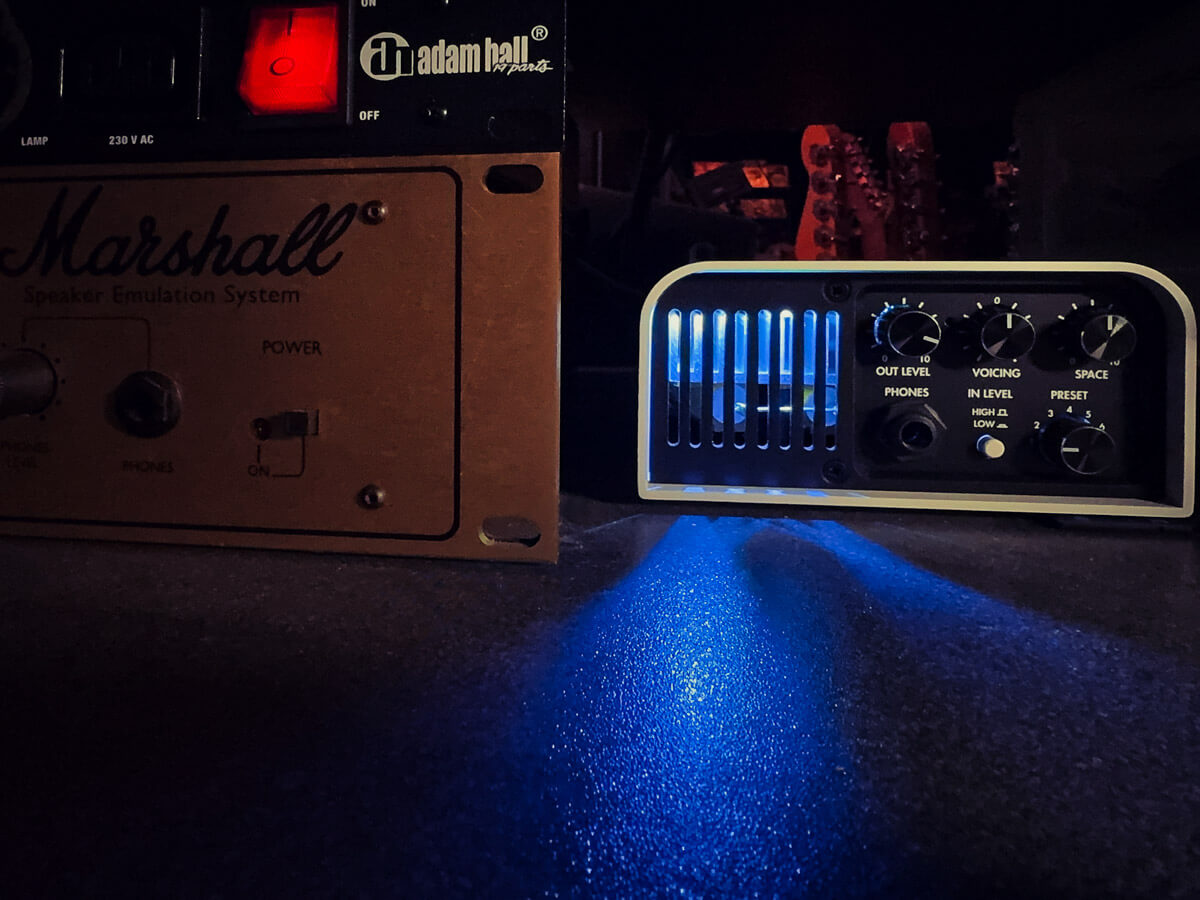
When I started with music I bought a Marshall SE100, an awesome load box with a line out that sounded not that bad (at that time, and terrible now) and three options to lower the volume of my amp. This meant I could play “loud” in my room without being “loud” in volume.
The SE100 is great, and I still use it when I want to mic up a cab and use the ENGL920.
But my workflow really changed when I bought the Two Notes Capture X.
Together with my amps, they create something that feels less like technology and more like a portal between worlds.
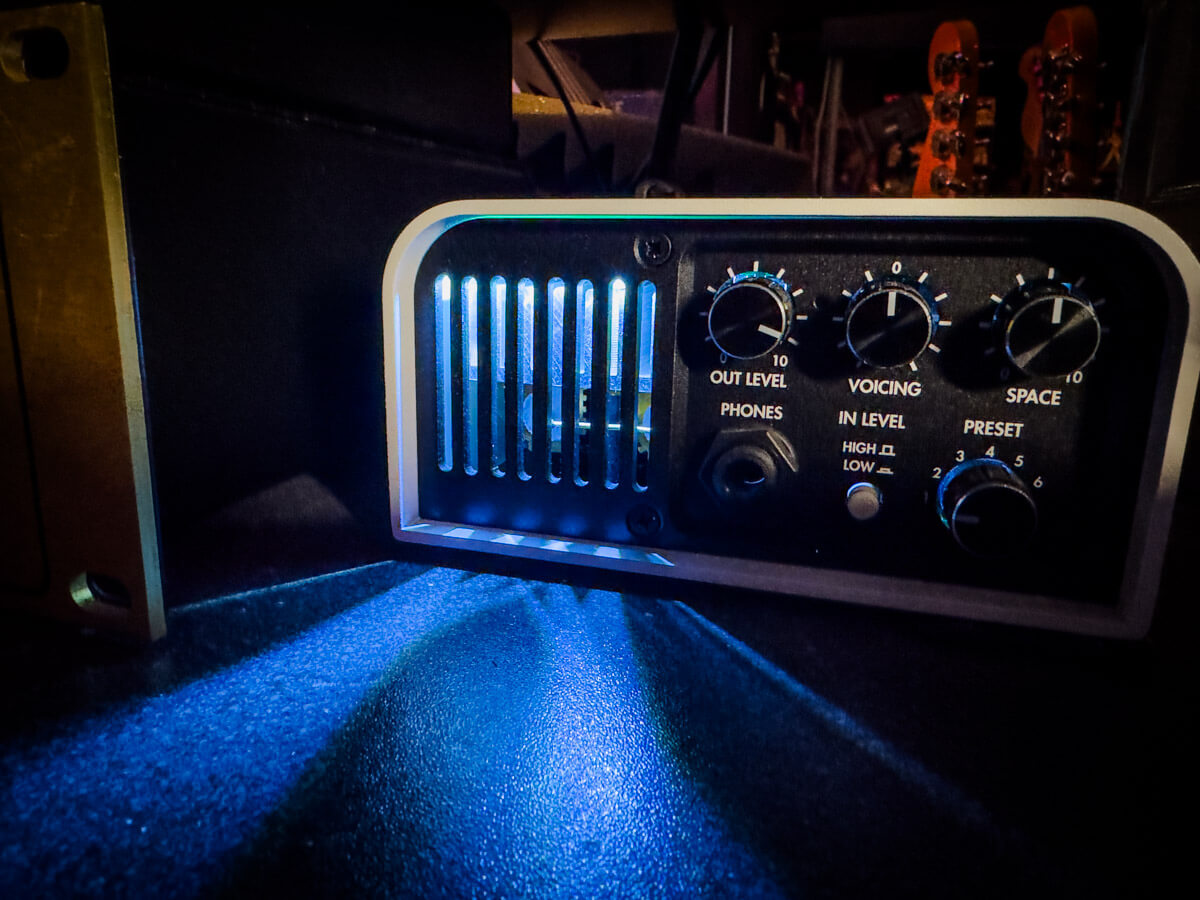
The Captor X: Catching Lightning
The Captor X sits between amplifier and speaker like an interpreter.
It looks like a simple box but in reality you could say it’s a diplomatic envoy negotiating peace between raging tube amplifiers while keeping your family/neighbors happy.
You can connect the Captor X between your power amp and the cabinet.
The Captor X has several settings to lower the volume from the power amp.
Because the Captor X is behind the power amp you still hear the “full” quality of the amp, but your ears won’t bleed, you can even connect headphones if you want a fully silent setup.
I no longer need to shake the room and destroy my ears to record the perfect sound.
The Captor X absorbs the power, preserves the dynamics, and captures the personality of the amp at its most expressive. The growl of pushed power tubes, the bloom of sustained notes, the subtle compression that makes a guitar feel alive—all of it is embedded In the signal.
And that’s just one of the solutions.
It becomes even more interesting when we start using the included software.
Now I have to immediately say that I don’t use the software anymore.
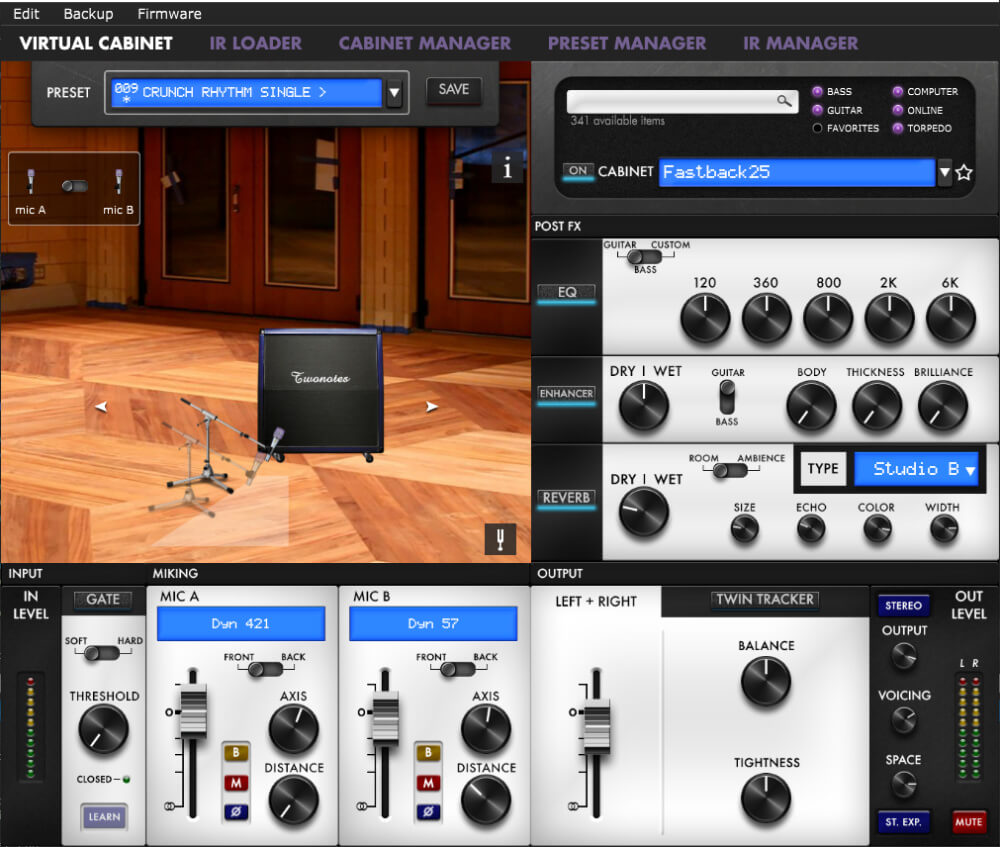
The remote software
The Captor X has a great app that runs on your mobile device or of course from the desktop.
We are now at the moment where we are not using a physical cab anymore.
From here on we are in the digital domain.
When we connect a power amp to a cabinet, the cabinet colors the sounds.
When we take out the cabinet you will hear the real sound of the amp… and it’s terrible.
So we need to solve this.
Inside the software you can select so called IR’s.
By now I guess everyone will be familiar with IR’s, but in case you are not.
IR’s are in essence “captures” of a real piece of gear (in this case cabinets, or speakers and mics) which can be digitally added to your signal chain.
In most cases you use IR’s where a cab is recorded with a certain mic in a certain position.
As you probably know when we move the mic the sound changes a lot, so when you buy an IR pack you often get a lot of different options and blends.
This can be a little overwhelming and frustrating to get right.
This is where the Captor X has a great solution.
The IR’s you use with the Two Notes software are different.
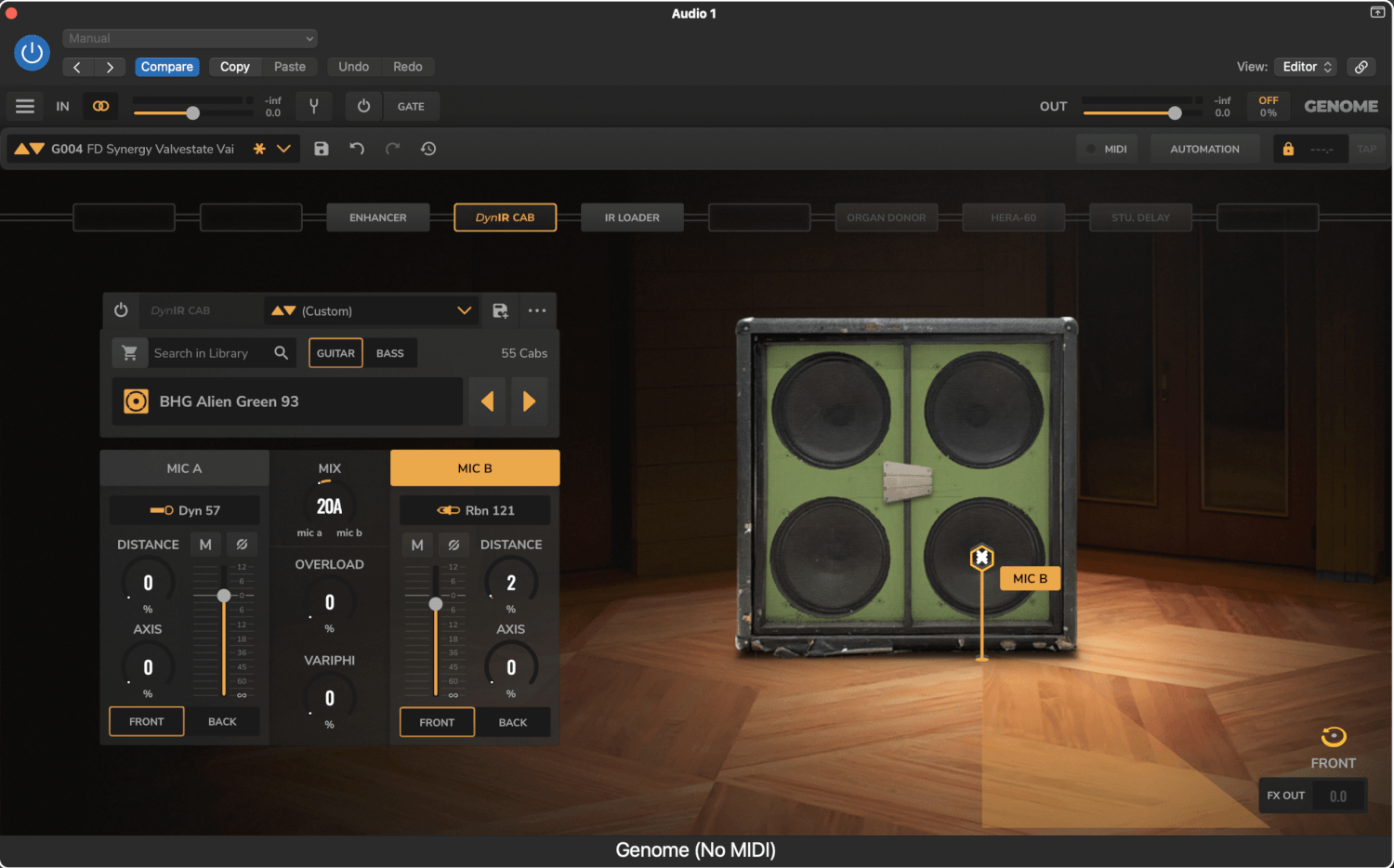
Instead of getting one IR per position, mic and blends, you get the cab, a pulldown menu with mics (2) and you can “freely” move the mics around, getting the perfect sound, you can even mic the back of the cabinet. This makes finding your sound not only super easy but also a lot of fun.
But it doesn’t stop there.
In the software you can also add effects, a great noisegate (with learning option), different rooms and of course blend microphones.
Now you might say “Why don’t you use the software?”
For me, the setup is used 100% for recording.
When I use the software inside the Captor X I’m committing to that sound. That’s not a real issue when you nail it, but in most cases the sound you play with during recording is not the sound that will fit best in the mix, so I was delighted when Two Notes released Genome as an alternative to the Captor X app.
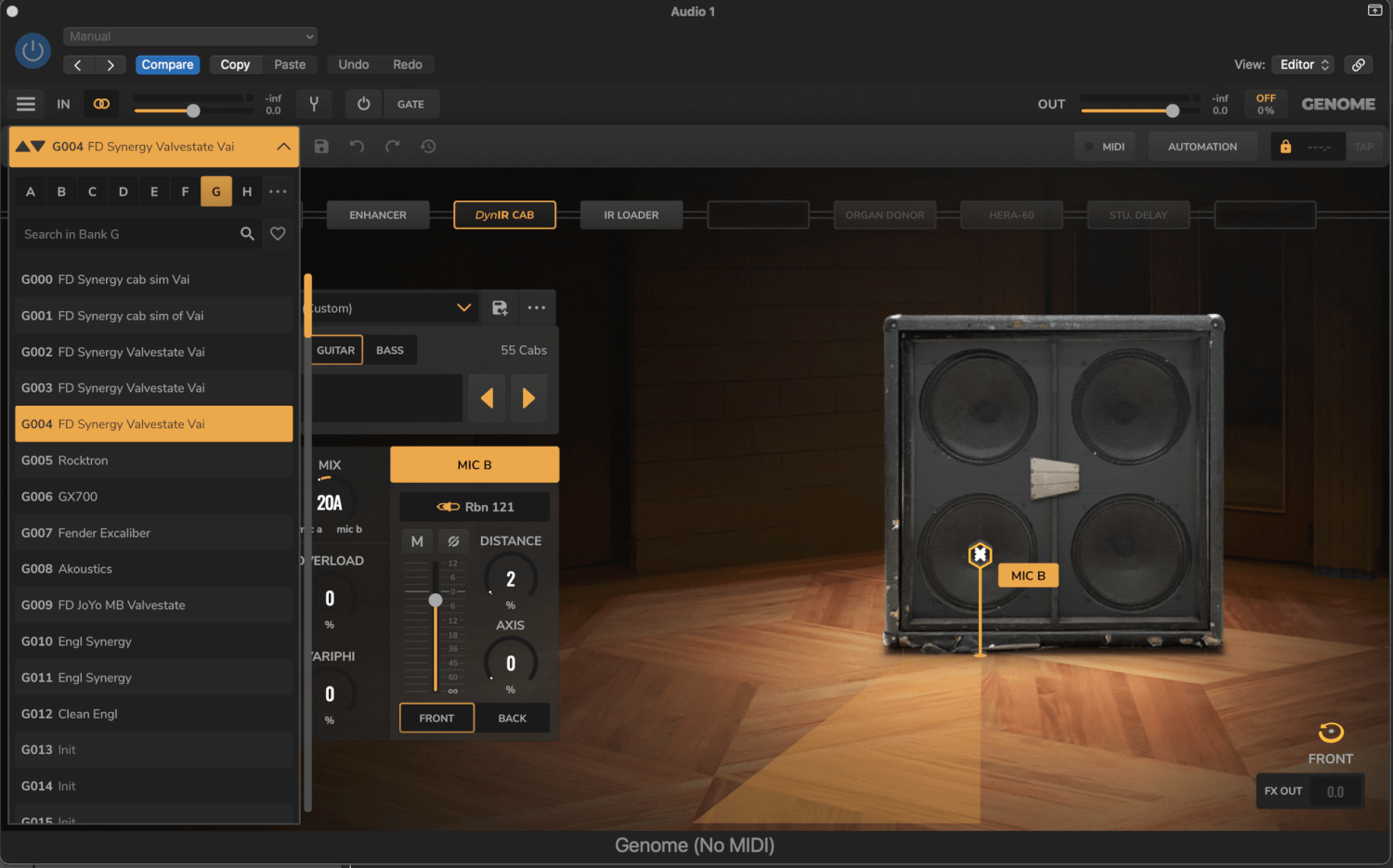
Enter Genome: The Architect of Space
If the Captor X captures the soul of the amplifier, Genome becomes the architect that decides where that soul lives.
Every guitarist understands that tone doesn’t stop at the amplifier. Cabinets, microphones, rooms, and signal chains all contribute to the final sound. Genome allows those elements to become fluid and creative rather than fixed and physical.
For me this means I’m using Genome pretty limited.
In the Captor X I’m using the bypassed outputs. In essence I’m only using the Captor X as way to get my amp into the DAW.
In Genome I’m placing my favorite Cabs in the chain, add an enhancer and of course play with mic positions.
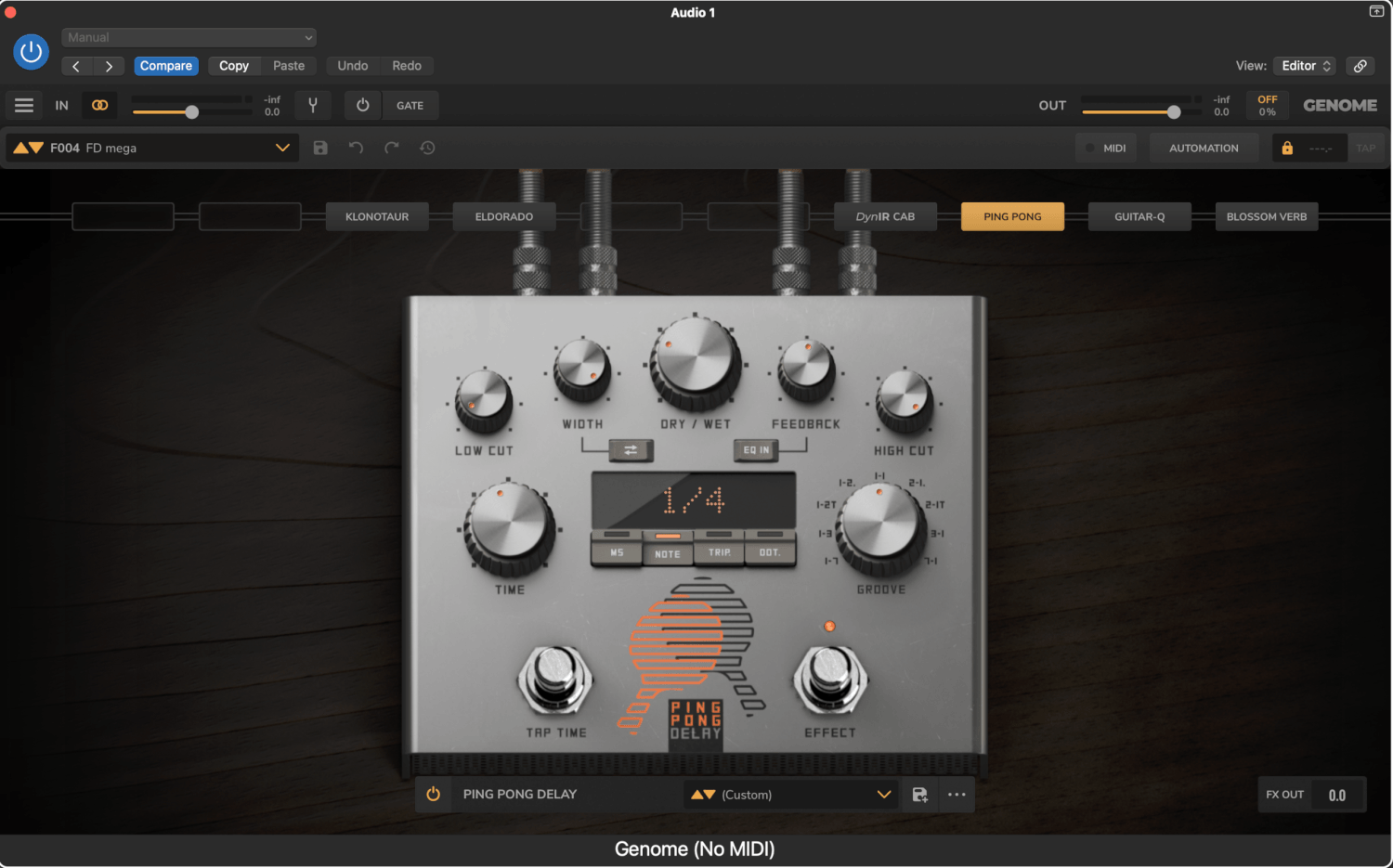
If you want you can also add a boat load of effects to the chain. Do remember you are behind the amp so boost pedals will behave totally different than you expect. Studio effects will work just as they are supposed to of course. I get most of my effects from the Rack or X32 but I have to be honest, Genome has some awesome effects on board, and they are adding new amps, cabs and effects on a very regular basis.
You probably already guessed it when I said boost pedal.
Genome is MUCH more than just a replacement of the remote control of the Captor X.
This is a full blown (and very good) modeler plugin.
You can go into Genome with a DI signal and build a complete signal chain from start to finish.
A British-style amp can suddenly inhabit a massive arena cabinet.
A tight modern rhythm sound can be reshaped with different microphone combinations.
A clean ambient texture can be placed inside a virtual room larger than any studio I could ever afford.
What once required racks of equipment now happens with a few mouse clicks.
Genome doesn’t replace the amplifier.
It completes the story but if you want you can also replace your whole rig and go fully digital.
What I also like about Genome is that they have a dedicated power amp.
Seeing I have several pre-amps in my rack that output a stereo signal I’m routing those directly to the Console and from there into Genome.
Where I’m using just a Cab IR for my power amp setup, in this case I’m adding a power amp before the cab and this way I’m still using my tube pre-amps and analogue stereo FX, but adding the feel and sag of a power amp in Genome.
The possibilities are endless.
There is of course one thing you miss….. the air that moves when you use a cab and mic.
In my main setup I’m running the ENGL920/100 into the Captor X and into the SE100.
Although I absolutely love the quality of the Genome workflow, nothing beats the cab with a real mic. But this is not possible for everyone. Plus it’s a lot more money and space you need to get it better than Genome. I still owned my BlackBack Marshall cab which sounds great, but when I would not own that cab I would probably never use a mic-ed setup. (yes it’s that’s good).
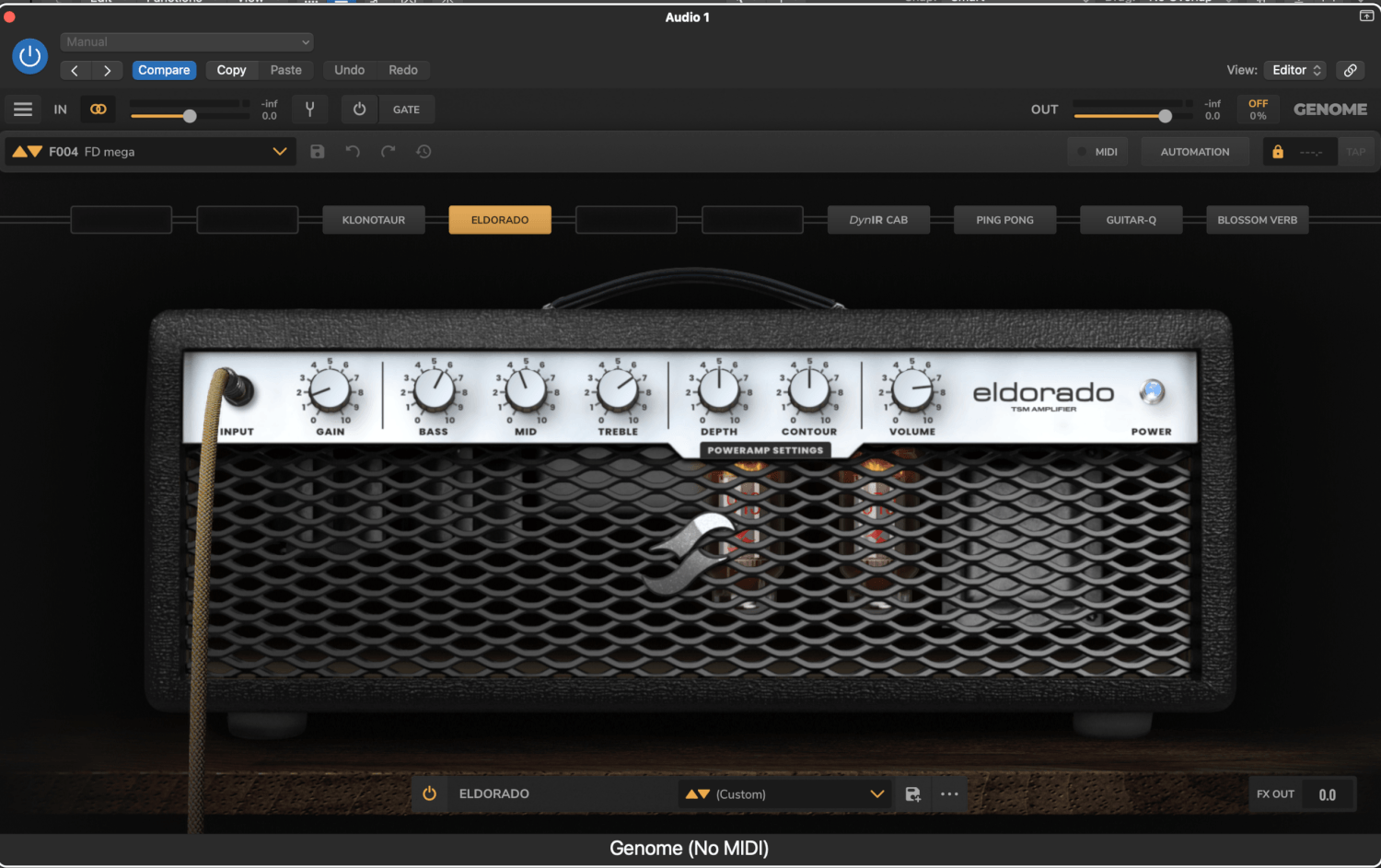
The Conversation Between Hardware and Software
What fascinates me most is the synergy between the two systems.
The Captor X provides authenticity. It captures a real amplifier behaving exactly as it should with the tubes on fire (not literally).
Genome provides imagination, you can play with effects, change mic positions and cabs to your hearts content and if you go full digital it even supports the great NAM captures.
The result feels remarkably organic.
Many digital workflows ask guitarists to abandon familiar experiences. This setup does the opposite. The amplifier remains the heart of the process. The guitar still responds to touch, attack, and dynamics in a way that feels unmistakably real. And when you use it as a load box you can even use your own cab and mic.
Recording Without Barriers
Perhaps the greatest gift of this combination is freedom.
Inspiration is fragile. It rarely waits patiently while microphones are positioned or cabinets are moved around the room.
With Captor X and Genome, ideas can move directly from imagination to recording.
A riff appears.
Record.
A melody emerges.
Record.
A layered harmony arrives unexpectedly.
Record.
And don’t worry if it doesn’t sound 100% perfect.
As long as the amp is setup correctly and you tuned your guitar, you can shape your sound after the recording.
And when you’re smart you also record a DI track so when you play something dirty and you later decide it should be clean you can always add this in Genome, or of course Re-amp the performance.
A New Definition of “Real”
There is an ongoing debate in the guitar world about authenticity. Analog versus digital. Hardware versus software. Traditional versus modern.
The Captor X and Genome partnership suggests that these categories may be less important than we think.
The amplifier is real.
The performance is real.
The emotional connection is real.
Technology simply extends what is possible.
For me, that is the most exciting part. Not that these tools emulate the past, but that they enable new creative futures while respecting the traditions that inspired us in the first place. When I switch on my amplifier now, I no longer think about volume restrictions, microphone placement, or studio limitations.
I think about possibilities.
And sometimes, that’s the difference between practicing guitar and making music.
At the moment there is a new Captor X that adds a lot of extra options that would be even better for my workflow in stereo, so maybe in the future I’ll update my Captor X but for now the combination of Genome and my tube amps is for me the perfect solution.
What I use
The included amps and cabs in Genome are great, but as a huge Steve Vai fan I could not resist getting the Vai cabs from Big Hairy Guitars.
And I can only say… get them if you are into the Genome eco system, they sound amazing.
I hope you enjoyed my overview of how I use the Captor X and Genome.
Music is my passion/hobby so all gear is brought from my own money for full price.
But I’m always open for reviews of course 😀