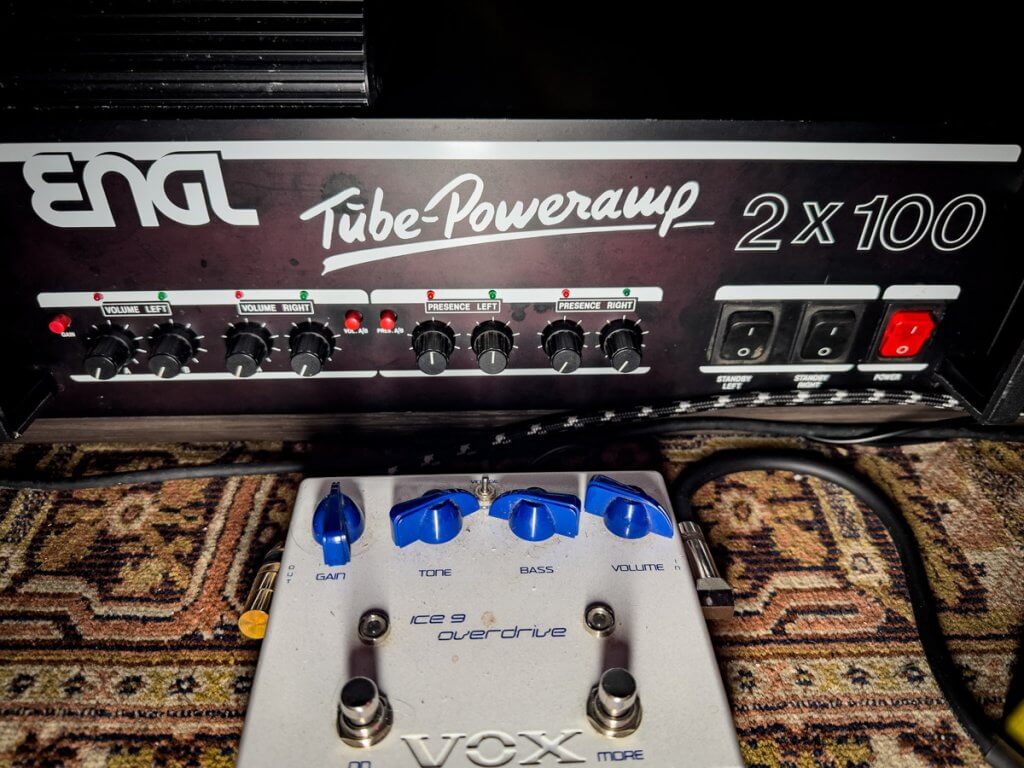
Sometimes you get more than you wish for
or less….
I love tube amps
Don’t get me wrong, modelers and plugins have come a long way and sound absolutely awesome, and I guess I could not guess which was used in a mix, but somehow when I play… maybe it’s between the ears, but a tube amp just has something else.
When I was in my teens I owned a JCM800 combo but when I started playing in a band I traded that one in for a Marshall 90001 and a valvestate 80008.
To be honest both still sound great today, and the Valvestate is one of those amps you can buy for next to nothing but is a solid performer, it doesn’t sound like a solid-state, but also not really like a tube amp, it’s awesome for recording and practice.
Most of the time I play through the Valvestate and use the ENGL mostly when recording.
Looking for a Marshall
For years I knew, one day I’ll get that beast from Marshall.
The rack tube amp, but the prices are high for units that often are not in perfect condition.
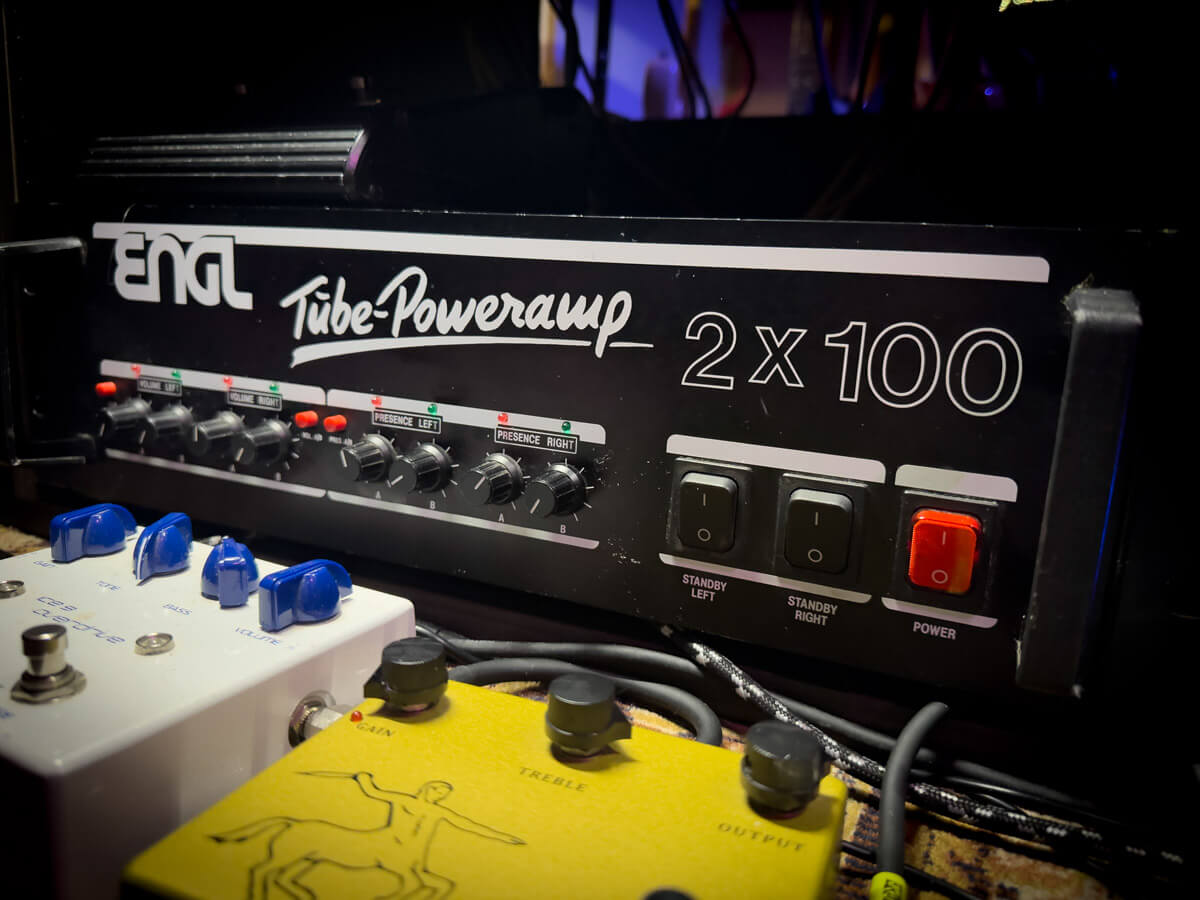
This is when my eye fell on the ENGL 920/100 which was offered on Marktplaats (our Dutch buying and selling site) for a very nice price.
In fact it was a bit on the cheap side.
So of course you ask… “why do you sell it, and was it working, and how long ago”.
It all sounded great, and I could try it out when I picked it up, this is where my alarm was going off, the seller didn’t have a cab, pre amp or guitar. So how can I test a tube amp?
I took the gamble and picked up the beast.
Connected it at home and ….. well that was it.
4 months later I connected it again and it worked.
The seller probably turned the amp on without a load and turned up the volume.
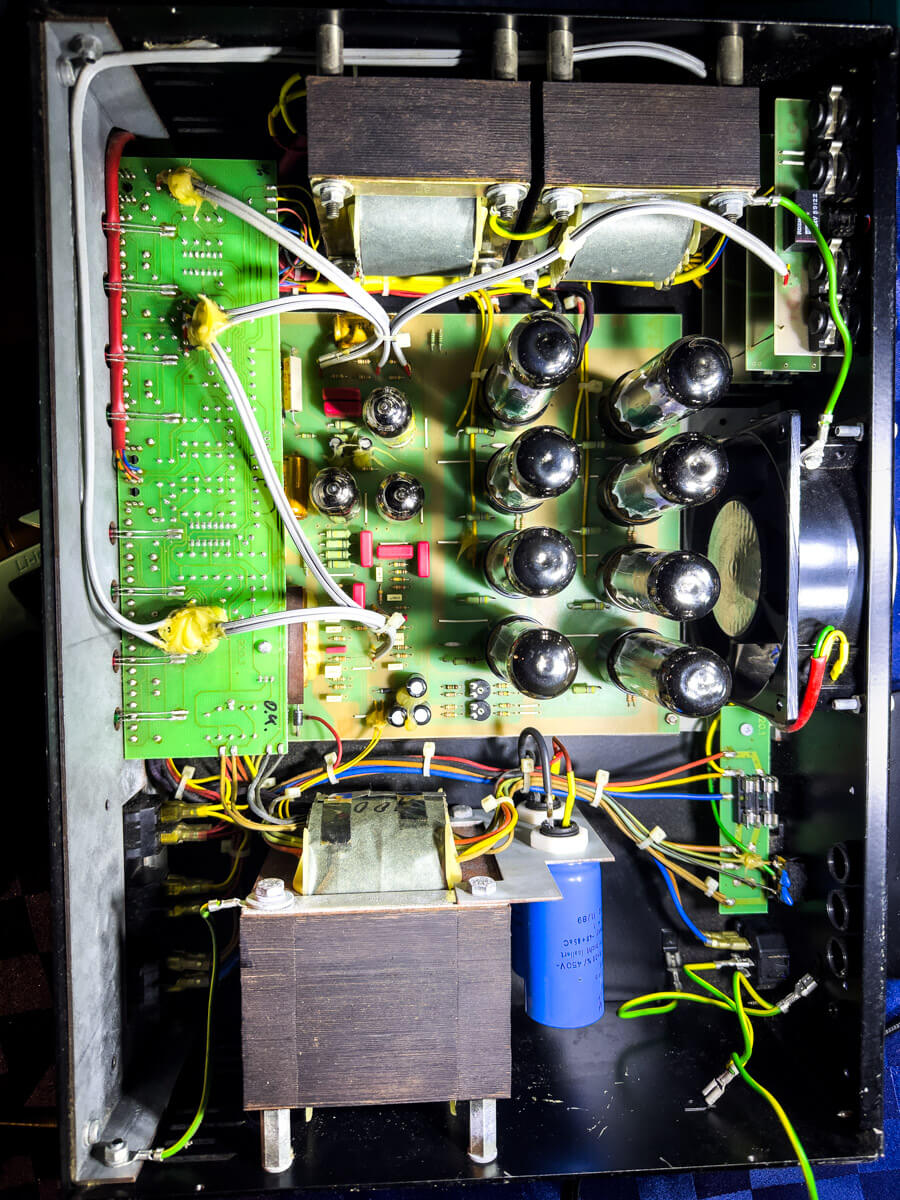
Inside almost everything was blown, the tubes, the main fuses where blown, but also internally the safety fuses were all gone.
Luckily I could find a great technician who not only fixed the ENGL but also changed some of the internal circuits to modern standards so I could run it without having any issues with fuses being blown.
The results……. I still love Marshall, but I’m not looking anymore. This is insane.
It’s a 100W double channel tube amp.
Meaning 2 separate channels with also 2 inputs per channel.
In essence you can connect 4 pre-amps and use 4 cabs in stereo.
For me that’s a bit overkill.
I’m using one side connected to an amp switcher that goes straight into the Capture X and Genome with IRs. The other side I have connected to a vintage Marshall SE100 (power soak) and a cab with black backs.
As microphone I mostly use the Slate Digital SL2 which is almost like a SM57 but with a lot of emulation options.
I was a bit reluctanct at first but the price was the same as a SM57 and the reviews were great when you used it without software, and I can confirm, even without software it sounds great on a cab, but when you start using the software… well I’ll write something about that later.
Let’s focus on the ENGL
I could not find a lot online about this model, which can mean 2 things.
It sucks, and no-one cares, or it’s really limited.
And in this case it’s the last, I looked everywhere and found the following information.
In total I believe there were only 65 build which already justified the costs I put into it to get it in like new condition
The following is almost everything I could find online and with the help of Ai.
The ENGL 920/100: A Forgotten Giant of the Rack Era
During the 1990s and early 2000s, rack-mounted guitar systems represented the cutting edge of professional guitar amplification. While guitarists today often rely on digital modelers and compact heads, there was a time when serious touring players built entire rigs around separate preamps, effects processors, and power amplifiers. One of the most impressive—and now relatively obscure—products from that era was the ENGL E920/100 Stereo Tube Power Amplifier, commonly known as the ENGL 920/100.
Built in Germany by ENGL Amplification, the 920/100 was designed to deliver the power, reliability, and tonal character demanded by professional guitarists using rack systems. Today it remains a sought-after collector’s piece among enthusiasts of classic rack gear.
Origins and History
ENGL was founded by Edmund Engl and became known throughout Europe for producing high-gain tube amplifiers with exceptional clarity and reliability. During the late 1980s and 1990s, the company earned a reputation through models such as the Straight, Savage, and later the Powerball series.
As rack systems became increasingly popular, ENGL introduced dedicated tube power amplifiers to complement preamps such as the 530 Tube Preamp and other MIDI-controlled rack equipment. The E920 series was part of this movement, offering stereo power amplification for sophisticated wet/dry/wet and stereo stage rigs.
The E920 was available in multiple versions, including a 50-watt-per-channel model and a more powerful 100-watt-per-channel version. Contemporary documentation and user reports confirm that both variants existed, although the 100-watt model was produced in smaller numbers and is considerably rarer today.
Build Quality and Design
The ENGL 920/100 was engineered as a professional touring amplifier rather than a budget product.
This is really obvious when you look at the amp. This is not a standard amp but build like a tank with loads of routing options. Something that we nowadays take for granted but that time (especially with the rise of the racks) was a great option to have.
Power Section
The amp delivers:
- 100 watts per channel in stereo operation
- 200 watts total output
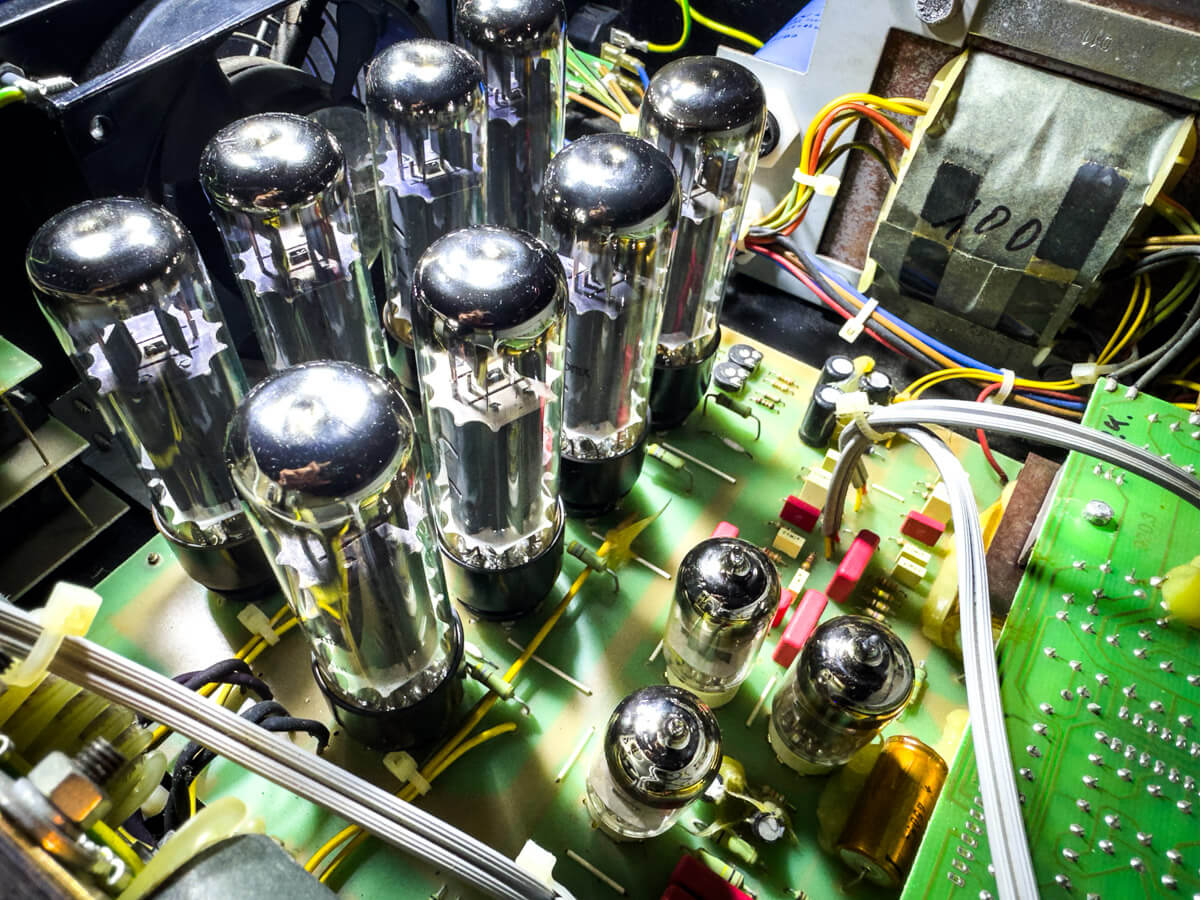
- Eight EL34 power tubes
- Three 12AX7/ECC83 preamp tubes
- Three-rack-space chassis design
- Approximately 16 kg (35 lbs) weight
The use of eight EL34 tubes gave the amp a distinctly European voice. EL34s are famous for their aggressive midrange response, tight low end, and singing harmonic content, characteristics often associated with British-style amplifiers.
Stereo Architecture
Unlike traditional guitar heads, the 920/100 functioned as a stereo power amp. This allowed players to run:
- Stereo chorus effects
- Stereo delays
- Wet/dry/wet configurations
- Dual cabinet setups
- Multi-preamp systems
During the rack era, such flexibility was highly desirable for arena and festival performances.
Switching and Control
One of the more advanced features of the E920 series was independent channel control.
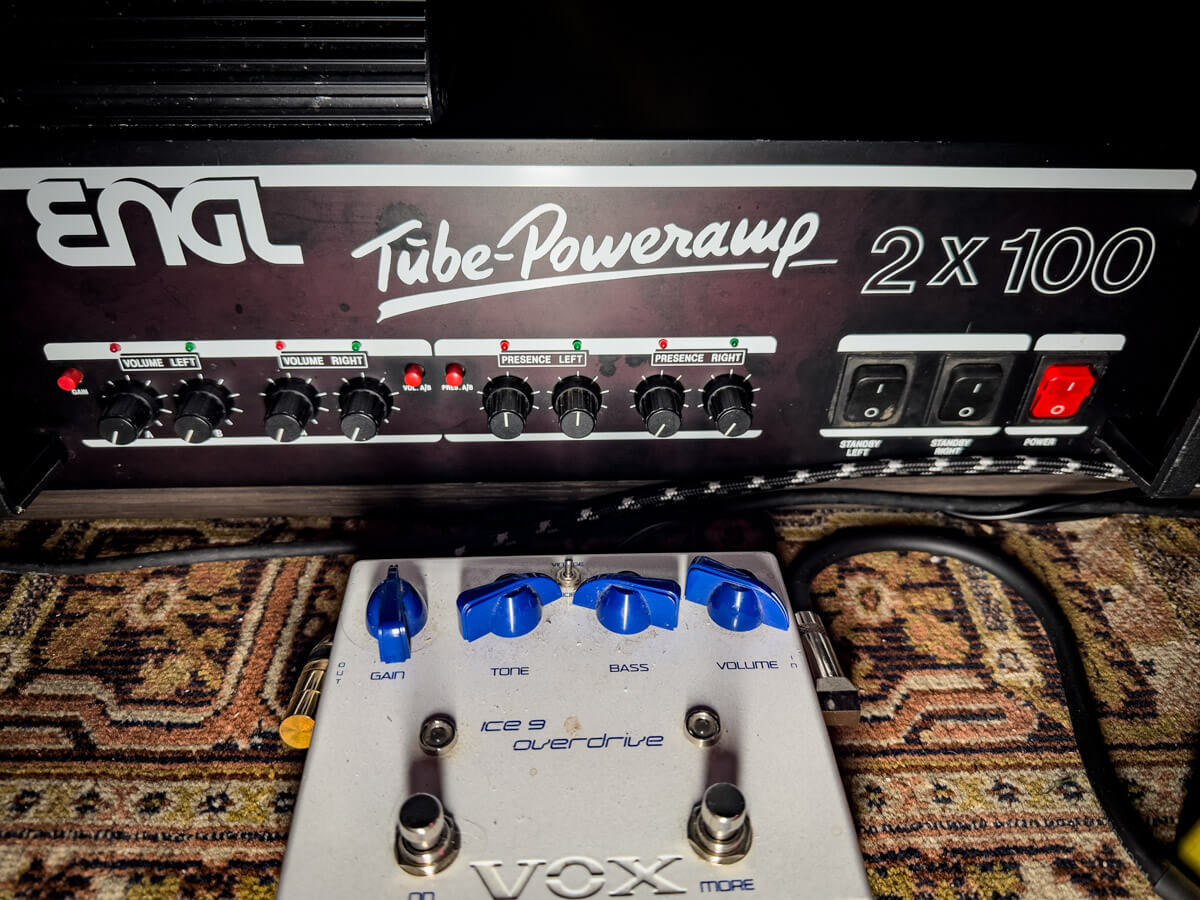
Certain versions (including mine) offered switchable presence and volume functions for each side of the amplifier, allowing players to tailor different power amp responses within the same unit. I’ve been playing around with this and it’s one of those things that if you have it you don’t want to be without anymore. It really shapes the sound of the amp from darker to much more aggressive. It’s not a gimmick but gives the amp many different faces.
Tone Characteristics
The ENGL 920/100 was never intended to color the signal heavily.
Instead, it was designed to reproduce the character of the connected preamp while adding the dynamic response and warmth of a tube power section.
The amp is mostly described as :
- Tight and articulate
- Extremely powerful
- Fast in transient response
- Well suited to high-gain sounds
- Capable of clean stereo reproduction
Compared with some American power amplifiers of the period, the ENGL often delivered a more focused low end and a slightly more aggressive midrange character, making it particularly attractive to hard rock and metal players.
Musicians Associated with ENGL Rack Systems
Of course I wanted to know who used this version 😀
Precise documentation of players using the E920/100 specifically is limited, as power amps were rarely advertised as prominently as amplifier heads. However, several notable guitarists have used ENGL rack-based systems and power amplification throughout their careers.
Steve Morse
Steve Morse has been one of ENGL’s most visible artists for decades. His signature ENGL products and long-standing relationship with the company helped establish ENGL as a serious professional brand. While Morse is best known for using ENGL heads and custom systems, his rigs frequently incorporated sophisticated rack equipment and stereo configurations.
Ritchie Blackmore
Blackmore used ENGL equipment during portions of his later career, particularly when seeking high-powered, reliable touring systems. His endorsement significantly increased ENGL’s visibility outside Germany.
Victor Smolski
Known for complex, highly technical metal playing, Smolski was an early advocate of ENGL gear and often used sophisticated rack setups that benefited from stereo tube power amplification.
Chris Poland
Loads of releases, probably most known for Megadeth and his solo releases
Metal and Progressive Guitarists loved it
The E920/100 became especially popular among:
- Progressive metal players
- Technical death metal guitarists
- Session musicians
- Touring professionals using MIDI-controlled racks
Its combination of reliability, power, and stereo capability made it a natural fit for complex live systems.
Why It Became Rare
By the late 2000s, the guitar industry began moving away from large rack systems. Compact amplifier heads, digital processors, and later modelers such as the Axe-Fx and Kemper reduced demand for dedicated tube power amplifiers. Also having a 100W power amp can be overkill in today’s market where we want more silent stages or go direct to the front of house via a modeler.
As a result:
- Production numbers remained relatively low.
- Many units stayed in professional rigs.
- Few reached the used market.
- Surviving examples became collectible.
One documented used example notes that only a small number were distributed in North America, contributing further to their rarity.
Legacy
The ENGL 920/100 represents the peak of the rack-mounted tube amplification era. Built with touring-grade components, massive power reserves, and stereo flexibility, it offered a level of control that few standalone heads could match.
Although modern digital systems have largely replaced rack power amps, the E920/100 remains highly respected among enthusiasts who appreciate traditional tube tone and classic rack rigs. For collectors of vintage ENGL equipment, it stands as one of the company’s most interesting and least-common products—a reminder of a period when guitar amplification was as much about engineering as it was about tone.
Conclusion
If you can find one (or the 50W version) I can highly recommend it.
The sound has “balls” so to say.
For me it will stay in my home studio for a LONG time and will be used on most recordings.
You could ask the question… “is it worth it to have” and I can only say “yes”, when you combine it with a proper load box, put a cab in a hush box with a good mic, spend some time for setup and you will be surprised.
The funny thing is that according to almost everything you read online a mic’ed cab will need some proper EQ etc. to sound nice, but when you use an IR it can be build in to sound right for the mix.
Of course I tried IRs, got the Big Hairy Guitar Vai cabs which sound great, but I always needed something extra to get the tone that I like.
Much to my surprise the slate digital mic in front of my cab with the ENGL was an instant “this is awesome” experience. You know the moment you are playing for 30-40 minutes and realize you didn’t even add some reverb or delay. The bone dry signal was already wide and pulled me in. So when you see one, get it 😀